

Ice, snow and wet-floor falls in New York
New York Slip and Fall Lawyer
A slip and fall claim asks whether the owner or occupier created the slippery condition, or knew or should have known about it in time to clean it, treat it or warn you.
Snow and ice follow their own timing rules. We have more than 40 years of injury practice in New York. Free consultation, no fee unless there is a recovery.
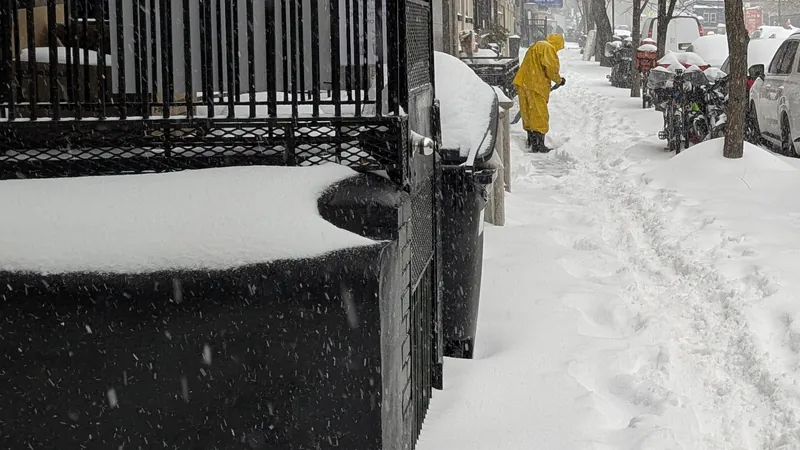
Loss of footing
What makes a slip case different
A slip happens when your shoe loses traction. The hazard is often temporary: a puddle, a spill, a patch of ice. That makes timing the central question, because the owner can say it appeared moments before you fell.
- Freshly mopped or waxed floors with no warning
- Spills, dropped produce and leaking coolers in stores
- Rain and slush tracked into lobbies and entrances
- Leaks from roofs, pipes and air-conditioning units
- Grease in restaurant and kitchen areas
- Ice and packed snow on sidewalks, steps and parking lots
Caught your foot on a broken flag, step or object instead? See our trip and fall page. For stairs, elevators, security and other unsafe-property claims, see the premises liability guide.
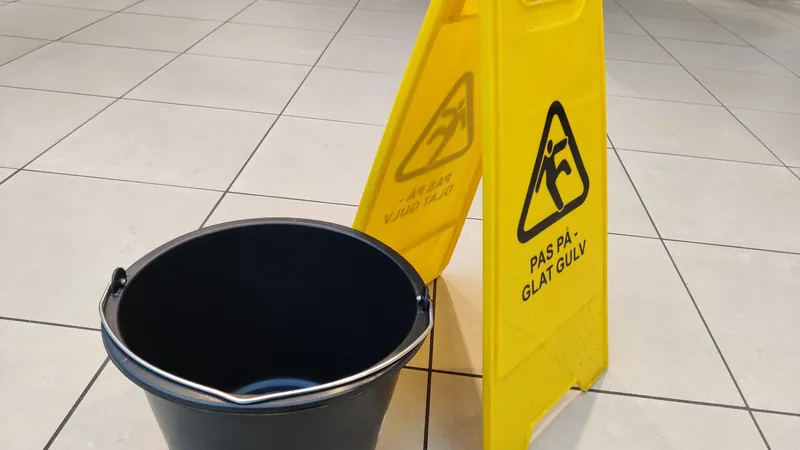
Warnings matter. Mopping or waxing without a sign is a hazard the owner created, so how long it was there usually matters less.
New York snow law
New York snow and ice law: when an owner has to act
Most winter fall cases turn on when the snow stopped and what the owner did afterward. Read the rules in the order they apply.
- 1
While the storm is still going
An owner is generally not liable for ice or snow from an ongoing storm. New York’s highest court applied this to subway steps exposed to snow, sleet and rain all day (Solazzo v New York City Transit Authority).
- 2
If they shovel or salt during the storm
Clearing is not required yet, but an owner who chooses to clear must use reasonable care not to create a new hazard or make the storm’s hazard worse. Simply not removing all of the snow is not enough to show that (Henenlotter v Union Free School District No. 23).
- 3
After the storm ends
The protection lasts only for a reasonable time after the storm. After that, leaving ice untreated can be negligence. When the snow stopped, the temperatures since, and when anyone cleared or salted are the facts that matter.
- 4
On a New York City sidewalk
The City’s four-hour clearing rule (9 p.m. to 7 a.m. not counted) is a sanitation duty with fines (Admin Code § 16-123). Injury liability is separate: the abutting owner is liable for negligent failure to remove snow and ice, except for a one-, two- or three-family home that is owner occupied in whole or in part and used exclusively for residential purposes (§ 7-210), and that exemption does not by itself clear a homeowner who worsened the hazard. A missed deadline is evidence, not automatic liability.
Ice from a leaking gutter, downspout or drain is a different question: it may be a condition the owner created or knew about, so the storm timing is only part of the analysis. Weather records, photos and repair history are what we look at first.
Proof
Notice decides most slip cases
The hard part is rarely the fall itself. It is showing that the owner made the hazard, or knew about it, or should have found it in time.
“To constitute constructive notice, a defect must be visible and apparent and it must exist for a sufficient length of time prior to the accident to permit defendant's employees to discover and remedy it.”
Created it: staff mopped, waxed or spilled something. Knew about it: a complaint, a report or a work order. Should have known: the condition was visible and there long enough to find.
A general awareness that floors get wet in bad weather is not, by itself, notice of the puddle you slipped on (Solazzo). That is why we ask quickly for video, cleaning and inspection logs, prior complaints and weather data, before they are overwritten or thrown away.
Deadlines
Who you claim against changes the deadline
The same fall can carry a three-year deadline or a 90-day one, depending on who controlled the spot.
These are the usual first deadlines for an ordinary negligence claim for personal injury, generally counted from the day of the injury. Wrongful death and other special claims run on different clocks; for example, a death notice of claim against a public body generally runs from the appointment of the estate's representative.
- A private owner, landlord, store or other private business
- No notice of claim. A lawsuit generally must be started within three years of the injury (CPLR 214).
- The City of New York
- A notice of claim filed with the Comptroller within 90 days of the incident, through eClaim or in person or by mail (email is not accepted); then a 30-day wait and any hearing the City demands; suit within one year and 90 days (NYC Comptroller).
- A county, town, village or school district
- Where a notice of claim is required, it must be served within 90 days after the claim arises (GML 50-e), and suit generally started within one year and 90 days (GML 50-i).
- The State of New York
- In the Court of Claims: the claim must be filed and served on the Attorney General within 90 days after it accrues, or a notice of intention served within those 90 days and the claim then filed and served within two years after accrual (Court of Claims Act § 10(3)).
- A public authority, such as a transit or housing authority
- Authorities have their own notice and filing statutes. Identify the exact entity first; do not assume the three-year rule.
- The injured person is a child
- CPLR 208 can extend the time to sue, but notice deadlines still need attention.
If you were partly at fault. In a fall case your share of fault generally reduces the damages in proportion; it does not bar the claim (CPLR 1411). The 2026 change that can bar recovery applies to no-fault motor-vehicle injury actions, not to falls on property.
An owner may argue the hazard was open and obvious. New York courts treat that mainly as a question of your comparative fault, not as an automatic defense (Westbrook v WR Activities-Cabrera Markets).
Premises results
Results for people hurt on unsafe property
These are the firm's published premises liability results. They include falls caused by spills, defects and unsafe steps; the records do not state the county where each case arose.
Prior results do not guarantee a similar outcome. Every case depends on its own facts.
See the full verdicts and settlements archiveAppellate result
Michael Licatesi Wins Again in the Appellate Division
The plaintiff was injured after falling from a defective step at a commercial property. Our Expert Witness provided evidence that the step's slope did not meet regulatory standards, and was a construction defect that the property owner failed to maintain and secure.
Read the case study$175,000
$175,000 Settlement
49 year old fell at a bar with disputed liability resulting in a dismissed case which Michael Licatesi, Esq overturned at the appellate level resulting in a monetary recovery
$950,000
$950,000 RECOVERY
Co-defendant neighbor aware that spill would flow onto her and is outside warning pedestrians negligently fails to apply salt or otherwise address the dangerous condition
$4,000,000
$4,000,000 Jury Verdict — Overturned Dismissal on Appeal
$4,000,000 jury verdict secured after overturning a dismissed case on appeal and obtaining a 100% liability finding for the plaintiff who suffered spine surgery as a result of a fall.
$225,000
$225,000 Apartment Building Slip-and-Fall Settlement
The Licatesi Law Group secured a $225,000 settlement after our client slipped and fell in their apartment building.
$250,000
$250,000 Settlement — Fall at a Burger Restaurant
Our client was injured after falling due to a dangerous defect at a burger restaurant. We fought to hold the responsible parties accountable and secured a $250,000 settlement for our client.
Where you fell
Slip and fall help by location
Local guides explain borough and county details. To choose an office or start by phone or video, see slip and fall attorney near me; for other property injuries, premises liability lawyer near me.
- Brooklyn slip and fall
- Queens slip and fall
- Bronx slip and fall
- Manhattan slip and fall
- Staten Island slip and fall
- Nassau County slip and fall
- Long Island slip and fall
Fell in New Jersey? New Jersey law differs; see our New Jersey slip and fall page. Claims involving the City or another public body: how to sue a city or municipality in New York.
Questions
Slip and fall questions
Get medical care first and tell the provider how you fell. Report the fall to the owner, manager or staff and ask for the incident report number. If you can, photograph the exact spot, what made it slippery, any warning signs or the lack of them, and the lighting. Keep the shoes and clothes you wore, write down witness names, and be careful about recorded statements to the owner’s insurer before you get advice.
Against a private owner, landlord or business, a lawsuit generally must be started within three years. If the City of New York may be responsible, a notice of claim must be filed with the Comptroller within 90 days and suit started within one year and 90 days. Claims against the State go to the Court of Claims with their own 90-day rule, and public authorities such as transit or housing authorities have their own statutes. Identify who controlled the spot early.
Generally that a dangerous condition existed; that the defendant owned, occupied or controlled the area (or, for a New York City sidewalk, was the abutting owner responsible for it); that it created the condition or knew or should have known about it in time to fix it or warn you; and that the condition caused your injury. Falling on someone’s property does not by itself make them liable.
Often, yes. A store, restaurant or other business must keep its premises reasonably safe for customers. The usual questions are whether staff created the hazard (for example, mopping without a warning), whether someone reported it, and whether it was there long enough that a reasonable inspection would have found it. Cleaning logs, video and staff testimony often answer those questions.
Damages can include medical expenses, lost earnings and earning capacity, out-of-pocket costs, and pain and suffering, including loss of enjoyment of life. The value depends on the injury, the medical proof, how the injury affects work and daily life, and how strong the proof of notice is. No honest lawyer can give you a number before reviewing the records.
Usually yes. In a fall case your share of fault generally reduces the damages in proportion rather than barring the claim (CPLR 1411). An argument that the hazard was open and obvious is mainly treated as a question of your comparative fault. The 2026 rule that can bar recovery applies to no-fault motor-vehicle injury actions, not to falls on property.
It depends on timing and on who controlled the spot. An owner is generally not liable during a storm in progress or for a reasonable time after it ends; after that, untreated ice can be negligence, and clearing during a storm must not worsen it. On City sidewalks the abutting owner is usually responsible, except at one- to three-family homes that are owner occupied in whole or in part and used only as residences. The four-hour rule carries fines; missing it is evidence, not automatic liability.
Wrist, ankle, hip and other fractures, head injuries from striking the floor or pavement, back and neck injuries, knee and shoulder tears, and soft-tissue injuries. Older adults can face long recoveries from a broken hip. Get examined even if you feel fine, because some injuries show up later.
Notice can be actual (complaints, reports, work orders, staff who saw it) or constructive. New York’s highest court has said a condition must be visible and apparent and must exist long enough before the accident for the owner’s employees to discover and fix it. Video, inspection and cleaning logs, prior complaints and the condition’s appearance (dirt, track marks, a long-running leak) are the usual proof. If the owner or its staff created the condition, notice is not needed.
Not before you understand your injury and your claim. A settlement usually requires a release that ends the claim for good, even if you later need surgery or more treatment. Have the offer reviewed against your medical records, lost income and future care. The decision to settle is always yours.
Talk to a New York slip and fall lawyer
Tell us where and when you fell, what the surface was like and who you think owns or runs the property. We will explain who may be responsible, which deadline applies and what to ask for before it is cleaned up or repaired. The consultation is free.
What to bring
- Date, time and the weather that day
- Photos of the spot and your shoes
- Incident report number and witness names
- Medical records so far
Photo credits: Shoveling on 11th Street by Eden, Janine and Jim, CC BY 4.0, cropped and resized; Wet floor sign with a bucket by Kent Madsen, CC BY-SA 2.0, cropped and resized.