

Slip, trip and fall claims in New York County
Manhattan Slip and Fall Lawyer
On a Manhattan block the question is who controlled the exact spot: the building owner, a tenant, a contractor's sidewalk shed, a store, the City or NYC Transit. In winter, timing matters too.
We serve Manhattan from our New York offices and by phone or video. Free consultation, no fee unless there is a recovery.
Who is responsible
Who controlled the spot?
Manhattan sidewalks carry sheds, cellar doors, gratings and building entrances within a few feet of each other. Each can belong to someone different.
- The sidewalk in front of a building
- Usually the abutting owner, who must keep it reasonably safe, including snow and ice.
- First deadline: Generally 3 years; no notice of claim (§ 7-210)
- Under a sidewalk shed or scaffolding
- Possibly the building owner and the contractor that put up or maintains the shed. Who controlled the walkway and knew of the hazard decides it.
- First deadline: Generally 3 years
- An open cellar door or a sidewalk grating
- Usually the owner or the tenant that uses or opened it; how it was guarded and who was responsible for it are the questions.
- First deadline: Generally 3 years
- A lobby, stairway or hallway
- The owner or managing agent; in a co-op or condominium, usually the board for common areas.
- First deadline: Generally 3 years
- A store, restaurant or office
- The business, the building owner, or both, depending on the lease and who created or knew of the hazard.
- First deadline: Generally 3 years
- Subway stairs, mezzanines and platforms
- New York City Transit, if the fall involved its station.
- First deadline: Notice of claim, then suit within 1 year 90 days (PAL 1212)
- A City park path or City building
- Possibly the City of New York; prior-written-notice rules can apply to some paths and streets.
- First deadline: Comptroller notice within 90 days (NYC Comptroller)
Prior written notice of a defect is different from the notice of claim. Tripped on a raised flag or grating edge? See trip and fall; for public-body claims, suing a city or municipality.

Sheds and cellar doors
Falls under sheds and at cellar doors
A shed can hide a broken flag, drip water that freezes, or leave a dark walkway. The owner and the contractor may both have had control, so we look at permits, inspection records and complaints.
For an open cellar door or loose grating, note the business using it and whether anyone guarded it. If it is safe, photograph it before it is closed or repaired.
Winter
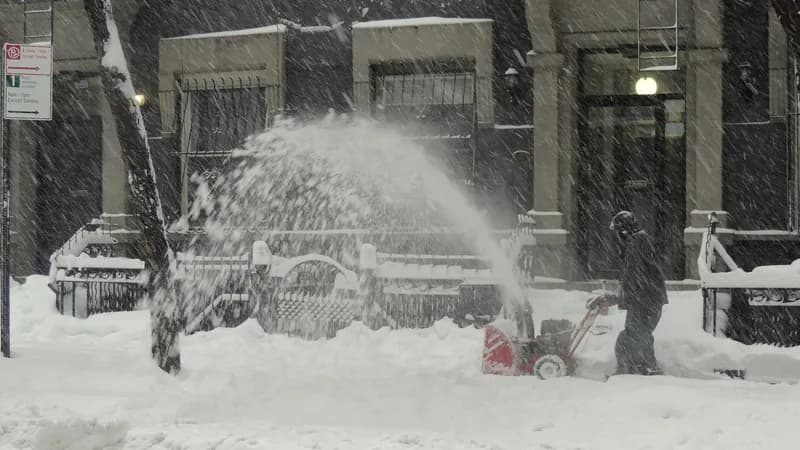
Snow during and after a storm
- While it is still snowing. An owner is generally not liable for ice from a storm in progress (Solazzo).
- If they clear during the storm. They must not make the hazard worse, though leaving some snow is not enough by itself (Henenlotter).
- After it stops. The owner has a reasonable time to act; after that, an untreated sidewalk can be negligence.
- The four-hour rule. The City's sanitation rule, not counting 9 p.m. to 7 a.m., carries fines (§ 16-123). Missing it is evidence, not automatic liability. Weather records fix the times.
Deadlines
Who you claim against sets the deadline
These are the usual first deadlines for an ordinary negligence claim for personal injury, generally counted from the day of the fall. Wrongful death and other special claims run on different clocks.
- A private owner, landlord, store or other business
- No notice of claim. A lawsuit generally must be started within three years of the injury (CPLR 214).
- The City of New York
- A notice of claim filed with the Comptroller within 90 days of the incident, through eClaim or in person or by mail (email is not accepted), and a lawsuit within one year and 90 days (NYC Comptroller).
- New York City Transit (subway stations, stairs and platforms)
- A notice of claim under the General Municipal Law 50-e rules, which generally means within 90 days, and a lawsuit within one year and 90 days of the fall (Public Authorities Law 1212). Other transit operators have their own rules.
- The New York City Housing Authority (NYCHA)
- Notice is served on NYCHA itself, not the Comptroller, under the notice-of-claim rules, and a lawsuit generally must be started within one year and 90 days (Public Housing Law 157).
- The State of New York
- In the Court of Claims: the claim filed and served within 90 days after it accrues, or a notice of intention served within those 90 days (Court of Claims Act 10).
- The injured person is a child
- CPLR 208 can extend the time to sue, but notice deadlines against public bodies still need attention right away.
If you were partly at fault. In a fall case your share of fault generally reduces the damages in proportion; it does not bar the claim (CPLR 1411). The 2026 change that can bar recovery applies to no-fault motor-vehicle injury actions, not to falls on property.
An owner may argue the hazard was open and obvious. That removes the duty to warn about it, but not the separate duty to keep the property reasonably safe, and it can bear on your share of fault (Westbrook v WR Activities-Cabrera Markets). A condition that is both open and obvious and not inherently dangerous can defeat a claim.
Premises Liability Results
Results for people hurt on unsafe property
These are the firm's published premises liability results. Not all are slips or trips, and the descriptions do not identify the county or borough, so they are not presented as Manhattan results. Past results do not predict the outcome of another case.
Prior results do not guarantee a similar outcome. Every case depends on its own facts.
See the full verdicts and settlements archiveAppellate result
Michael Licatesi Wins Again in the Appellate Division
The plaintiff was injured after falling from a defective step at a commercial property. Our Expert Witness provided evidence that the step's slope did not meet regulatory standards, and was a construction defect that the property owner failed to maintain and secure.
Read the case study$175,000
$175,000 Settlement
49 year old fell at a bar with disputed liability resulting in a dismissed case which Michael Licatesi, Esq overturned at the appellate level resulting in a monetary recovery
$950,000
$950,000 RECOVERY
Co-defendant neighbor aware that spill would flow onto her and is outside warning pedestrians negligently fails to apply salt or otherwise address the dangerous condition
$4,000,000
$4,000,000 Jury Verdict — Overturned Dismissal on Appeal
$4,000,000 jury verdict secured after overturning a dismissed case on appeal and obtaining a 100% liability finding for the plaintiff who suffered spine surgery as a result of a fall.
$225,000
$225,000 Apartment Building Slip-and-Fall Settlement
The Licatesi Law Group secured a $225,000 settlement after our client slipped and fell in their apartment building.
$250,000
$250,000 Settlement — Fall at a Burger Restaurant
Our client was injured after falling due to a dangerous defect at a burger restaurant. We fought to hold the responsible parties accountable and secured a $250,000 settlement for our client.
Meeting with us
Serving Manhattan
We do not have a Manhattan office. We serve Manhattan clients from our New York offices and meet by phone or video. See our Manhattan location page and every office by borough.
Fell in another borough? See Brooklyn, Queens or Bronx slip and fall.
Manhattan neighborhoods we serve include
- Financial District
- Tribeca
- SoHo
- Greenwich Village
- Lower East Side
- Chelsea
- Midtown
- Murray Hill
- Upper East Side
- Upper West Side
- Harlem
- Washington Heights
Questions
Frequently Asked Questions About Manhattan Slip and Fall Cases
Generally by showing a dangerous condition; that the defendant owned, managed or controlled the spot, or for a sidewalk was the abutting owner responsible for it; that it created the condition or knew or should have known about it in time to fix it or warn you; and that it caused your injury. Photos, the incident report, video and maintenance records are the usual proof.
Against a private owner, landlord or business, generally three years, with no notice of claim. If the City may be responsible, for example for a park path or a sidewalk next to a one-, two- or three-family home that is owner occupied in whole or in part and used exclusively for residential purposes, a notice of claim is due within 90 days and suit within one year and 90 days. Subway (NYC Transit) and NYCHA claims also need notice and suit within one year and 90 days.
Building owners and landlords, co-ops and condominiums, managing agents, stores and restaurants and the owners who lease to them, contractors that put up sidewalk sheds or did other work, and, in limited situations, the City, NYC Transit or NYCHA. Liability usually follows who controlled the area and who had to maintain it; more than one party can share it.
It depends on the injury, the treatment and recovery, lost income, how the injury affects daily life, and how strong the proof of notice is. We do not quote figures before reviewing the records. The firm’s published premises results are on this page; they do not predict the outcome of any other case.
Get medical care and tell the provider how you fell. Report the fall to the doorman, super or store manager and ask for a report number. If it is safe, photograph the exact spot, any shed, cellar door or grating, the surface and the lighting; note the address, keep your shoes and write down witness names. Be careful about recorded statements to an insurer.
Often, yes, usually against the abutting private owner, who must keep the sidewalk reasonably safe, with no notice of claim needed. A contractor or tenant that created the hazard can share responsibility. If the property is a one-, two- or three-family home that is owner occupied in whole or in part and used exclusively for residential purposes, the City may be responsible instead, generally only where it had prior written notice of the defect, plus a 90-day notice of claim.
The store, and sometimes the building owner, must keep the premises reasonably safe. The questions are whether staff created the hazard, for example mopping without a warning sign, whether it was reported, and whether it was there long enough that a reasonable inspection would have found it. For water tracked in from outside, the question is whether the store used reasonable care, for example with mats or warning signs, and how long the water was there. Ask for an incident report quickly.
Owners must keep entrances, lobbies, stairs and hallways reasonably safe: clearing snow and ice within a reasonable time after a storm, fixing leaks and broken steps, and keeping stairs lit and railings secure. In a co-op or condominium, the board and managing agent usually control the common areas. Liability usually requires that the owner created the condition or knew or should have known about it.
Medical expenses, lost earnings and earning capacity, out-of-pocket costs, and pain and suffering, including loss of enjoyment of life and lasting limitations. The amount depends on the injury and the proof in your case.
Usually yes. In a fall case your share of fault generally reduces the damages in proportion rather than barring the claim (CPLR 1411). The 2026 change that can bar recovery applies to no-fault motor-vehicle injury actions, not to falls. If the hazard was open and obvious, the owner had no duty to warn of it but still had to keep the property reasonably safe; a condition that was both obvious and not inherently dangerous can defeat the claim.
It depends on how long treatment lasts, whether liability is disputed, how many parties are involved, such as an owner, a tenant and a contractor, and whether a lawsuit is needed. Many cases cannot be valued until the medical picture is clear. We explain what is driving the timeline in your case and keep you informed.
Talk to a Manhattan slip and fall lawyer
Tell us the address, what was on the sidewalk or floor and what the weather was. We will explain who may be responsible, which deadline applies and what to request before it is repaired. The consultation is free.
What to bring
- Address and exact spot
- Photos of the shed, door, surface or stairs
- Report number and witness names
- Medical records so far
Related pages
More on falls and unsafe property
Photo credits: Snow blower on West 47th Street by Jim.henderson, CC BY 3.0, cropped and resized; Sidewalk shed at 205 West 57th Street by Jim.henderson, CC BY-SA 4.0, cropped and resized.