

Misdiagnosis, surgical errors and hospital negligence
New York Medical Malpractice Lawyers for Long Island and NYC Patients
Malpractice is care that departs from accepted medical practice and causes real harm. New York gives most patients two and a half years to sue, and far less when a public hospital is involved.
We represent patients from our Uniondale, Brooklyn and Corona offices.
What has to be shown
Not every bad outcome is malpractice
1
A treating relationship
The doctor, nurse or hospital owed you a duty of care.
2
A departure from accepted practice
Care fell below what a reasonably careful provider would have done, as shown by physician testimony.
3
Causation
That departure, not the underlying illness, caused the injury or made it worse.
4
Harm
Real injury: added treatment, disability, lost earnings, pain, or death.
The deadline clock
When a New York malpractice deadline starts and ends
The rule that applies depends on the kind of error, the patient and the hospital. Missing it can end the case regardless of its merit. These are general rules: tolls, public-entity requirements and wrongful-death claims need individual review.
- Most malpractice claims
- 2 years and 6 months
- From the act or omission, or the end of continuous treatment for the same condition CPLR 214-a
- Qualifying foreign object left in the body
- 1 year
- From actual discovery or discovery of facts reasonably leading to it, whichever is earlier; fixation devices and prosthetic aids are excluded CPLR 214-a
- Missed cancer or malignant tumor
- 2 years and 6 months
- From the later of qualifying discovery or last continuous treatment. Discovery means knowing (or reasonably being expected to know) both negligence and resulting injury; that branch has a 7-year outer limit from the act CPLR 214-a
- NYC Health + Hospitals
- 90-day notice; 1 year 90 days
- Notice of claim on HHC itself, then the lawsuit Scantlebury (2005)
For missed cancer diagnoses, see our cancer misdiagnosis guide.

Who is responsible
Doctor, private hospital or public hospital
A claim can name the individual providers and, depending on the facts, the hospital or practice responsible for them. Identifying who employed the doctor or nurse matters, because it affects who answers for the error.
Public hospitals add a separate step. NYC Health + Hospitals is its own public corporation: for an ordinary malpractice injury claim, notice is generally due on HHC within 90 days, and in Scantlebury v NYC Health & Hospitals Corp. (2005) a patient's case was dismissed because the notice went to the City Comptroller instead. Our guide to claims against public entities explains the notice rules.
Before a case is filed
Records first, then a physician review
Under Public Health Law 18, patients can get copies of their records within a reasonable time, at no more than 75 cents per page for paper, and cannot be refused solely for inability to pay.
We build a timeline from the chart — symptoms reported, tests ordered or skipped, results, and follow-up — and have it reviewed by a physician. New York then requires the attorney to file a certificate of merit (CPLR 3012-a) stating that a licensed physician was consulted and that there is a reasonable basis for the case.
Fees
The fee cap set by law
Malpractice fees are contingent and capped by Judiciary Law 474-a. No fee unless there is a recovery.
| Portion of the recovery | Maximum fee |
|---|---|
| First $250,000 | 30% |
| Next $250,000 | 25% |
| Next $500,000 | 20% |
| Next $250,000 | 15% |
| Over $1,250,000 | 10% |
Case types
Malpractice cases we handle
- Cancer misdiagnosis
Delayed or missed diagnosis, and the discovery rule for cancer claims.
- Birth injuries
Delivery complications, fetal distress and newborn injuries.
- Surgical errors and retained objects
Wrong-site surgery and instruments or sponges left behind.
- Nursing home neglect
Falls, pressure injuries and neglect in long-term care.
We also review anesthesia errors, medication errors, emergency-room misdiagnosis and failures to monitor hospital patients.
Where we represent patients
From central Nassau to the five boroughs
Our Uniondale office is a short drive from Carle Place, Westbury, Garden City and Mineola, and we meet patients across Nassau and Suffolk Counties. Our Brooklyn and Corona offices serve patients throughout New York City.
Not sure which office is closest? See medical malpractice lawyer near me.
Malpractice results
Results for injured patients
These are the firm's published medical malpractice results. The descriptions do not identify the hospital or county involved.
Prior results do not guarantee a similar outcome. Every case depends on its own facts.
See the full verdicts and settlements archive$950,000
$950,000 Settlement for a Preventable Eye Injury
The Licatesi Law Group fought for a woman who suffered permanent blindness in one eye after an alleged failure to identify a retained contact lens during an ophthalmologic examination.
$1,300,000
$1,300,000 Medical Malpractice settlement
47 year old male police officer injured as a result of surgical malpractice by an orthopedic surgeon resulting in an inability to work and permanent impairment of gait.
Read the case study$3,000,000
$3 Million Dollar Settlement — Failure to Diagnose
Failure to diagnose the plaintiff's cancer resulting in a $3 million dollar settlement.
Questions
Medical malpractice questions
A bad result alone is not malpractice. A claim generally requires a doctor-patient relationship, a departure from accepted medical practice, proof that the departure caused the injury, and real harm. Whether care fell below the standard is a medical question that has to be answered by a qualified physician reviewing the records.
Generally two years and six months from the act or omission, or from the end of continuous treatment for the same condition (CPLR 214-a). For a qualifying foreign object, the one-year period starts at actual discovery or discovery of facts reasonably leading to it, whichever is earlier. Cancer or malignant-tumor claims have a later-of discovery/continuous-treatment rule; the discovery branch requires actual or reasonable knowledge of both negligence and resulting injury and has a seven-year limit from the negligent act. Claims against NYC Health + Hospitals require a notice of claim within 90 days and a lawsuit within one year and 90 days.
It is a certificate signed by the patient's attorney, filed with the complaint, stating that the attorney has reviewed the facts and consulted at least one licensed physician and concluded there is a reasonable basis for the case (CPLR 3012-a). It is not a sworn expert affidavit; expert proof comes later in the case.
Yes. NYC Health + Hospitals is a separate public corporation. For an ordinary malpractice injury claim, a notice of claim is generally due on HHC within 90 days, and serving the City Comptroller instead does not count (Scantlebury v NYC Health & Hospitals Corp., 2005). The lawsuit must generally be commenced within one year and 90 days.
New York Public Health Law 18 gives patients the right to copies of their records within a reasonable time. The charge for paper copies may not exceed 75 cents per page, and a patient cannot be denied records solely because of inability to pay.
On a contingency fee, which Judiciary Law 474-a caps on a sliding scale: 30% of the first $250,000, 25% of the next $250,000, 20% of the next $500,000, 15% of the next $250,000 and 10% of anything over $1,250,000. You pay no attorney fee unless there is a recovery.
A wrongful death action must generally be commenced within two years of death (EPTL 5-4.1), and the malpractice deadline may also matter. For children, infancy tolls the malpractice deadline, but in malpractice cases the extension cannot go beyond ten years from the malpractice (CPLR 208).
From our Uniondale office we represent patients across Nassau and Suffolk Counties, including central Nassau communities such as Carle Place, Westbury, Garden City and Mineola. From our Brooklyn and Corona offices we represent patients throughout New York City, and we also handle cases in New Jersey.
Talk to a New York medical malpractice lawyer
Tell us what treatment you had, where, and when you learned something went wrong. We will tell you which deadline applies and what records to request first. The review is free.
What to bring
- Names of the doctors and hospitals
- Dates of treatment and surgery
- Discharge papers and test results you have
- A short timeline of symptoms
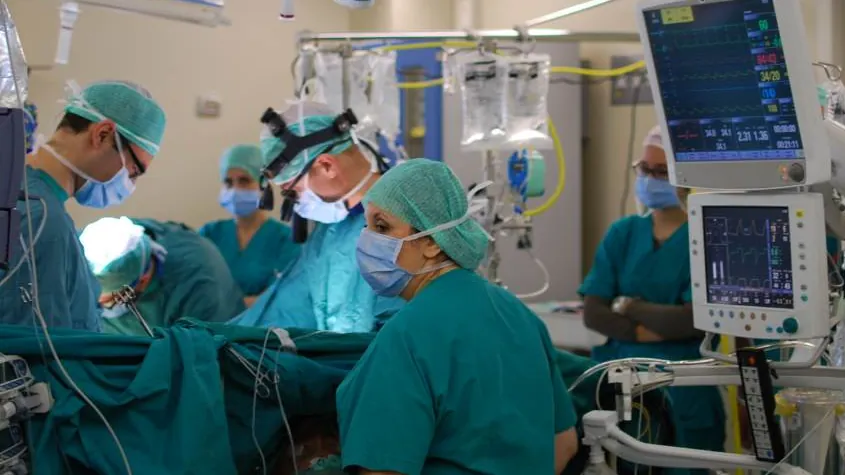
Photo credits: Operating room by Pfree2014, CC BY-SA 4.0, cropped and resized.