

Slip, trip and fall claims in Bronx County
Bronx Slip and Fall Lawyer
Many Bronx falls happen in and around apartment buildings, so the first question is who owns the building: a private landlord, a co-op, NYCHA or the City. That decides who answers and how fast you must act.
Our Corona office serves the Bronx. Free consultation, no fee unless there is a recovery.
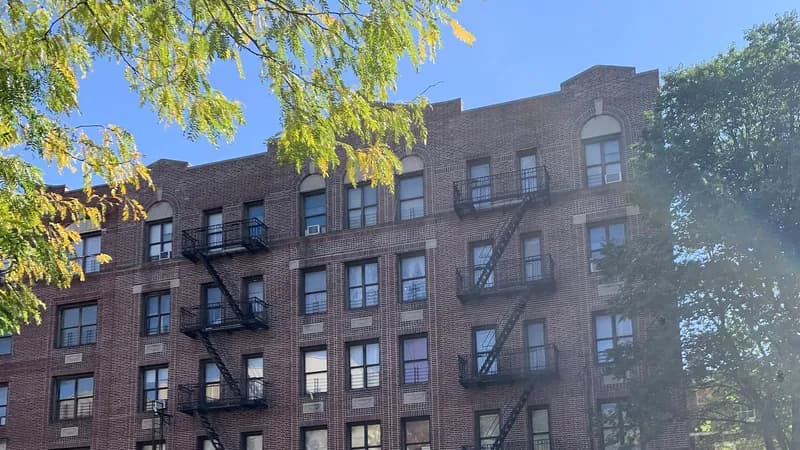
Who is responsible
Who owns your building?
A lease, a rent bill or a sign in the lobby usually names the owner or managing agent. If you are not sure, tell us the address and we will find out.
- A private landlord
- The owner and its managing agent. Complaints to the super, repair requests and building violation history show what they knew.
- First deadline: Generally 3 years; no notice of claim
- A co-op or condominium
- The co-op corporation or condominium board and its managing agent for common areas; a unit owner for spaces it controls.
- First deadline: Generally 3 years
- NYCHA
- The New York City Housing Authority, for its lobbies, stairs, walkways and grounds.
- First deadline: Notice served on NYCHA itself; suit within 1 year 90 days (PHL 157)
- A City-owned building
- The City of New York, if it controlled the spot.
- First deadline: Comptroller notice within 90 days (NYC Comptroller)
NYCHA is a public authority, so notice goes to NYCHA itself, not to the City Comptroller. Our guide to suing a city or municipality explains notices of claim.
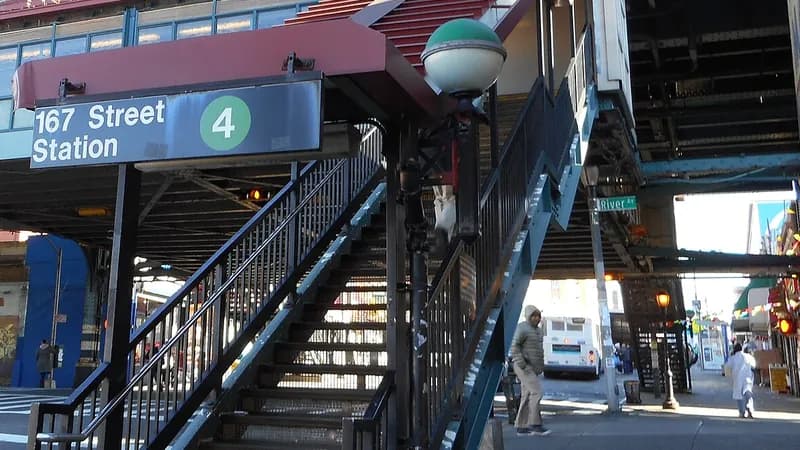
Elevated stations
Falls on elevated subway stairs
Outdoor station stairs collect rain, snow and ice. A claim against New York City Transit needs a notice of claim under the General Municipal Law rules and a lawsuit within one year and 90 days (Public Authorities Law 1212).
For snow or ice from a storm still in progress, or within a reasonable time after it, the authority is generally not liable (Solazzo); a general awareness that stairs get wet is not notice of the specific condition. Other hazards, such as a broken step or a leak, turn on notice and reasonable care. If it is safe, photograph the step, the station name and the weather, and note the time.
Deadlines
Who you claim against sets the deadline
These are the usual first deadlines for an ordinary negligence claim for personal injury, generally counted from the day of the fall. Wrongful death and other special claims run on different clocks.
- A private owner, landlord, store or other business
- No notice of claim. A lawsuit generally must be started within three years of the injury (CPLR 214).
- The City of New York
- A notice of claim filed with the Comptroller within 90 days of the incident, through eClaim or in person or by mail (email is not accepted), and a lawsuit within one year and 90 days (NYC Comptroller).
- New York City Transit (subway stations, stairs and platforms)
- A notice of claim under the General Municipal Law 50-e rules, which generally means within 90 days, and a lawsuit within one year and 90 days of the fall (Public Authorities Law 1212). Other transit operators have their own rules.
- The New York City Housing Authority (NYCHA)
- Notice is served on NYCHA itself, not the Comptroller, under the notice-of-claim rules, and a lawsuit generally must be started within one year and 90 days (Public Housing Law 157).
- The State of New York
- In the Court of Claims: the claim filed and served within 90 days after it accrues, or a notice of intention served within those 90 days (Court of Claims Act 10).
- The injured person is a child
- CPLR 208 can extend the time to sue, but notice deadlines against public bodies still need attention right away.
Snow and ice. An owner is generally not liable for snow or ice from a storm still in progress, or for a reasonable time after it ends (Solazzo), unless its clearing created a new hazard or made the storm's hazard worse (Henenlotter). After that, an untreated walk can be negligence. The City's four-hour clearing rule, not counting 9 p.m. to 7 a.m. (§ 16-123), is evidence, not automatic liability. See our New York slip and fall page.
If you were partly at fault. In a fall case your share of fault generally reduces the damages in proportion; it does not bar the claim (CPLR 1411). The 2026 change that can bar recovery applies to no-fault motor-vehicle injury actions, not to falls on property.
An owner may argue the hazard was open and obvious. That removes the duty to warn about it, but not the separate duty to keep the property reasonably safe, and it can bear on your share of fault (Westbrook v WR Activities-Cabrera Markets). A condition that is both open and obvious and not inherently dangerous can defeat a claim.
Premises Liability Results
Results for people hurt on unsafe property
These are the firm's published premises liability results. Not all are slips or trips, and the descriptions do not identify the county or borough, so they are not presented as Bronx results. Past results do not predict the outcome of another case.
Prior results do not guarantee a similar outcome. Every case depends on its own facts.
See the full verdicts and settlements archiveAppellate result
Michael Licatesi Wins Again in the Appellate Division
The plaintiff was injured after falling from a defective step at a commercial property. Our Expert Witness provided evidence that the step's slope did not meet regulatory standards, and was a construction defect that the property owner failed to maintain and secure.
Read the case study$175,000
$175,000 Settlement
49 year old fell at a bar with disputed liability resulting in a dismissed case which Michael Licatesi, Esq overturned at the appellate level resulting in a monetary recovery
$950,000
$950,000 RECOVERY
Co-defendant neighbor aware that spill would flow onto her and is outside warning pedestrians negligently fails to apply salt or otherwise address the dangerous condition
$4,000,000
$4,000,000 Jury Verdict — Overturned Dismissal on Appeal
$4,000,000 jury verdict secured after overturning a dismissed case on appeal and obtaining a 100% liability finding for the plaintiff who suffered spine surgery as a result of a fall.
$225,000
$225,000 Apartment Building Slip-and-Fall Settlement
The Licatesi Law Group secured a $225,000 settlement after our client slipped and fell in their apartment building.
$250,000
$250,000 Settlement — Fall at a Burger Restaurant
Our client was injured after falling due to a dangerous defect at a burger restaurant. We fought to hold the responsible parties accountable and secured a $250,000 settlement for our client.
Meeting with us
Serving the Bronx from Corona
We do not have a Bronx office. Our Corona office at 100-17 Northern Boulevard serves Bronx clients, and we also meet by phone or video. See our Bronx location page.
Fell in another borough? See Brooklyn, Queens or Manhattan slip and fall.
Bronx neighborhoods we serve include
- Fordham
- Kingsbridge
- Riverdale
- Parkchester
- Pelham Bay
- Soundview
- Mott Haven
- Concourse
- Tremont
- Belmont
- Morris Park
- Co-op City
Questions
Frequently Asked Questions About Bronx Slip and Fall Cases
Generally by showing a dangerous condition; that the defendant owned, managed or controlled the spot, or for a sidewalk was the abutting owner responsible for it; that it created the condition or knew or should have known about it in time to fix it or warn you; and that it caused your injury. Photos, the incident report, video, tenant complaints and repair records are the usual proof.
Against a private landlord, owner or business, generally three years, with no notice of claim. If NYCHA owns the building, notice goes to NYCHA and suit is due within one year and 90 days. City claims, for example a sidewalk next to a one-, two- or three-family home that is owner occupied in whole or in part and used exclusively for residential purposes, need a notice of claim within 90 days. Subway (NYC Transit) claims also need notice and suit within one year and 90 days.
Private landlords and managing agents, co-ops and condominiums, stores and restaurants and the owners who lease to them, contractors whose work created a hazard, and, in limited situations, NYCHA, the City or NYC Transit. Liability usually follows who controlled the area and who had to maintain it; more than one party can share it.
It depends on the injury, the treatment and recovery, lost income, how the injury affects daily life, and how strong the proof of notice is. We do not quote figures before reviewing the records. The firm’s published premises results are on this page; they do not predict the outcome of any other case.
Get medical care and tell the provider how you fell. Report the fall to the super, management office or store manager and ask for a report number. If it is safe, photograph the exact spot, the surface and the lighting, note the address, keep your shoes, and write down witness names. Be careful about recorded statements to an insurer before you get advice.
Often, yes, usually against the abutting private owner, who must keep the sidewalk reasonably safe, with no notice of claim needed. If the property is a one-, two- or three-family home that is owner occupied in whole or in part and used exclusively for residential purposes, the City may be responsible instead, generally only where it had prior written notice of the defect, plus a 90-day notice of claim. The exemption does not automatically clear a homeowner who created the defect.
The store, and sometimes the building owner, must keep the premises reasonably safe. The questions are whether staff created the hazard, for example mopping without a warning sign, whether it was reported, and whether it was there long enough that a reasonable inspection would have found it. Ask for an incident report and act quickly, because store video is often recorded over.
Owners must keep entrances, lobbies, stairs and hallways reasonably safe: clearing snow and ice within a reasonable time after a storm, fixing leaks and broken steps, and keeping stairs lit and railings secure. Liability usually requires that the owner created the condition or knew or should have known about it. Complaints to the super and repair requests are important proof.
Medical expenses, lost earnings and earning capacity, out-of-pocket costs, and pain and suffering, including loss of enjoyment of life and lasting limitations. The amount depends on the injury and the proof in your case.
Usually yes. In a fall case your share of fault generally reduces the damages in proportion rather than barring the claim (CPLR 1411). The 2026 change that can bar recovery applies to no-fault motor-vehicle injury actions, not to falls. If the hazard was open and obvious, the owner had no duty to warn of it but still had to keep the property reasonably safe; a condition that was both obvious and not inherently dangerous can defeat the claim.
It depends on how long treatment lasts, whether liability is disputed, how many parties are involved and whether a lawsuit is needed. Many cases cannot be valued until the medical picture is clear. We explain what is driving the timeline in your case and keep you informed.
Talk to a Bronx slip and fall lawyer
Tell us the address, who owns or manages the building and what the surface was like. We will explain who may be responsible, which deadline applies and what to request before it is repaired. The consultation is free.
What to bring
- Building address and exact spot
- Lease, rent bill or owner name
- Photos, report number and witness names
- Medical records so far
Related pages
More on falls and unsafe property
Photo credits: 1910 University Avenue by Deansfa, CC BY-SA 4.0, cropped and resized; 167th Street station staircase by DanTD, CC BY-SA 4.0, cropped and resized.