

Motor vehicle accidents · New York
New York Auto Accident Lawyer for No-Fault and Injury Claims
After a New York crash, up to four kinds of coverage may apply, each with its own rules and clock. No-fault benefits are usually claimed first from the applicable insurer; the at-fault driver's policy, your uninsured or SUM coverage and, as a safety net, MVAIC depend on the facts.
Over 40 years of experience across the five boroughs, Nassau and Suffolk. Free consultation.
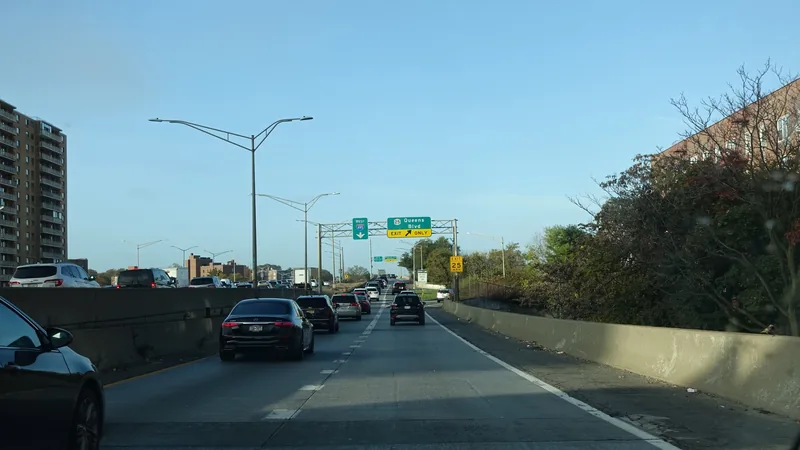
New York Personal Injury Protection
How PIP Benefits Fit Into a No-Fault Car Accident Settlement in NY
New York personal injury protection, often called PIP or no-fault coverage, can pay eligible medical bills and part of lost wages after a crash without proving fault, through the insurer that applies under the no-fault rules. A no-fault car accident settlement in NY still needs careful documentation: timely written notice, benefit forms, treatment records, wage verification, and a separate serious-injury file when seeking non-economic loss such as pain and suffering. Excess economic-loss claims have different requirements.
For NF-2 forms, denials, IMEs and arbitration, read our NY no-fault and PIP law guide.
- 30-day notice
- Written notice within 30 days of the accident. A late notice must come with written proof giving a clear and reasonable justification.
- PIP benefit file
- Medical proof of claim within 45 days of each service and work-loss proof within 90 days, with records organized before an adjuster challenges payment.
- Serious injury lawsuit
- When the injury qualifies under Insurance Law 5102(d), the liability case against the driver and owner is built alongside the PIP claim.
Which coverage may pay
The four coverages behind a New York auto accident claim
These are routes, not a fixed waterfall: not every source is available in every crash, and they do not always respond in sequence. No-fault is usually claimed first; a liability claim and your own UM or SUM coverage depend on the facts and the policies; MVAIC is a safety net only when its eligibility rules are met. Each has its own trigger and deadline, and missing one can cost benefits that cannot be recovered later. Vehicle damage is a separate property claim against the at-fault driver or under your own collision coverage.
- No-fault (PIP)
- Eligible medical bills, 80% of lost earnings to $2,000/month for 3 years, $25/day other expenses, within $50,000 basic economic loss, without proving fault. Claimed from the applicable insurer: the vehicle you occupied or, for a pedestrian, the vehicle that struck you.
- What you must do: Written notice within 30 days (late only with written justification); medical proof within 45 days of treatment; work-loss proof within 90 days.
- Ins. Law 5102(a); 11 NYCRR 65-1.1
- At-fault driver and owner
- Economic loss beyond basic no-fault, property damage and, with a serious injury, pain and suffering. The owner answers for a permissive driver.
- What you must do: Prove fault and, for non-economic loss, a serious injury. Sue within 3 years. For actions commenced on or after May 26, 2026, the fault bar and specified at-fault cap below may apply.
- Ins. Law 5104; VTL 388; CPLR 214(5)
- Your UM / SUM
- Uninsured or unidentified (hit-and-run) drivers; optional SUM when the at-fault driver has too little insurance, up to your limits.
- What you must do: Notify your own insurer promptly and follow the policy conditions; check your declarations page for SUM.
- Ins. Law 3420(f)
- MVAIC (safety net)
- Eligibility-based safety net when no other policy applies, including some hit-and-run cases.
- What you must do: Hit-and-run: police report within 24 hours and affidavit within 90 days; otherwise generally 180 days. Late filing only on proof.
- Ins. Law 5208
2026 changes apply by commencement date. They cover personal-injury actions under New York's no-fault law (Insurance Law article 51) commenced on or after May 26, 2026; what matters is when the lawsuit is commenced, not the accident date (DFS Circular Letter No. 3 (2026)). For those actions:
- the former 90/180 serious-injury category no longer applies;
- a claimant whose culpable conduct is greater than that of the defendant, or of the defendants combined, is barred from recovery; otherwise, including at an even 50/50 split, damages are reduced by the claimant's share (CPLR 1411);
- except in an action for death, non-economic damages are limited to $100,000 for an injured person who is at fault, is not barred under CPLR 1411, and was operating an uninsured vehicle they were responsible for insuring (unless the lapse in coverage was less than 30 days), was operating while impaired and was convicted of that offense, or was operating in the commission of, or immediate flight from, a felony and was convicted of it (Insurance Law 5104(d)).
Different vehicles, different rules
Experience with a wide range of motor vehicle accident scenarios
- Passenger cars
- Driver, passenger or pedestrian: no-fault from the applicable insurer, plus a claim against the at-fault driver and owner where fault and injury support it.
- Taxis, limousines and rideshare
- Commercial and app-based coverage can add a layer; the trip status at the time of the crash matters.
- Commercial trucks
- Employer, owner and carrier policies; see truck accidents.
- Motorcycles
- Motorcycle claims follow different insurance rules; see motorcycle accidents.
- Public vehicles
- City, county and transit vehicles need the right notice on a short deadline; see the bus accident guide.
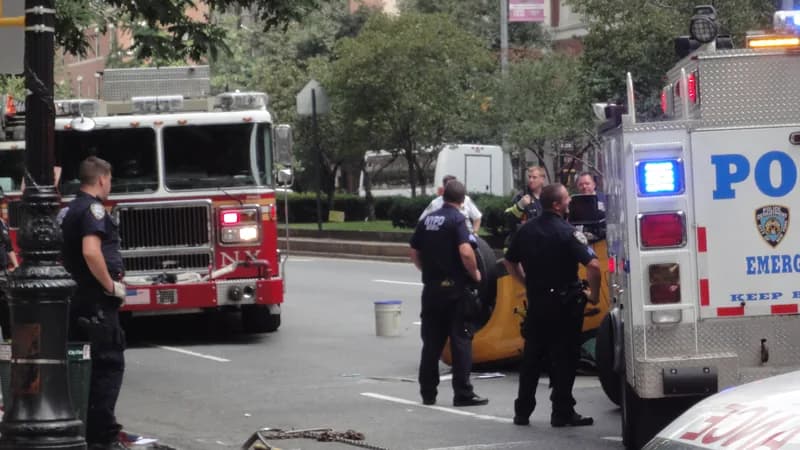
The police report starts the file. A driver involved in a crash that injures someone must stop and report it (VTL 600). Get the report number at the scene; insurers and MVAIC rely on it.
Where crashes happen
Roads and Intersections in NYC & Long Island: Evidence to Preserve
Examples of busy corridors where crash evidence may be important. Video from businesses and traffic cameras, and whether a road defect or signal problem played a part, need to be checked early.
Manhattan
FDR Drive · West Side Highway / Route 9A · Broadway and Times Square · Houston Street · 2nd and 3rd Avenues
Queens
Queens Boulevard · Grand Central Parkway · Jackie Robinson Parkway · Northern Boulevard · Hillside Avenue
Brooklyn
Brooklyn-Queens Expressway · Atlantic Avenue · Flatbush Avenue · Belt Parkway · Ocean Parkway
Bronx
Cross Bronx Expressway · Major Deegan Expressway · Bruckner Expressway · Grand Concourse · Pelham Parkway
Staten Island
Staten Island Expressway · Hylan Boulevard · Victory Boulevard · Richmond Avenue · Forest Avenue
Long Island / Nassau
Long Island Expressway · Northern State Parkway · Southern State Parkway · Hempstead Turnpike · Sunrise Highway
Fault
Proving liability in a serious injury car crash
Speeding, distraction, impairment, failure to yield, signal violations, defective parts and unsafe road design. The proof is the police report, video, phone and vehicle data, witnesses and, where needed, reconstruction. How fault is proven in a car accident lawsuit.
Injuries
Proving the full extent of your injuries
Fractures, brain injuries, neck, back and spine injuries, scarring and loss of bodily function need records that connect the crash to the injury: emergency care, imaging, specialist findings, surgery and therapy notes, and work restrictions.
Published results
Proven Auto Accident Results
These are the firm's published motor-vehicle results from across New York and New Jersey, quoted exactly as recorded. A place is named only where the record names it. They are not a prediction for any other case.
Prior results do not guarantee a similar outcome. Every case depends on its own facts.
See the full verdicts and settlements archive$250,000
$250,000 Settlement — Queens Parkway Rear-End Collision
After being rear-ended on a busy Queens parkway, our client suffered a torn shoulder and herniated discs in his lower back. His injuries disrupted his work and daily life, ultimately requiring surgery.
$1,021,235
Million Dollar Verdict — Long Island Auto Accident
Plaintiff was involved in an auto accident in Long Island sustaining an exacerbation of prior neck and back injuries resulting in spinal surgery and physical therapy. Following careful deliberation, a Suffolk County jury awarded plaintiff a verdict for pain and suffering in the amount of $1,021,235 after a minimal $50,000 pre-trial offer.
Read the case study$800,000
$800,000 Settlement — Auto Accident with Severe Injuries
A hardworking individual's life changed dramatically after an accident at an intersection, leading to severe injuries that required spine surgery. Beyond the physical pain, the accident brought significant emotional and financial hardship.
Read the case study$650,000
$650,000 Verdict — Auto Accident with Injuries
The Licatesi Law Group obtained a $650,000 verdict for a 55 year-old woman who underwent discectomy after being rear-ended at a red light. The Defendant argued the accident was of minimal impact, and that the plaintiff had pre-existing conditions due to a previous spinal surgery. The last offer prior to trial was $12,500.
Read the case study$899,940
$899,940.10 Settlement
69 year old female with underlying osteoporosis and preexisting spinal degeneration awarded as a result of a motor vehicle accident causing an acute T12 fracture of her spine.
Read the case study$800,000
$800,000 Award at Arbitration Hearing
66 year old female passenger in a motor vehicle sustained a right distal tibial pilon fracture and a right lateral malleolus fracture both requiring open reduction internal fixation as well as a left knee medial meniscus tear with a left knee subchondral fracture requiring arthroscopic assisted open reduction internal fixation.
Read the case study
Local pages
Auto Accident Lawyers Serving New York & New Jersey
- Brooklyn auto accidents
- Queens auto accidents
- Bronx auto accidents
- Manhattan auto accidents
- Staten Island auto accidents
- Nassau County auto accidents
- Long Island auto accidents
- New Jersey auto accidents
New Jersey crashes follow New Jersey law, with different PIP options and a "limitation on lawsuit" election (NJ DOBI).
Questions
Frequently Asked Questions
New York's no-fault system covers eligible medical expenses, part of lost earnings and some other necessary expenses without first proving who caused the crash. An occupant claims against the insurer of the vehicle they were in, and a pedestrian against the insurer of the vehicle that struck them; unknown or uninsured vehicles follow special household-policy and MVAIC rules. Basic coverage is an aggregate $50,000 of basic economic loss per person, not $50,000 for each type of expense (Insurance Law 5102(a)). It does not pay pain and suffering or vehicle damage. A claim for non-economic loss against the at-fault driver generally requires a serious injury under Insurance Law 5102(d). We open the no-fault claim and evaluate the liability claim at the same time.
Within the $50,000 basic economic-loss limit: necessary medical and rehabilitation expenses; 80% of lost earnings, up to $2,000 a month for up to three years; and up to $25 a day of other reasonable and necessary expenses for up to one year (Insurance Law 5102(a)). Some policies add optional coverage. Written notice is due within 30 days of the accident unless written proof gives a clear and reasonable justification for the delay, medical proof of claim within 45 days of treatment, and lost-earnings proof within 90 days (11 NYCRR 65-1.1). No-fault does not pay pain and suffering or car repairs.
You can sue the at-fault driver and owner for economic loss beyond basic no-fault benefits and for property damage. To recover non-economic loss such as pain and suffering, you generally need a serious injury under Insurance Law 5102(d). For actions commenced on or after May 26, 2026, the former 90/180 category no longer exists; the commencement date, not the accident date, controls. Meeting the threshold does not guarantee compensation; liability, evidence and available coverage matter. The deadline for most injury lawsuits is three years from the crash (CPLR 214(5)).
For actions commenced on or after May 26, 2026, the categories are death; dismemberment; significant disfigurement; a fracture; loss of a fetus; permanent loss of use of a body organ, member, function or system; permanent consequential limitation of use of a body organ or member; and significant limitation of use of a body function or system (Insurance Law 5102(d)). The former 90/180 category is historical context for actions commenced before that date. Proof depends on the category: imaging, specialist findings, measured limitations and medical opinion tying the injury to the crash.
There is no reliable figure based on an injury label, and we do not quote ranges. Depending on the claim, damages can include medical expenses and lost earnings beyond basic no-fault benefits, lost earning capacity, property damage and, with a serious injury, pain and suffering. For actions commenced on or after May 26, 2026, in personal-injury actions under the no-fault law, a claimant whose fault is greater than the defendants' is barred and otherwise damages are reduced by the claimant's share (CPLR 1411), and specified at-fault driving and conviction cases are subject to a $100,000 non-economic cap under Insurance Law 5104(d), with statutory exceptions including death. Available insurance often limits what can be collected. Our published results are listed on this page as records, not predictions.
Generally three years from the accident for a personal-injury lawsuit (CPLR 214(5)) and two years from death for wrongful death (EPTL 5-4.1). No-fault notice is due within 30 days unless the delay is justified in writing (11 NYCRR 65-1.1). Where a notice of claim is required against a public body, it is often due within 90 days, with a shorter lawsuit deadline; transit authorities have their own rules. Hit-and-run claims through MVAIC need a police report within 24 hours and an affidavit within 90 days (Insurance Law 5208). Have a lawyer calculate your dates.
You can file a no-fault claim yourself. A lawyer helps identify every policy that could pay, protects the deadlines, evaluates the serious-injury and fault questions, gathers medical and wage proof, deals with the insurers and files suit when needed. No lawyer can promise a particular result. We work on a contingency fee, so there is no fee unless there is a recovery, and the consultation is free. Call (516) 227-2662.
Call 911 so police respond and a report is made, and get medical care the same day if you can. Photograph the vehicles, plates, damage, the scene and your injuries, and get witness names. Exchange license and insurance information without arguing about fault. Note nearby cameras, because that video is often overwritten. Give written notice to the no-fault insurer within 30 days, keep every bill and wage record, and do not give a recorded statement to the other driver's insurer before talking to a lawyer.
It varies with the injuries, the treatment, whether fault is disputed and how many insurers are involved. A liability claim usually cannot be valued until the medical picture is clear; a case that needs a lawsuit then goes through discovery and court conferences. We do not recommend settling before future care and lost earnings can be estimated, and we do not promise a timetable.
No-fault benefits remain available to eligible people: for an occupant, through the insurer of the vehicle they were in; for an unknown or uninsured striking vehicle, generally through a household relative's policy or, if none, MVAIC. New York policies include uninsured-motorist coverage, which also applies to hit-and-run vehicles that cannot be identified and pays non-economic loss only for a serious injury (Insurance Law 3420(f)(1)). Optional SUM coverage can apply when the at-fault driver is underinsured, up to your policy limits (Insurance Law 3420(f)(2)). If no policy applies, MVAIC may be the source, subject to its eligibility rules (Insurance Law 5208). The vehicle owner is liable for a permissive driver (VTL 388), and an employer may be liable for an employee driving for work.
Get every coverage working for you
We check your no-fault claim, the at-fault driver's policy, your own UM and SUM coverage and MVAIC, and protect each deadline. Free consultation; no fee unless there is a recovery.
What to bring
- Your insurance card and declarations page
- Police report number
- No-fault claim number and any denial letters
- Medical records and bills
- Pay stubs or employer letter for lost time
Related
Other car and auto accident guides
- Car accident lawsuits: fault and serious injury
- Brooklyn auto accident lawyer
- No-fault and auto accident help near you
- Find our nearest office after a car crash
- Bus and transit accident notice rules
- NY no-fault and PIP benefits guide
- The serious injury threshold explained
- Nassau County car accident lawyer
- New Jersey auto accident claims
- All verdicts and settlements
Photo credits: Long Island Expressway, Queens by Tdorante10, CC BY-SA 4.0, cropped and resized; NYPD officers at a car accident by Pablo029, CC BY-SA 4.0, cropped and resized.