

Unsafe property injuries in Brooklyn and NYC
Brooklyn Premises Liability Lawyer
A premises claim turns on two questions: who controlled the place where you were hurt, and whether they knew, or should have known, about the danger in time to fix it.
We represent people hurt on stoops, stairs, sidewalks and in buildings and stores across Brooklyn and New York City.
The rule in New York
One standard of care, not visitor categories
Some guides still sort injured people into invitees, licensees and trespassers. New York stopped doing that in Basso v Miller (1976). Owners and occupiers must keep property in a reasonably safe condition, judged by all the circumstances, including the foreseeable risk to people expected to be there (applied, for example, in Petruzzi v New York Mercantile Exchange).
Liability usually requires proof that the defendant created the condition or had notice of it. Notice can be actual (complaints, reports, repair requests) or constructive.
“To constitute constructive notice, a defect must be visible and apparent and it must exist for a sufficient length of time prior to the accident to permit defendant's employees to discover and remedy it.”
Who controlled it?
The responsible party depends on the kind of property
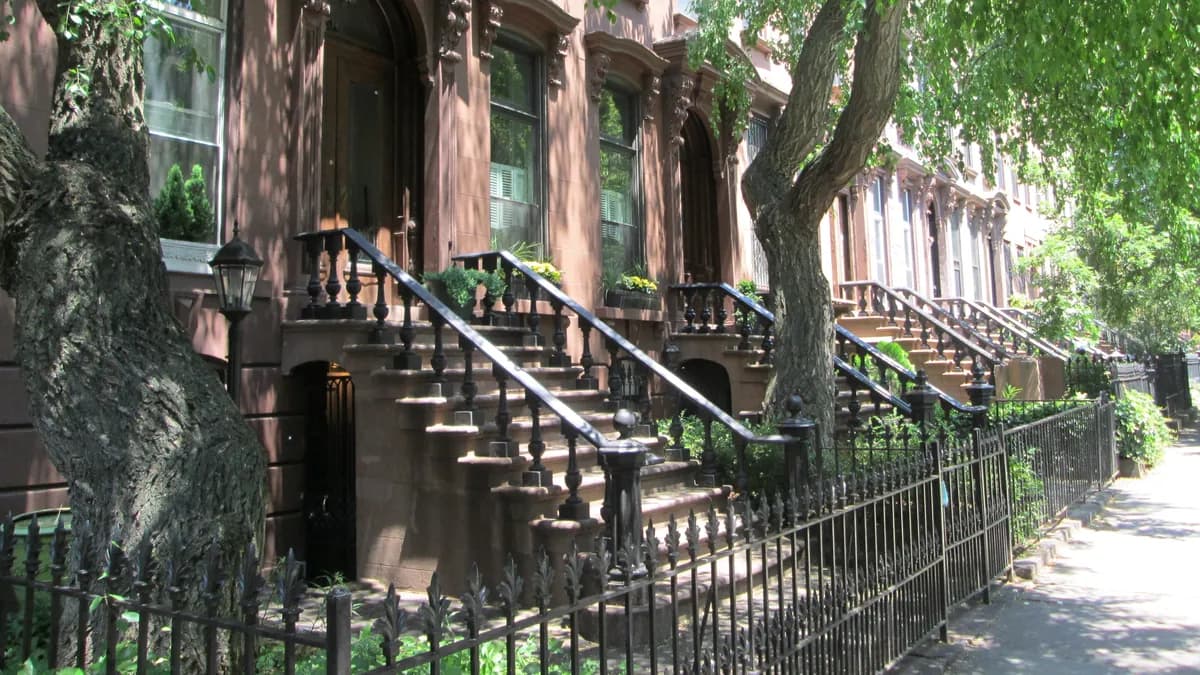
Brooklyn injuries often happen where ownership and control are split: a stoop in front of a brownstone, a hallway managed by an agent, a store in a leased building. The deadline can change too.
- Stoop, steps and sidewalk out front
- Often the building owner, but sidewalk liability has exceptions, including qualifying owner-occupied one-, two- or three-family residential property.
- Timing: Generally 3 years (CPLR 214)
- Apartment hallways, stairs, lobbies and elevators
- The owner or managing agent; sometimes a contractor responsible for maintenance or repairs.
- Timing: Generally 3 years
- Store, restaurant or bar
- The business, the building owner, or both — depending on the lease and who created or knew about the hazard.
- Timing: Generally 3 years
- NYCHA development
- The New York City Housing Authority, a public authority.
- Timing: Notice of claim within 90 days; suit within 1 year and 90 days (Public Housing Law 157)
- City parks, buildings and other City property
- The City of New York, through a notice of claim filed with the Comptroller.
- Timing: Notice of claim within 90 days (GML 50-e); see our guide to suing the City
Sidewalk responsibility: NYC Department of Transportation; the owner-occupied residential exception is explained in Zak v City of New York (2021). Most private-owner injury claims: 3 years under CPLR 214; wrongful death generally 2 years.
Hazards we see
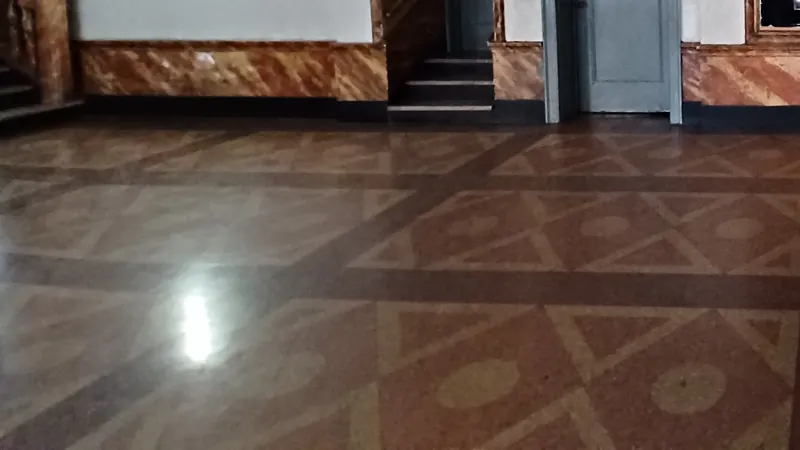
From the front steps to the elevator
- Wet floors, spills, ice and debris
- Broken or uneven stairs, missing handrails and loose treads
- Defective sidewalks, stoops and entryways
- Elevator and escalator malfunctions
- Poor lighting in halls, stairwells and parking areas
- Inadequate security that allows a foreseeable assault
- Unfenced pools and unsafe pool decks
- Fire-safety failures, blocked exits and gas or electrical hazards
Specific guides: slip and fall, trip and fall, elevator accidents and escalator accidents.
Proof
What to preserve, and how fast
Owners can repair a hazard within days. The first photographs are often the only record of what the condition looked like.
- 1Photos of the exact hazard, from several angles, as soon as possible
- 2Incident reports, witness names and the staff or super you told
- 3Surveillance video (ask quickly; systems overwrite)
- 4Complaints, 311 reports, repair tickets and inspection or cleaning logs
- 5The lease or management contract showing who maintained the area
- 6Medical records, bills and proof of missed work
Premises results
Results for people hurt on unsafe property
These are the firm's published premises liability results. The descriptions do not identify the county or borough where each case arose, so they are not presented as Brooklyn results.
Prior results do not guarantee a similar outcome. Every case depends on its own facts.
See the full verdicts and settlements archiveAppellate result
Michael Licatesi Wins Again in the Appellate Division
The plaintiff was injured after falling from a defective step at a commercial property. Our Expert Witness provided evidence that the step's slope did not meet regulatory standards, and was a construction defect that the property owner failed to maintain and secure.
Read the case study$175,000
$175,000 Settlement
49 year old fell at a bar with disputed liability resulting in a dismissed case which Michael Licatesi, Esq overturned at the appellate level resulting in a monetary recovery
$950,000
$950,000 RECOVERY
Co-defendant neighbor aware that spill would flow onto her and is outside warning pedestrians negligently fails to apply salt or otherwise address the dangerous condition
$4,000,000
$4,000,000 Jury Verdict — Overturned Dismissal on Appeal
$4,000,000 jury verdict secured after overturning a dismissed case on appeal and obtaining a 100% liability finding for the plaintiff who suffered spine surgery as a result of a fall.
$225,000
$225,000 Apartment Building Slip-and-Fall Settlement
The Licatesi Law Group secured a $225,000 settlement after our client slipped and fell in their apartment building.
$250,000
$250,000 Settlement — Fall at a Burger Restaurant
Our client was injured after falling due to a dangerous defect at a burger restaurant. We fought to hold the responsible parties accountable and secured a $250,000 settlement for our client.
Related
More on unsafe-property claims
- Brooklyn slip and fall lawyer for falls in Kings County.
- Brooklyn personal injury claims of every kind.
- Queens slip and fall claims.
- Queens premises liability guide.
- How to sue the City or another public entity in New York.
- Our Brooklyn office.
Questions
Premises liability questions
Not the way it used to. New York no longer applies separate duties for invitees, licensees and trespassers. Since Basso v Miller (1976), an owner or occupier must keep the property reasonably safe in view of all the circumstances, including the foreseeable risk to people expected to be there. Why you were there can still affect what was foreseeable.
Generally that a dangerous condition existed, that the defendant owned, occupied or controlled the area, that it created the condition or had actual or constructive notice of it and did not fix it or warn in a reasonable time, and that the condition caused your injury.
It means the owner should have known. In Gordon v American Museum of Natural History (1986), New York's highest court said a defect "must be visible and apparent and it must exist for a sufficient length of time prior to the accident to permit defendant's employees to discover and remedy it." Inspection logs, complaints and video often decide this question.
Often the owner of the property next to the sidewalk. New York City Department of Transportation guidance states that property owners are responsible for maintaining adjoining sidewalks and are potentially liable for injuries caused by failing to keep them free of defects. Section 7-210 exempts qualifying one-, two- or three-family homes that are owner occupied in whole or part and used exclusively for residential purposes from its liability shift. City-owned property, streets and other public areas follow different notice rules.
The New York City Housing Authority is a public authority. A notice of claim under General Municipal Law 50-e generally must be served within 90 days, and the lawsuit generally must be commenced within one year and 90 days (Public Housing Law 157). Do not wait for the ordinary three-year deadline.
Most claims against private owners, landlords and businesses must be started within three years (CPLR 214). Ordinary negligence claims against the City or NYCHA generally require notice within 90 days and suit within one year and 90 days. Other public entities have different rules; identify the entity before calculating a deadline. A wrongful death action must generally be commenced within two years of death.
Photograph the exact condition, lighting and surroundings, keep your shoes and clothing, get names of witnesses and staff, ask for an incident report, and write down any cameras you saw. Keep every medical record and bill. Repair records, complaints and inspection logs come later, from the owner or manager.
We represent injured people throughout Brooklyn and the other four boroughs, on Long Island and in New Jersey, from offices in Brooklyn, Corona (Queens), Uniondale and New Jersey.
Talk to a Brooklyn premises liability lawyer
Tell us the address, what the condition was, and who you think owns or manages the property. We will explain who may be responsible, which notice rules apply and what to request before it is repaired. The consultation is free.
What to bring
- Address and exact spot where you were hurt
- Photos of the condition
- Names of witnesses, staff or the super
- Medical records so far
Photo credits: Prospect Place brownstones by Beyond My Ken, CC BY-SA 4.0, cropped and resized; Brooklyn lobby by GK tramrunner RU, CC BY-SA 4.0, cropped and resized.