

Nassau County · Uniondale main office
Nassau County Slip and Fall Lawyer
A Nassau fall claim turns on who controlled the spot. On a public sidewalk or road, a town or village often needs prior written notice of the defect before the accident, a separate step from the 90-day notice of claim after it.
Talk to us at our Uniondale main office, or by phone or video. Over 40 years of injury practice.
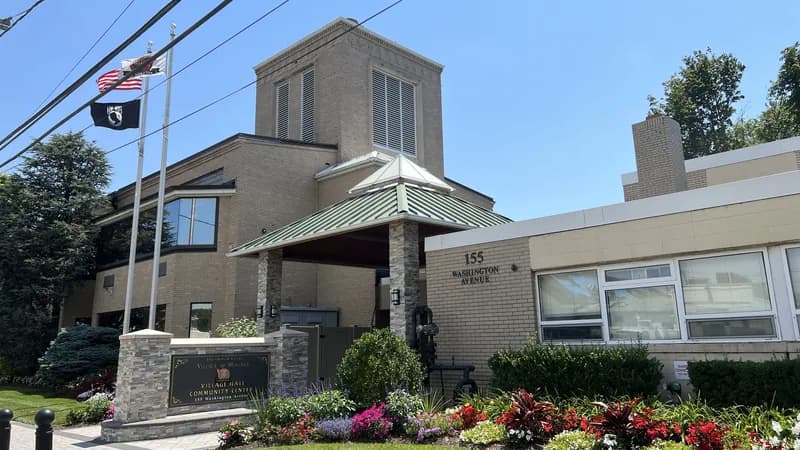
Where did you fall?
Who may answer for the spot, and which notice comes first
Nassau is outside New York City, so the City’s sidewalk law does not apply. Who answers depends on the type of place and which government, if any, maintains it.
- Inside a store, restaurant, office or other business
- The owner or tenant that controlled the spot, or its cleaning contractor.
- Notices and first deadline: No governmental notice of claim, though insurance or other reporting deadlines may still apply. A lawsuit generally must be started within three years (CPLR 214). You must show it created the hazard or knew, or should have known, about it in time (Gordon).
- An apartment, condo or co-op common area
- The landlord, board or managing agent responsible for halls, stairs and walkways.
- Notices and first deadline: No governmental notice of claim, though insurance or other reporting deadlines may still apply. A lawsuit generally must be started within three years (CPLR 214).
- The public sidewalk in front of a home or business
- Usually the town, village or city, not the owner next to it. The owner can be responsible if it caused the defect, repaired it badly, used the sidewalk specially, or a local law makes owners liable, as Long Beach’s does (Hausser v Giunta).
- Notices and first deadline: Private owner: generally three years. Municipality: see the next two rows.
- A town road, sidewalk, park, pool or parking field
- The Town of Hempstead, North Hempstead or Oyster Bay, if it built or maintains that spot.
- Notices and first deadline: Ordinary personal-injury claim: a notice of claim served on that public body within 90 days (GML 50-e), a possible sworn examination (GML 50-h), and a lawsuit generally within one year and 90 days (GML 50-i). For a defective road or sidewalk, or snow and ice, a town generally is not liable unless written notice of that particular place reached the town clerk or highway superintendent before the accident and it was not fixed in a reasonable time (Town Law 65-a).
- Village, city or county property
- A village, the City of Glen Cove or Long Beach, or Nassau County.
- Notices and first deadline: Ordinary personal-injury claim: a notice of claim served on that public body within 90 days (GML 50-e), a possible sworn examination (GML 50-h), and a lawsuit generally within one year and 90 days (GML 50-i). Villages, cities and the county can have their own written-notice requirements, which the notice-of-claim statute keeps in force (GML 50-e(4)). We check the exact law for the owner of that spot.
- A Long Island Rail Road station
- The railroad’s public authority, or a contractor that maintains the area.
- Notices and first deadline: Public authorities have their own notice statutes. Identify the exact entity first and act early; do not assume the three-year rule.
- State property
- The State of New York.
- Notices and first deadline: Ordinary personal-injury claim against the State itself for negligence or an unintentional tort of a State employee: in the Court of Claims, the claim must be filed with the court and served on the Attorney General within 90 days, or a valid notice of intention served on the Attorney General within those 90 days. Later filing and service deadlines need a lawyer’s review, and death claims follow separate rules (Court of Claims Act § 10).
Rows describe ordinary personal-injury claims. A death claim has separate notice and time rules, and the exact owner, local law and exceptions must be checked in every case. Naming a place or government is not a statement that anyone was at fault.
Public sidewalks and roads
Two notices, two different jobs
1. Prior written notice: before the fall
A written complaint about that exact defect, given to the town clerk or highway superintendent before the accident (Town Law 65-a). Towns such as North Hempstead apply the same rule to their parks, pools and parking fields (Code ch. 59A).
2. Notice of claim: after the fall
Served on the town, village, city or county within 90 days. The municipality can then demand a sworn examination, and suit generally follows within one year and 90 days (GML 50-i).
3. The narrow exceptions
Without prior written notice, a municipality is generally liable only if its own work immediately created the hazard, or it made special use of the spot (Oboler v City of New York). So we ask the clerk early whether any complaint was on file.
Snow and ice in Nassau
An owner is generally not liable for snow or ice that falls during a storm, or for a reasonable time after it ends. If someone clears and makes the surface more dangerous, that can create liability (Henenlotter).
Town codes also set clearing duties; North Hempstead requires sidewalk snow removal within four hours after it stops, not counting 9 p.m. to 7 a.m. (§ 48-10). A clearing duty is not by itself liability for an injury.
Deadlines
The first deadline depends on who you claim against
If you were partly at fault. In a fall case your share of fault generally reduces the damages in proportion; it does not bar the claim (CPLR 1411). The 2026 change that can bar recovery applies to no-fault motor-vehicle injury actions, not to falls on property.
An owner may argue the hazard was open and obvious. That removes the duty to warn about it, but not the separate duty to keep the property reasonably safe, and it can bear on your share of fault (Westbrook v WR Activities-Cabrera Markets). A condition that is both open and obvious and not inherently dangerous can defeat a claim.
- Private owner, landlord or business
- No governmental notice of claim, though insurance or other reporting deadlines may still apply. A lawsuit generally must be started within three years (CPLR 214).
- Nassau County, a town, village or city
- Ordinary personal-injury claim: a notice of claim served on that public body within 90 days (GML 50-e), a possible sworn examination (GML 50-h), and a lawsuit generally within one year and 90 days (GML 50-i). Late notice needs court permission and cannot go beyond the time to sue.
- The State of New York
- Ordinary personal-injury claim against the State itself for negligence or an unintentional tort of a State employee: in the Court of Claims, the claim must be filed with the court and served on the Attorney General within 90 days, or a valid notice of intention served on the Attorney General within those 90 days. Later filing and service deadlines need a lawyer’s review, and death claims follow separate rules (Court of Claims Act § 10).
- The injured person is a child
- CPLR 208 can extend the time to sue, but notice deadlines still need attention.
Premises Liability Results
Results for people hurt on unsafe property
These are the firm's published premises liability results. Not all are slips or trips, and the descriptions do not identify the county or borough, so they are not presented as Nassau County results. Past results do not predict the outcome of another case.
Prior results do not guarantee a similar outcome. Every case depends on its own facts.
See the full verdicts and settlements archiveAppellate result
Michael Licatesi Wins Again in the Appellate Division
The plaintiff was injured after falling from a defective step at a commercial property. Our Expert Witness provided evidence that the step's slope did not meet regulatory standards, and was a construction defect that the property owner failed to maintain and secure.
Read the case study$175,000
$175,000 Settlement
49 year old fell at a bar with disputed liability resulting in a dismissed case which Michael Licatesi, Esq overturned at the appellate level resulting in a monetary recovery
$950,000
$950,000 RECOVERY
Co-defendant neighbor aware that spill would flow onto her and is outside warning pedestrians negligently fails to apply salt or otherwise address the dangerous condition
$4,000,000
$4,000,000 Jury Verdict — Overturned Dismissal on Appeal
$4,000,000 jury verdict secured after overturning a dismissed case on appeal and obtaining a 100% liability finding for the plaintiff who suffered spine surgery as a result of a fall.
$225,000
$225,000 Apartment Building Slip-and-Fall Settlement
The Licatesi Law Group secured a $225,000 settlement after our client slipped and fell in their apartment building.
$250,000
$250,000 Settlement — Fall at a Burger Restaurant
Our client was injured after falling due to a dangerous defect at a burger restaurant. We fought to hold the responsible parties accountable and secured a $250,000 settlement for our client.
Meet us
Nassau slip and fall help from Uniondale
Our main office is at 423 RXR Plaza, East Tower, Uniondale, NY 11556, (516) 227-2662. Details: serving Nassau County and Uniondale office.
Falls anywhere on Long Island: Long Island slip and fall. New York snow and ice law: New York slip and fall. Other Nassau injuries: Nassau County personal injury.
Nassau communities we serve
Hempstead · Garden City · Mineola · Uniondale · Freeport · Baldwin · Long Beach · Rockville Centre · Oceanside · Valley Stream · Great Neck · Port Washington · Glen Cove · Hicksville · Levittown · Massapequa · Westbury · East Meadow, and the rest of Nassau County.
Questions
Nassau County slip and fall FAQs
You generally need to show a dangerous condition; that the defendant owned, occupied or controlled the spot; that it created the condition or knew about it, or that the condition was visible and there long enough to be found and fixed; and that it caused your injury. On a public sidewalk or road in Nassau, the claim may instead be against a town, village, city or the county, which brings its own notice rules.
Wet or freshly mopped floors, spills, tracked-in rain and snow, ice in parking lots and on walkways, raised or broken sidewalk flags, potholes, broken or uneven steps, missing handrails, poor lighting, loose mats and objects left in aisles. The hazard matters because it shows who was responsible and whether they knew about it.
Against a private owner, landlord or business, a lawsuit generally must be started within three years. For an ordinary personal-injury claim against Nassau County, a town, a village or a city, a notice of claim is usually due within 90 days and a lawsuit generally within one year and 90 days. A claim against the State goes to the Court of Claims, public authorities have their own rules, and a death claim follows separate timing.
Wrist, hip, ankle and other fractures; head injuries including concussions; back and neck injuries; torn ligaments and shoulder injuries; and cuts and dental injuries. Medical records that connect the injury to the fall are central to any claim.
It depends on the injury, treatment, lost earnings, how the injury affects daily life, the proof that the defendant was responsible, any share of fault, and available insurance. We do not quote values before reviewing the records. The firm’s published premises results are listed on this page exactly as recorded.
Get medical care first (911 in an emergency). If you can do so safely, photograph the hazard and the area, note the exact spot and time, ask for an incident report and witness names, and keep your shoes and clothing. Do not sign releases or give recorded statements to an insurer before getting advice. If a town, village, city or the county may be responsible, the 90-day notice of claim clock is already running.
Possibly, but two different notices can matter. A notice of claim must usually be served on the public body within 90 days, and it can demand a sworn examination before you sue. Separately, a town generally is not liable for a sidewalk or road defect, or snow and ice, unless written notice of that particular place reached the town clerk or highway superintendent before the accident; villages, cities and the county can have their own written-notice rules. Exceptions are narrow, for example where the municipality created the hazard by its own work.
In a fall case your share of fault generally reduces the damages in proportion; it does not bar the claim. The 2026 change that can bar recovery applies to no-fault motor-vehicle injury actions, not to falls on property. An owner may argue the hazard was open and obvious. A genuinely open and obvious hazard may remove the duty to warn, but it does not by itself remove the duty to keep the property reasonably safe; a condition that is open and obvious and not inherently dangerous may result in no liability.
A store’s name or size does not decide a fall claim, so this page does not rank or name retailers. In a mall or shopping center the questions are who controlled the exact spot, such as the store tenant, the center’s owner or a maintenance contractor, and whether they created the hazard or knew about it in time to clean it up or warn you.
Go to the nearest emergency department or call 911 for a serious injury, and follow up with your own doctor. Where to be treated is a medical decision, not a legal one. Keep every record and bill, because the records connect the injury to the fall.
Supreme Court, Nassau County sits in Mineola. A suit against Nassau County or a Nassau town, village or city is generally venued in Nassau County; a case against a private owner can generally be venued where a party lived when it started or where a substantial part of the events happened, subject to transfer and other venue rules. After filing come document exchange, depositions and any medical examination; many cases resolve before trial.
Hurt in a Nassau County fall? Get your free consultation
Tell us the exact spot and who you think maintains it. We will check whether a notice of claim is due and whether any written complaint was on file. No fee unless there is a recovery.
What to bring
- Photos of the hazard and the area
- The exact location and town or village
- Any incident report and witness names
- Medical records and bills
Photo credits: Mineola Village Hall by AITFFan1, CC BY-SA 4.0, cropped and resized; Niagara Street, North Valley Stream by AITFFan1, CC BY-SA 4.0, cropped and resized.