

MTA, NICE, school and private buses
MTA Notice of Claim and New York Bus Accident Lawyers
Who operated the bus decides where the claim goes and how fast you must act. Many public bus claims start with a notice of claim due within 90 days; some operators follow different rules.
Identify the bus and the operator early, and have the deadline confirmed before relying on the usual three years.
Start here
Who operates the bus decides where the claim goes
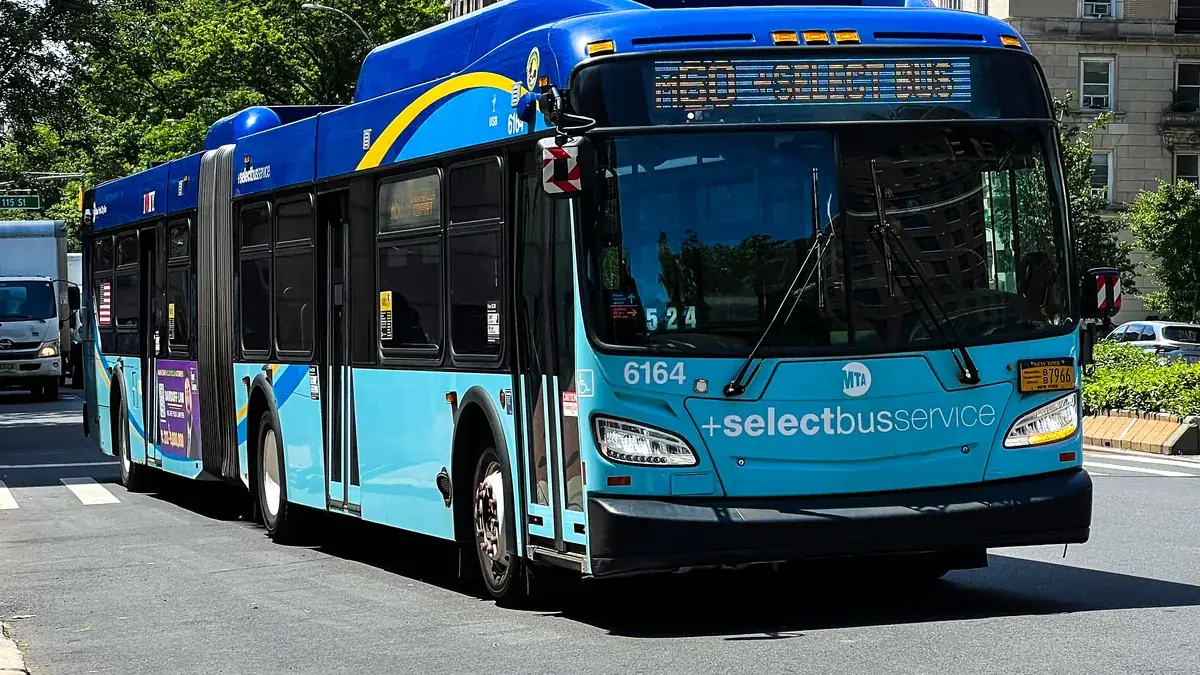
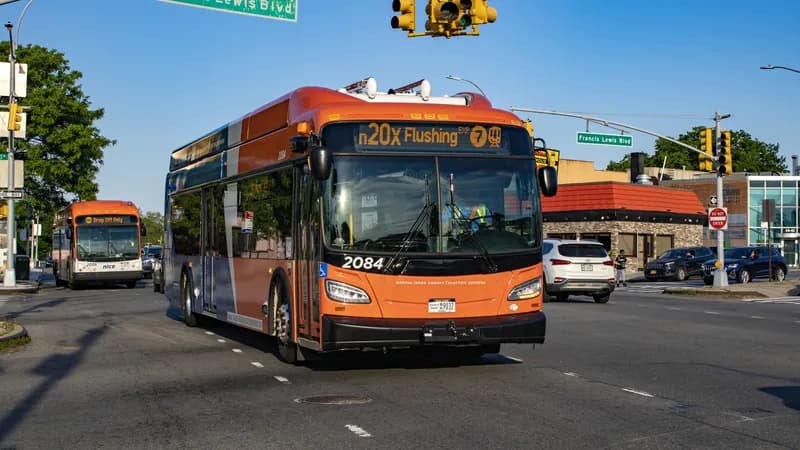
A bus can carry one agency's name while a different entity runs it. The bus number, route and the logo on the side are the first clues; the operating contracts settle it.
- MTA New York City Transit and MaBSTOA buses
- Public authority
- Notice of claim under General Municipal Law 50-e; lawsuit within one year and 90 days.
- MTA Bus Company
- MTA subsidiary
- Public Authorities Law 1276(6): the notice-of-claim requirement does not apply to subsidiaries; the one-year-and-90-day limit and claim-presentation rules still do.
- NICE (Nassau Inter-County Express)
- Nassau County service run by a private contractor (Transdev)
- Whether the claim is against the County, the contractor or both affects notice and deadlines.
- City-owned vehicles and some school-bus claims
- City of New York
- Notice of claim with the NYC Comptroller within 90 days; lawsuit within one year and 90 days.
- Private school, tour, charter and commuter buses
- Private company
- Generally three years for personal injury; identify the operator, owner and driver's employer.
Sources: General Municipal Law 50-e, Public Authorities Law 1276, NYC Comptroller claim FAQs. The table is a starting point, not a substitute for confirming the operator in your case.
MTA notice of claim checklist
The public-bus claim timeline
File a claim correctly and on time; a late or defective notice is one of the most common reasons these cases fail.
Within 90 days
Where required, serve a notice of claim within 90 days from the date the claim arises. It describes the time, place, manner and injuries. A court may allow late notice in some cases, but that is discretionary.
After the notice
The authority may investigate and require sworn questioning (often called a 50-h examination). For the MTA, suit cannot be filed until at least 30 days after the claim is presented.
Within 1 year and 90 days
The lawsuit against the MTA or the City generally must be commenced within one year and 90 days of the accident.
Settlement
A claim can settle during the claims process or during the lawsuit. Either way, the evidence of fault and injury drives it.
Settlements
What an MTA bus accident settlement depends on
- Proof of fault: video, the bus's data, witnesses and the police report.
- Injury evidence: treatment records, imaging and how the injury affects work and daily life.
- Motor-vehicle rules: non-economic loss generally requires a serious injury under Insurance Law 5102(d). For actions commenced on or after May 26, 2026, amended serious-injury, damages and comparative-fault rules apply; see our no-fault and PIP guide and DFS Circular Letter No. 3 (2026).
- Timely, correct paperwork: a valid notice of claim and a lawsuit filed within the limit.
We do not quote settlement ranges. Published amounts from other cases say little about yours.
Who gets hurt
Passengers, pedestrians, cyclists and drivers
Bus operators owe passengers reasonable care under the circumstances. The Court of Appeals adopted that standard in Bethel v New York City Transit Authority (1998), replacing the older "utmost care" rule for common carriers.
Passengers thrown by a sudden stop must show a jerk or lurch that was "unusual or violent" (Urquhart v NYCTA, 1995). Door, boarding and step injuries turn on what the driver saw and did.
Pedestrians and cyclists struck by buses, and drivers whose cars were hit, may have liability evidence on bus or street video. See also pedestrian accidents and auto accidents.
Evidence
Evidence to ask for early
Bus video and data are kept by the operator and can be overwritten. A lawyer can send a written preservation request promptly.
- Bus number, route and direction, and the exact time
- Interior and exterior bus camera footage
- Nearby business and traffic camera footage
- Police report and any MTA or 311 complaint number
- Names of witnesses and other passengers
- Photos of the scene, the bus and your injuries
Published firm results
Bus and other motor-vehicle results
The first result involved a municipal bus. The others are auto and pedestrian results from the firm's published archive; their descriptions do not identify them as bus cases.
Prior results do not guarantee a similar outcome. Every case depends on its own facts.
See the full verdicts and settlements archive$250,000
$250,000 Settlement — Municipal Bus Rear-End Collision
A municipal bus rear-ended our client, resulting in injuries that required an ablation procedure.
$250,000
$250,000 Settlement — Queens Parkway Rear-End Collision
After being rear-ended on a busy Queens parkway, our client suffered a torn shoulder and herniated discs in his lower back. His injuries disrupted his work and daily life, ultimately requiring surgery.
$1,021,235
Million Dollar Verdict — Long Island Auto Accident
Plaintiff was involved in an auto accident in Long Island sustaining an exacerbation of prior neck and back injuries resulting in spinal surgery and physical therapy. Following careful deliberation, a Suffolk County jury awarded plaintiff a verdict for pain and suffering in the amount of $1,021,235 after a minimal $50,000 pre-trial offer.
Read the case study$800,000
$800,000 Settlement — Auto Accident with Severe Injuries
A hardworking individual's life changed dramatically after an accident at an intersection, leading to severe injuries that required spine surgery. Beyond the physical pain, the accident brought significant emotional and financial hardship.
Read the case study$650,000
$650,000 Verdict — Auto Accident with Injuries
The Licatesi Law Group obtained a $650,000 verdict for a 55 year-old woman who underwent discectomy after being rear-ended at a red light. The Defendant argued the accident was of minimal impact, and that the plaintiff had pre-existing conditions due to a previous spinal surgery. The last offer prior to trial was $12,500.
Read the case study
Local pages
Bus accident lawyers by area
Our local pages cover the routes, agencies and courts for each area.
Not always, and it depends on who operated the bus. For many public operators a notice of claim must be served within 90 days from the date the claim arises (General Municipal Law 50-e). Public Authorities Law 1276 applies the 50-e notice requirement to actions against the MTA but says that notice requirement does not apply to an MTA subsidiary corporation, while its other provisions, including the one-year-and-90-day limit, still do. Private bus companies follow ordinary rules. Because identifying the operator can take time, treat 90 days as the working deadline until a lawyer confirms otherwise.
There is no reliable figure based on the type of accident. Value depends on proof of fault, the injuries and their medical documentation, lost earnings, whether a motor-vehicle injury meets New York's serious-injury rules for non-economic loss, and the applicable law. For motor-vehicle actions commenced on or after May 26, 2026, amended serious-injury, non-economic damages and comparative-fault rules apply. No lawyer can promise a settlement amount.
Generally no. The Comptroller handles claims against the City of New York. MTA buses are run by public authorities and subsidiaries that are separate from the City, so the claim is served on the operating authority. City-owned vehicles and some school-bus claims involving the City go through the Comptroller.
Possibly. In Urquhart v New York City Transit Authority, the Court of Appeals said a passenger injured when a bus stops must show a jerk or lurch that was "unusual or violent," proven by more than calling it that. Witness accounts, bus video and the bus's own data can matter.
The no-fault and serious-injury rules for motor-vehicle accidents still apply, but if the bus was publicly operated, the notice and lawsuit deadlines can be much shorter than for a crash with a private car. Report the crash, photograph the bus number and route, and have the operator identified quickly.
The public entity may investigate and can require you to answer questions under oath, often called a 50-h examination. For the MTA, a lawsuit cannot be filed until at least 30 days after the claim is presented, and it generally must be commenced within one year and 90 days. Settlement can happen before or after a lawsuit is filed.
Many school buses are operated by private contractors, while school districts and the City may also be involved; each has different notice rules. Tour, charter and commuter coaches are usually private companies, where the general three-year personal injury period applies. The bus company, the driver's employer and the vehicle owner can all be different entities.
Have your bus accident deadline checked
Tell us the date, the route and what happened. We will help identify the operator and the notice and filing deadlines that apply to your personal injury claim.
What to bring
- Date, time, route and bus number
- Photos and witness names
- Police report or complaint number
- Medical records and no-fault paperwork