

Serving Brooklyn, NY
Brooklyn Bus Accident Lawyer
Over 40 years of experience representing Brooklyn residents injured in MTA bus, school bus, and private bus accidents. Free consultation.
Who operated the bus decides where the claim goes and how fast: most B routes need a notice of claim within 90 days.
Brooklyn
Experienced Bus Accident Representation in Brooklyn
Brooklyn, NYC's most populous borough with over 2.7 million residents, has extensive MTA bus service along major corridors like Atlantic Avenue, Flatbush Avenue, and Nostrand Avenue. The B41, B44, B46, and B82 routes carry heavy traffic through busy commercial strips and residential streets.
School buses, charter buses and private coaches share the same streets. When you are injured in a Brooklyn bus accident, the first job is to identify the operator, because New York City Transit, MTA Bus Company, the City and private companies each have different claim rules.
At Licatesi Law Group, we have over 40 years of experience representing injured New Yorkers, with an office in Brooklyn. A lawsuit against the Transit Authority over a Brooklyn accident is tried in Kings County Supreme Court, 360 Adams Street (CPLR 505(b)).
Brooklyn bus accident lawyer checklist
How We Build a Brooklyn Bus Accident Claim
Brooklyn bus crashes often involve New York City transit rules, insurance companies, private bus companies, school contractors, and short public-entity deadlines. We organize the file before the carrier frames the incident as unavoidable city traffic.
- File a claim correctly: NYC Transit and other public-entity cases can require a notice of claim before a lawsuit, served on the right entity.
- Preserve bus crash records: route data, onboard video, driver history, maintenance records, and incident reports matter.
- Track insurance coverage: different insurance companies may cover the bus operator, contractor, and other vehicles.
- Document the injury: medical care, lost work, pain, and long-term limits must match the crash timeline.
Notice of claim
Important: the 90-day notice depends on who ran the bus
For personal-injury claims involving most Brooklyn MTA buses — the B41, B44, B46 and other New York City Transit routes — a notice of claim must be served on the correct transit defendant within 90 days. The MTA's claim form directs NYC Transit claims to its Department of Law, Claims, at 130 Livingston Street in Brooklyn (MTA claim forms). It does not go to the City Comptroller, and it is not filed with the court.
Ordinary personal-injury claims only — wrongful death and exceptions below
- NYC Transit Authority or MaBSTOA
- B12, B41, B44, B46, B52, B63, B82 and other B local routes; X27, X28, X37, X38 express
- A notice of claim under GML 50-e within 90 days, served on the correct transit defendant: the Transit Authority and its subsidiary MaBSTOA are separate corporations, so identify which one ran the bus and serve it properly. At least 30 days must pass before suit. PAL 1212(2) sets one year and 90 days for tort actions generally, but 1212(4), covering negligent operation of an authority vehicle, says one year — so some transit claims may have a one-year limit (1203-a applies 1212 to MaBSTOA).
- MTA Bus Company
- B100 and B103 local; BM1–BM5 express to Manhattan
- An MTA subsidiary. For personal-injury claims, PAL 1276(6) removes the notice-of-claim requirement, but the rest of 1276 applies: the claim or demand must be presented and 30 days must pass before suit, and the action is due within one year and 90 days after it accrues.
- City of New York
- City-owned vehicles; some school-bus claims involving the City
- Notice of claim with the NYC Comptroller within 90 days; the City may demand a sworn 50-h examination; lawsuit within one year and 90 days. A notice to the City does not substitute for a notice to a transit authority.
- Private company alone
- Tour, charter, intercity, commuter and contracted school buses
- Ordinarily no statutory municipal notice of claim when only a private company is sued; generally three years (CPLR 214(5)). If a public body or special regime is also involved, its rules apply to that defendant.
Wrongful death is different. Against public authorities and public benefit corporations, a wrongful death action needs a notice of claim and must be started within two years of the death (PAL 2980, 2981); the 90-day notice period runs from the appointment of the estate representative (GML 50-e). Against other defendants, generally two years from death (EPTL 5-4.1).
Exceptions and tolls — for example a court's permission to serve a late notice under GML 50-e(5), or rules for minors and people under a disability — can change these dates. Have a lawyer calculate the deadline for your claim and defendant rather than relying on a general rule.
Routes
Common MTA Bus Routes in Brooklyn
We handle bus accident cases on Brooklyn routes including:
- B12
- Clarkson Avenue and East New York Avenue, Prospect Lefferts Gardens to East New York
- B41
- Flatbush Avenue, Downtown Brooklyn to Kings Plaza
- B44 and Select Bus Service
- Nostrand Avenue, Williamsburg to Sheepshead Bay
- B46
- Utica Avenue and Malcolm X Boulevard
- B52
- Fulton Street and Gates Avenue
- B63
- Fifth Avenue through Park Slope and Sunset Park
- B82
- Kings Highway and Flatlands Avenue
- B100, B103 (MTA Bus Company)
- Mill Basin–Midwood and Canarsie–Downtown Brooklyn local routes
Hospitals
Major Brooklyn Hospitals Treating Bus Accident Injuries
The State Health Department lists three adult Level I trauma centers in Brooklyn (DOH list):
- NYC Health + Hospitals/Kings County — Level I
- Maimonides Medical Center — Level I
- NYU Langone Hospital–Brooklyn — Level I
- NewYork-Presbyterian Brooklyn Methodist — Level II
We also represent people treated at Brooklyn Hospital Center, Woodhull, Wyckoff Heights, Interfaith and NYC Health + Hospitals/Coney Island.
Causes
Common Causes of Brooklyn Bus Accidents
- Driver negligence: speeding to stay on schedule on Flatbush, Atlantic or Fourth Avenue, failing to yield to pedestrians, distraction, and hard acceleration or braking that throws standing riders on the B44 or B46.
- School buses: loading and unloading near schools, and drivers who pass a stopped school bus with its red lights flashing (VTL 1174).
- Maintenance and equipment: brakes, tires, steering, doors that close on riders and wheelchair lifts. Maintenance and inspection records are evidence.
- Passenger-only injuries: sudden stops, sharp turns at Brooklyn intersections, wet floors and boarding at busy stops in Downtown Brooklyn, Williamsburg and Flatbush Junction. No collision is needed for a valid claim.
Injuries
Common Bus Accident Injuries in Brooklyn
- Traumatic brain injuries
- Standing riders thrown into poles, seats and windows during a sudden stop or turn.
- Spinal cord and back injuries
- Herniated discs, fractures and, in the worst cases, paralysis requiring surgery and long-term care.
- Fractures and orthopedic trauma
- Hip, wrist and arm fractures from falls on board or from bracing during a crash.
- Soft-tissue injuries
- Neck, back, shoulder and knee injuries that can still mean months of therapy and lost work.
Compensation
Compensation for Brooklyn Bus Accidents
Depending on the facts, damages can include medical expenses, lost wages and earning capacity, out-of-pocket costs, pain and suffering and loss of enjoyment of life. In motor-vehicle cases, non-economic damages generally require a serious injury; amended rules apply to actions commenced on or after May 26, 2026 (DFS Circular Letter No. 3; see our no-fault and PIP guide).
Passengers are owed reasonable care under the circumstances (Bethel v NYCTA), and a fall from braking needs proof of a jerk or lurch that was "unusual or violent" (Urquhart v NYCTA). We do not quote settlement ranges; value depends on proof of fault and the documented injury.
Hurt crossing the street? See Brooklyn pedestrian accidents.
Published firm result
A municipal bus case
This published settlement involved a municipal bus. The record does not identify the borough or county where the crash happened, and it is not offered as a prediction for any other case.
Prior results do not guarantee a similar outcome. Every case depends on its own facts.
See the full verdicts and settlements archive$250,000
$250,000 Settlement — Municipal Bus Rear-End Collision
A municipal bus rear-ended our client, resulting in injuries that required an ablation procedure.
Kings County
Brooklyn Neighborhoods We Serve
Our Brooklyn bus accident lawyers represent clients throughout all of Kings County, including:
Williamsburg · Park Slope · Bay Ridge · Bensonhurst · Flatbush · Crown Heights · Bedford-Stuyvesant · Bushwick · Sunset Park · Borough Park · Dyker Heights · Fort Greene · Downtown Brooklyn · Brooklyn Heights · Cobble Hill · Carroll Gardens · Red Hook · Gowanus · Prospect Heights · Clinton Hill · East Flatbush · Canarsie · East New York · Brownsville · Ocean Hill · Cypress Hills · Flatlands · Mill Basin · Marine Park · Gerritsen Beach · Sheepshead Bay · Brighton Beach · Manhattan Beach · Gravesend · Midwood · Ditmas Park · Kensington · Windsor Terrace · Greenwood Heights · Coney Island · Sea Gate · DUMBO · Vinegar Hill · Boerum Hill · Prospect Lefferts Gardens
Related
Other bus pages and guides
Questions
Frequently Asked Questions About Brooklyn Bus Accidents
After a Brooklyn bus accident: (1) Call 911 and get medical care. Kings County Hospital, Maimonides and NYU Langone Hospital–Brooklyn are the borough's adult Level I trauma centers. (2) Photograph the bus number, the route (B41, B44, B46 and so on), the damage, your injuries and the scene on streets such as Atlantic, Flatbush or Nostrand Avenue. (3) Get witness names. (4) Find out who operated the bus: New York City Transit, MTA Bus Company, a school-bus contractor or a private charter. (5) Do not admit fault or sign anything from a bus company or insurer. (6) Ask for the bus video to be preserved. (7) Report the injury to your own auto insurer for no-fault benefits if you have a policy. (8) Call our office at (516) 227-2662.
Most Brooklyn local routes (the B41, B44, B46 and similar) are run by New York City Transit. For a personal-injury claim against NYC Transit, a notice of claim under General Municipal Law 50-e is due within 90 days and must be served on the correct transit defendant; a notice to the City Comptroller does not substitute. The MTA's claim form for NYC Transit gives an email address and a Department of Law – Claims address at 130 Livingston Street in Brooklyn. No lawsuit can start until 30 days after the claim is presented. PAL 1212(2) sets one year and 90 days for tort actions generally, but PAL 1212(4), which covers negligence in operating an authority vehicle, says one year after the claim accrues, so some transit claims may have a one-year limit; have a lawyer calculate the date rather than relying on one year and 90 days. The B100, B103 and BM express buses are run by MTA Bus Company, an MTA subsidiary: for personal-injury claims Public Authorities Law 1276(6) removes the notice-of-claim requirement, but the claim must be presented, 30 days must pass, and suit is due within one year and 90 days. Wrongful death claims follow separate rules: against a public authority or public benefit corporation a notice of claim is required and suit is due within two years of death (PAL 2980, 2981), with the 90-day notice period running from the appointment of the estate representative. Late notice can sometimes be allowed by a court, but do not count on it.
Examples of Brooklyn bus routes include the B12 (Clarkson Avenue and East New York Avenue), B41 (Flatbush Avenue), B44 and B44 Select Bus Service (Nostrand Avenue), B46 (Utica Avenue), B52 (Fulton Street and Gates Avenue), B63 (Fifth Avenue through Park Slope and Sunset Park) and B82 (Kings Highway). The B100 and B103 are local Brooklyn routes run by MTA Bus Company, and the BM1–BM5 express buses to Manhattan are also MTA Bus Company; the X27, X28, X37 and X38 express buses are New York City Transit. School buses, charter buses and tour buses are often private companies.
The New York State Department of Health lists three adult Level I trauma centers in Brooklyn: NYC Health + Hospitals/Kings County, Maimonides Medical Center and NYU Langone Hospital–Brooklyn. NewYork-Presbyterian Brooklyn Methodist is a Level II center. Many people are also treated at Brooklyn Hospital Center, Woodhull, Wyckoff Heights, Interfaith and NYC Health + Hospitals/Coney Island. Wherever you were treated, the records from the emergency department onward are part of the claim.
It depends on who operated the bus and on the kind of claim. For ordinary personal-injury claims: a private bus company sued alone (charter, tour, intercity, contracted school buses) generally 3 years, ordinarily with no statutory municipal notice. NYC Transit: a notice of claim within 90 days, then a short limit; PAL 1212(2) sets one year and 90 days for tort actions generally, but PAL 1212(4), which covers negligence in operating an authority vehicle, says one year after the claim accrues, so some transit claims may have a one-year limit; have a lawyer calculate the date rather than relying on one year and 90 days. MTA Bus Company: no statutory notice of claim for personal injury, but presentment, a 30-day wait and suit within 1 year and 90 days. City-owned vehicles: notice to the NYC Comptroller within 90 days and suit within 1 year and 90 days. Wrongful death claims follow separate rules: against a public authority or public benefit corporation a notice of claim is required and suit is due within two years of death (PAL 2980, 2981), with the 90-day notice period running from the appointment of the estate representative. A lawsuit against the Transit Authority over a Brooklyn accident is tried in Kings County, where Supreme Court sits at 360 Adams Street. Bus and storefront video can be overwritten, so preservation requests should go out early.
Yes. A collision is not required. New York bus operators owe passengers reasonable care under the circumstances; the Court of Appeals replaced the older "highest degree of care" rule in Bethel v New York City Transit Authority (1998). For a fall caused by braking, the passenger must show a jerk or lurch that was "unusual or violent," proven by more than calling it that (Urquhart v New York City Transit Authority, 1995). Bus video, the bus's data and other passengers' accounts are often the proof. Door, boarding and slippery-floor injuries turn on what the operator saw and did.
Often, yes. Many school buses are run by private contractors, which are sued under the ordinary three-year rule. Ordinary injury claims against a public defendant can require a notice of claim within 90 days. Identify and serve the correct defendant: service on the City does not automatically serve the Department of Education. A demanded examination may also be required before suit. When another driver passes a stopped school bus with its red lights on, that driver breaks Vehicle and Traffic Law 1174, which can help prove fault if a child is struck. Identify the bus company, the district or school and the route as early as possible.
Distraction, fatigue, speeding to keep schedule and unsafe turns are all ordinary negligence and can be proven with the operator's records. Evidence we request includes the operator's training and work-hour records, prior incident history, dispatch communications, the bus's video and event data, and surveillance video from businesses along routes such as Flatbush, Nostrand or Utica Avenue. An operator's employer is generally responsible for negligent driving on the job, and negligent hiring, training or supervision can be separate claims.
(1) Call 911 so the NYPD can prepare a collision report. (2) For an MTA bus, ask the operator to report the incident and note the bus number and route; ask for any MTA complaint number. (3) For a school bus, report it to the school and the bus company. (4) For a private bus, get the company name, the USDOT number painted on the coach and insurance details from the driver. (5) Report the injury to your own auto insurer for no-fault benefits. (6) Photograph the intersection, the bus and your injuries. (7) Get witness names and phone numbers. A police report is not the same as a notice of claim; the notice of claim is a separate legal paper served on the public operator.
Depending on the facts, damages can include medical expenses, lost wages and lost earning capacity, out-of-pocket costs, pain and suffering, loss of enjoyment of life, and, in a wrongful death case, the losses New York law allows the family. In a motor-vehicle case, non-economic damages generally require a serious injury under Insurance Law 5102(d); for actions commenced on or after May 26, 2026, amended serious-injury rules apply. Value depends on proof of fault, the injuries and their documentation. No lawyer can promise an amount, and we do not quote settlement ranges.
By identifying the right operator and deadline first, then building proof: (1) preservation letters for bus video, event data and maintenance records; (2) canvassing Brooklyn businesses along the route for their own video; (3) witness interviews; (4) gathering complete medical records and documenting lost work; (5) identifying every insurer involved — the bus operator, a contractor, and any other vehicle; and (6) filing in the correct court within the limit. Our firm has more than 40 years of experience, and the consultation is free.
Contact Our Brooklyn Bus Accident Lawyers Today
Free consultation. No fee unless there is a recovery. Tell us the route and what happened, and we will help identify the operator and the deadlines that apply.
What to bring
- Date, time, route and bus number
- Photos and witness names
- Police report or MTA complaint number
- Medical records and no-fault paperwork
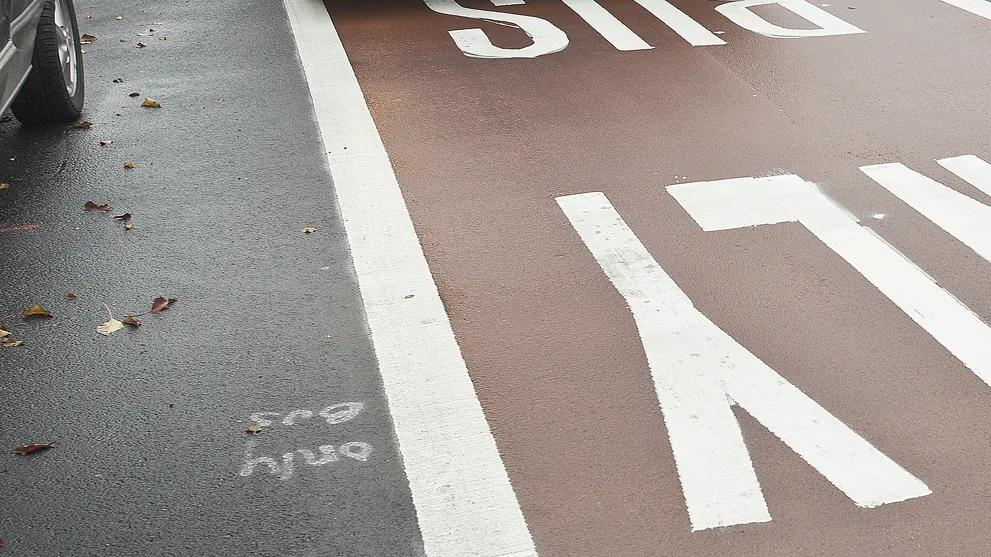
Photo credits: Nostrand Avenue bus lane by Metropolitan Transportation Authority of the State of New York, CC BY 2.0, cropped and resized.