

Serving Manhattan and New York County
Manhattan MTA Bus Accident Lawyer
In Manhattan the first question is which bus it was. A local M bus, an MTA Bus Company express and a sightseeing coach each follow a different claim path, and the public ones move on short deadlines.
Our firm has represented injured New Yorkers for more than 40 years.
Start here
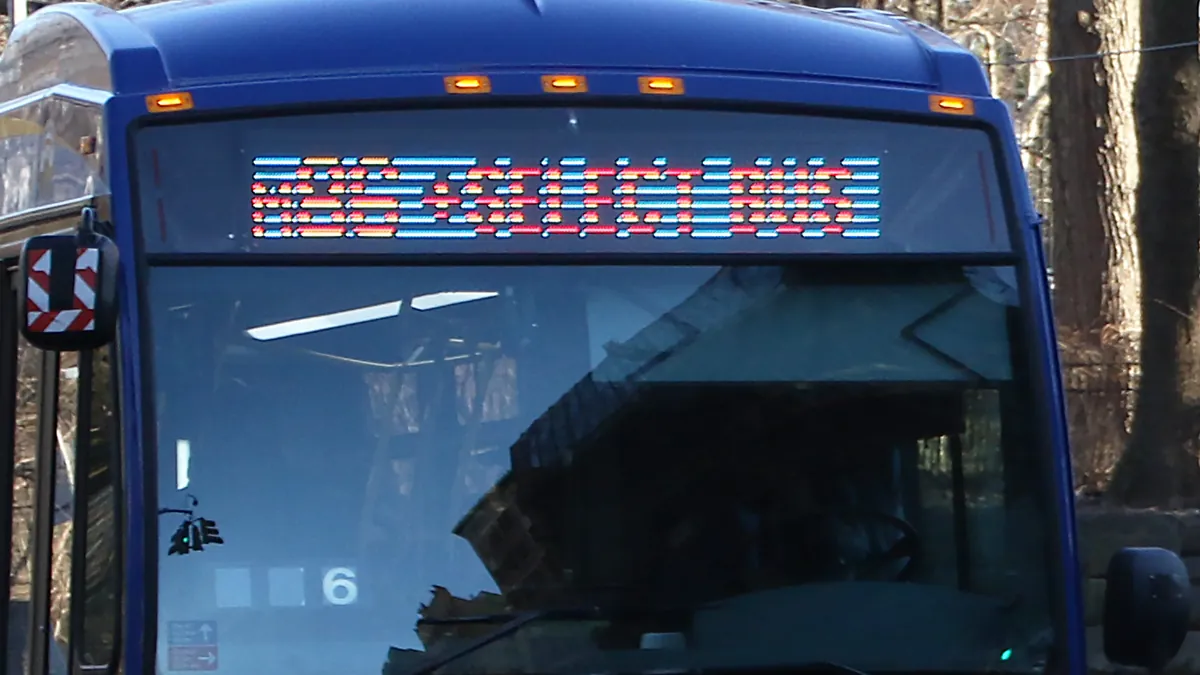
Which bus was it? The route name points to the operator
The letters on the destination sign are the fastest clue. M routes and Select Bus Service are New York City Transit or its Manhattan and Bronx subsidiary, MaBSTOA. BM, BxM and most QM express buses from Brooklyn, the Bronx and Queens belong to MTA Bus Company, a separate MTA subsidiary. Tour, charter, intercity and commuter coaches are private companies.
Ordinary personal-injury claims only — wrongful death and exceptions below
- NYC Transit Authority or MaBSTOA
- M15, M34, M42, M86, M116 and other M local and Select Bus Service routes; X27, X28, X37, X38 express
- A notice of claim under GML 50-e within 90 days, served on the correct transit defendant: the Transit Authority and its subsidiary MaBSTOA are separate corporations, so identify which one ran the bus and serve it properly. At least 30 days must pass before suit. PAL 1212(2) sets one year and 90 days for tort actions generally, but 1212(4), covering negligent operation of an authority vehicle, says one year — so some transit claims may have a one-year limit (1203-a applies 1212 to MaBSTOA).
- MTA Bus Company
- Most BM, BxM and QM express buses into Manhattan
- An MTA subsidiary. For personal-injury claims, PAL 1276(6) removes the notice-of-claim requirement, but the rest of 1276 applies: the claim or demand must be presented and 30 days must pass before suit, and the action is due within one year and 90 days after it accrues.
- City of New York
- City-owned vehicles; some school-bus claims involving the City
- Notice of claim with the NYC Comptroller within 90 days; the City may demand a sworn 50-h examination; lawsuit within one year and 90 days. A notice to the City does not substitute for a notice to a transit authority.
- Private company alone
- Tour, charter, intercity, commuter and contracted school buses
- Ordinarily no statutory municipal notice of claim when only a private company is sued; generally three years (CPLR 214(5)). If a public body or special regime is also involved, its rules apply to that defendant.
Wrongful death is different. Against public authorities and public benefit corporations, a wrongful death action needs a notice of claim and must be started within two years of the death (PAL 2980, 2981); the 90-day notice period runs from the appointment of the estate representative (GML 50-e). Against other defendants, generally two years from death (EPTL 5-4.1).
Exceptions and tolls — for example a court's permission to serve a late notice under GML 50-e(5), or rules for minors and people under a disability — can change these dates. Have a lawyer calculate the deadline for your claim and defendant rather than relying on a general rule.
Route assignments change; the operator named on the bus and in the police or MTA report controls. Buses run by New Jersey public carriers or the Port Authority have their own notice rules, so have those deadlines checked at once.
NYC Transit claims
How a personal-injury claim against NYC Transit moves
The MTA's own claim form for NYC Transit and MaBSTOA asks for the claim within 90 days and gives an email and a Brooklyn mailing address for service.
Within 90 days
Serve a notice of claim describing the time, place, manner and injuries (General Municipal Law 50-e) on the correct transit defendant; the Transit Authority and MaBSTOA are separate corporations. A court can allow late notice, but that is discretionary and weighs whether the authority knew the essential facts.
30 days later
No lawsuit until at least 30 days after the claim is presented, giving the authority a chance to adjust or pay it.
One year, or one year and 90 days
PAL 1212(2) sets one year and 90 days for tort actions generally; PAL 1212(4), for negligent operation of an authority vehicle, says one year after the claim accrues. Some transit claims may therefore have a one-year limit, so have a lawyer calculate the date.
Wrongful death
Separate rules: a notice of claim is required and the action is due within two years of death (PAL 2980, 2981); the 90-day notice runs from the appointment of the estate representative.
Sources: PAL 1212, GML 50-e, PAL 2980, 2981, MTA claim forms.
Passengers
Sudden stops, doors and crowded aisles
Operators owe riders reasonable care under the circumstances, the standard the Court of Appeals adopted in Bethel v NYCTA (1998) when it retired the old "highest degree of care" rule for common carriers.
A rider thrown by braking must show a jerk or lurch that was "unusual or violent" (Urquhart v NYCTA, 1995). On a packed crosstown bus, the interior camera and other riders usually decide that question.
On the street
Pedestrians, cyclists and drivers
Turning buses at avenue crosswalks, buses pulling out of a stop into a bike lane, and tour coaches in Midtown traffic all produce claims by people who were never on board. The same operator-first deadlines apply.
See Manhattan pedestrian accidents and the no-fault and PIP guide; for actions commenced on or after May 26, 2026, amended serious-injury rules apply (DFS Circular Letter No. 3).
Tour, charter and intercity buses
Private coaches: longer deadlines, more defendants to identify
Sightseeing, charter, casino and intercity buses are private carriers. When only a private company is sued there is ordinarily no statutory municipal notice of claim, and the general three-year personal injury period applies. The work is identifying who is responsible: the ticket seller, the bus owner, the driver's employer and any company that maintained the bus can be different businesses.
Keep the ticket or app confirmation and photograph the company name and USDOT number painted on the coach. For riders visiting from out of state, a New York claim can continue after you go home.
Evidence to ask for early
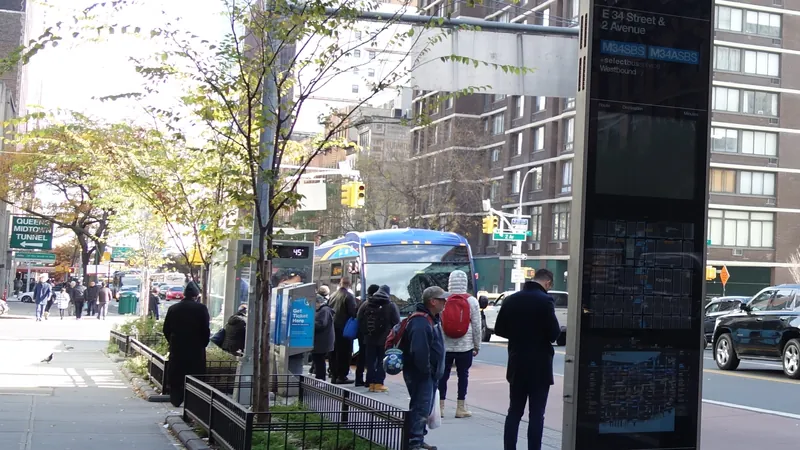
- Route, bus number, direction, stop or cross street and time
- Interior and exterior bus video and the bus's event data
- OMNY tap or ticket record placing you on the bus
- Storefront, building and traffic-camera video along the avenue
- NYPD collision report and any MTA complaint number
- Names of riders, pedestrians and building staff who saw it
Operators keep video for limited periods, and the bus is often back in service the next day. A written preservation request should go out as soon as the operator is known.
Published firm result
A municipal bus case
This published settlement involved a municipal bus. The record does not identify the borough or county where the crash happened, and it is not offered as a prediction for any other case.
Prior results do not guarantee a similar outcome. Every case depends on its own facts.
See the full verdicts and settlements archive$250,000
$250,000 Settlement — Municipal Bus Rear-End Collision
A municipal bus rear-ended our client, resulting in injuries that required an ablation procedure.
Court
New York County Supreme Court
A lawsuit against the Transit Authority over a Manhattan accident is tried in New York County (CPLR 505(b)), where Supreme Court sits at 60 Centre Street. The notice of claim itself goes to the authority, not the courthouse.
Hospitals
Where serious injuries are treated
The State Health Department lists NYC Health + Hospitals/Bellevue and NewYork-Presbyterian/Weill Cornell as adult Level I trauma centers in Manhattan, and Harlem Hospital as Level II (DOH trauma center list). Records from the emergency department onward are part of the claim, wherever you were treated.
We represent riders, pedestrians and drivers throughout Manhattan, from the Financial District, Chinatown and the Lower East Side through Midtown, Chelsea and Hell's Kitchen to the Upper East and West Sides, Harlem, Washington Heights and Inwood. Losing a family member? See Manhattan wrongful death.
Related
Other bus pages and guides
Questions
Manhattan bus accident questions
Get medical care first. Then write down the route, the bus number on the front or side, the direction of travel, the stop or cross street and the time. Photograph the bus, the scene and your injuries, collect witness names (tourists and commuters leave quickly), and keep the police report or MTA complaint number. Report the injury to your own auto insurer for no-fault benefits if you have a policy. Do not sign anything from an insurer or bus company before you know who operated the bus and which deadline applies.
Not always; it depends on the operator and the kind of claim. Most local M routes are run by New York City Transit or its subsidiary MaBSTOA, which are separate corporations. For a personal-injury claim against either, a notice of claim under General Municipal Law 50-e is due within 90 days and must be served on the correct transit defendant; a notice to the City Comptroller does not substitute. PAL 1212(2) sets one year and 90 days for tort actions generally, but PAL 1212(4), which covers negligence in operating an authority vehicle, says one year after the claim accrues, so some transit claims may have a one-year limit; have a lawyer calculate the date rather than relying on one year and 90 days. Many express buses into Manhattan are run by MTA Bus Company, an MTA subsidiary: for personal-injury claims Public Authorities Law 1276(6) removes the notice-of-claim requirement, but the claim must still be presented, 30 days must pass before suit, and the action is due within one year and 90 days. Tour and intercity buses are private. Wrongful death claims follow separate rules: against a public authority or public benefit corporation a notice of claim is required and suit is due within two years of death (PAL 2980, 2981), with the 90-day notice period running from the appointment of the estate representative.
Local and Select Bus Service routes such as the M15 on First and Second Avenues, the M34 and M86 crosstown, the M42 on 42nd Street and the M116 in Harlem are run by New York City Transit or MaBSTOA. Express buses into Manhattan carry BM, BxM, QM or SIM route names, plus the X27, X28, X37 and X38 from Brooklyn. BM, BxM and most QM buses are run by MTA Bus Company; the X routes are New York City Transit; for a SIM bus from Staten Island, check the operator named on the bus and in the report. Sightseeing, charter, intercity and commuter coaches are private companies.
Usually the claim is against a private company alone, which ordinarily requires no statutory municipal notice of claim; the general three-year personal injury period applies, and a wrongful death claim generally must be brought within two years of death. The company that sold the ticket, the company that owns the bus and the driver's employer can be different, so keep the ticket, receipt or app confirmation. If a public body is also involved, its own notice rules apply to it. Visitors who have gone home can still bring a New York claim, but evidence such as onboard video should be requested quickly.
Public bus claims have shorter, operator-specific steps: a notice of claim served on the correct transit defendant (except for personal-injury claims against MTA Bus Company), a 30-day waiting period before suit, and a short limitation period. PAL 1212(2) sets one year and 90 days for tort actions generally, but PAL 1212(4), which covers negligence in operating an authority vehicle, says one year after the claim accrues, so some transit claims may have a one-year limit; have a lawyer calculate the date rather than relying on one year and 90 days. A private company sued alone ordinarily requires no statutory municipal notice and is generally sued within three years. In both, liability is decided under the same reasonable-care standard, and motor-vehicle injury claims follow New York's no-fault and serious-injury rules.
Yes. A collision is not required. New York bus operators owe passengers reasonable care under the circumstances; the Court of Appeals replaced the older "highest degree of care" rule in Bethel v New York City Transit Authority (1998). For a fall caused by braking, the passenger must show a jerk or lurch that was "unusual or violent," proven by more than calling it that (Urquhart v New York City Transit Authority, 1995). Bus video, the bus's data and other passengers' accounts are often the proof. Door, boarding and slippery-floor injuries turn on what the operator saw and did.
For a lawsuit against the New York City Transit Authority, CPLR 505(b) places the trial in the county within New York City where the claim arose, so a Manhattan accident is venued in New York County, where Supreme Court sits at 60 Centre Street. Claims against private companies have broader venue options. A notice of claim is served on the public entity; it is not filed with the court.
No. The consultation is free, and in personal injury cases there is no fee unless there is a recovery. Call (516) 227-2662 or use the consultation form.
Have your Manhattan bus deadline checked
Tell us the route, the bus number if you have it, and what happened. We will help identify the operator and the notice and filing deadlines that apply. Free consultation; no fee unless there is a recovery.
What to bring
- Route, bus number and time
- Photos and witness names
- Police report or MTA complaint number
- Medical records and no-fault paperwork
Photo credits: M86 Select Bus Service bus by Mtattrain, CC BY-SA 4.0, cropped and resized; M34 Select Bus Service stop by Tdorante10, CC BY-SA 4.0, cropped and resized.