
Slip and Fall Attorney Near Me
NY/NJ premises liability specialists. 5 convenient locations. NYC sidewalk law experts. Free consultation.
Hazard Notice Review
We Document the Hazard Before It Gets Cleaned Up
Slip and fall claims often turn on notice: how long the spill, ice, broken stair, or uneven surface existed, who knew about it, and whether the owner fixed it only after someone was hurt.
Preserve the condition
Photos, video requests, weather records, incident reports, and witness names are gathered before cleanup changes the scene.
Prove notice
Maintenance logs, prior complaints, inspections, and employee activity help show what the owner should have done.
Common Slip & Fall Locations We Handle
5 Convenient Locations Throughout NY & NJ
NYC Slip and Fall Statistics
Slip and fall accidents are one of the leading causes of emergency room visits and personal injury claims in New York City. Understanding the scope of the problem helps explain why property owners must maintain safe premises:
Emergency room visits annually in the U.S. for slip/fall injuries (CDC)
Slip and fall ER visits annually in NYC hospitals
Of all accidental deaths result from slip/fall incidents
Of slip/fall accidents involve property owner negligence
NYC-Specific Challenges: Aging infrastructure, harsh winters with snow/ice, cracked sidewalks, poorly maintained subway stations, and high foot traffic in commercial areas create constant slip/fall hazards throughout the five boroughs.
Common Hazardous Conditions That Cause Slip & Fall Accidents
Property owners are legally required to maintain safe premises and fix or warn about dangerous conditions. The following hazards account for the majority of slip and fall cases we handle:
Wet & Slippery Surfaces
Freshly mopped floors without warning signs
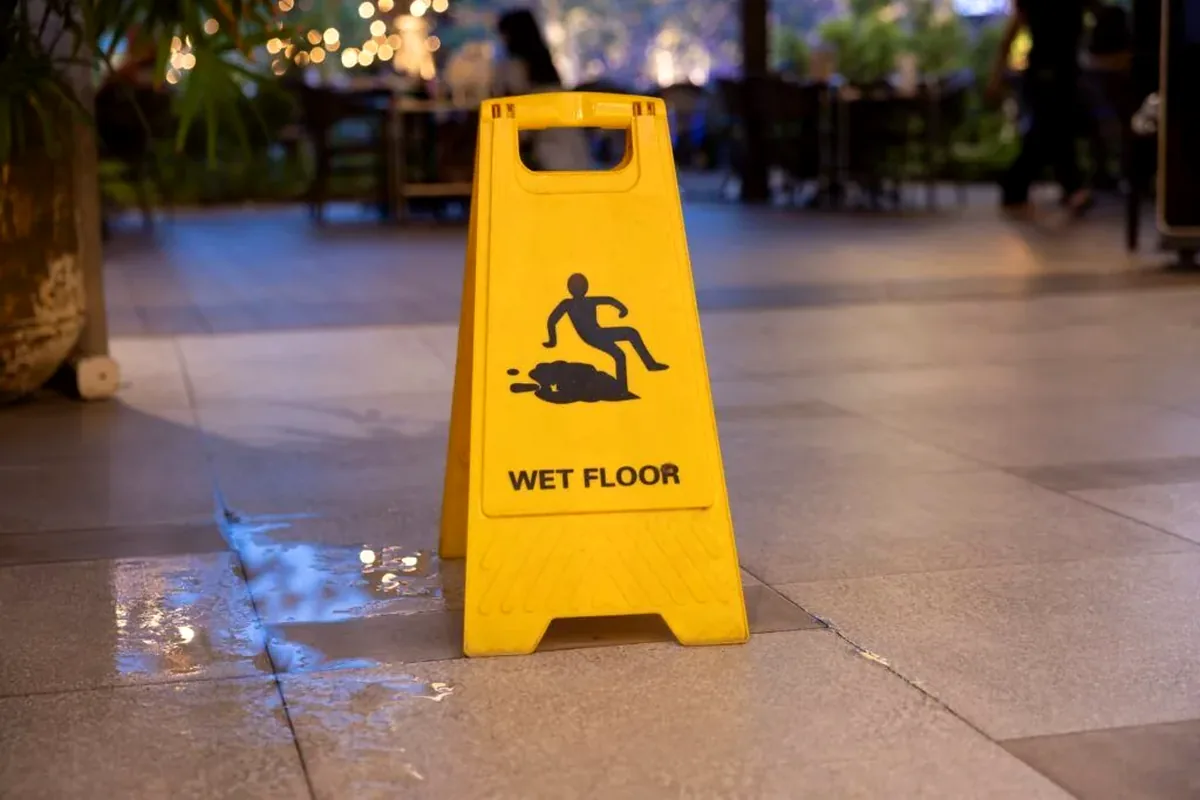
Supermarkets, retail stores, and office buildings must post "Wet Floor" signs right away
Spills left unattended
Grocery stores liable if spill existed long enough they should have known (constructive notice)
Leaking pipes or roof leaks
Landlords must fix leaks promptly; pooling water creates slip hazards
Rainwater tracked into entryways
Property owners must use mats and dry floors frequently during rain
Snow & Ice (Major NYC Issue)
Uncleared sidewalks after snowstorms
NYC property owners must clear sidewalks within 4 hours after snow stops (Admin Code §16-123)
Black ice in parking lots
Invisible ice from poor drainage, leaking downspouts, or melting/refreezing
Partial snow removal creating ice patches
Improper snow removal can make conditions worse; owner liable for making hazard
Unnatural ice accumulation
Ice from building defects (gutters, drainage) isn't protected by "storm in progress" rule
Uneven Walking Surfaces
Cracked or broken NYC sidewalks
Property owners responsible for sidewalk in front of building; must repair defects
Potholes in parking lots
Commercial property owners must maintain safe parking areas
Torn or bunched carpeting/mats
Office buildings and apartments must replace damaged flooring
Height differences without warning
Steps, ramps, or level changes need clear marking and handrails
Poor Maintenance & Design
Inadequate lighting
Stairwells, parking garages, hallways must have sufficient lighting
Missing or broken handrails
NYC Building Code requires handrails on stairs with 3+ steps
Worn or slippery stair treads
Must have slip-resistant surfaces, especially in high-traffic areas
Debris, clutter, or obstacles in walkways
Stores and warehouses must keep aisles clear
Document Conditions Right away
Take photos of the exact spot you fell, the hazard that caused your fall, your injuries, and the surrounding area. Get witness contact information. Request incident reports. These conditions are often fixed within 24-48 hours, destroying your evidence.
Call Licatesi Law Group at (516) 227-2662 right away - we'll dispatch investigators to document conditions before they're repaired.
Slip and Fall Injury Categories & Compensation
Slip and fall accidents can cause severe, life-altering injuries. Many people assume falls only cause minor bruises, but our clients have suffered catastrophic injuries requiring surgery, long-term rehabilitation, and permanent disability. Here are the most common injury types we handle:
Hip & Leg Fractures(Most Common in Elderly)
Typical Injuries:
- Hip fractures requiring surgery (hip replacement common)
- Femur (thighbone) fractures
- Ankle fractures (often require plates/screws)
- Knee fractures (patella, tibial plateau)
- Pelvis fractures (extremely painful, long recovery)
Compensation Range:
- Simple ankle fracture: $75,000-$250,000
- Hip fracture with surgery: $200,000-$750,000
- Multiple fractures: $500,000-$1.5M
- Elderly with permanent disability: $750,000-$2M+
Hip fractures in elderly often lead to loss of independence, nursing home placement, and reduced life expectancy - justifying higher compensation.
Head & Brain Injuries(Falling Backwards)
Typical Injuries:
- Concussions (mild traumatic brain injury)
- Skull fractures
- Intracranial hemorrhage (brain bleeding)
- Moderate to severe traumatic brain injury (TBI)
- Post-concussion syndrome (chronic headaches, dizziness, memory problems)
Compensation Range:
- Concussion with full recovery: $50,000-$150,000
- Skull fracture: $250,000-$750,000
- Moderate TBI with cognitive issues: $1M-$5M
- Severe TBI with permanent disability: $5M-$15M+
Brain injuries often worsen over time. Victims may seem fine initially but develop cognitive problems, personality changes, and chronic headaches months later. Early neuropsychological testing is important.
Back & Spinal Cord Injuries
Typical Injuries:
- Herniated discs (lumbar or cervical spine)
- Compression fractures (vertebrae crushed)
- Spinal cord injuries (partial or complete paralysis)
- Nerve damage (sciatica, radiculopathy)
- Facet joint injuries
Compensation Range:
- Herniated disc treated conservatively: $100,000-$400,000
- Herniated disc requiring surgery: $300,000-$1M
- Compression fractures: $250,000-$750,000
- Spinal cord injury with paralysis: $3M-$20M+
Back injuries often require multiple surgeries (discectomy, fusion, laminectomy) and lifelong pain management. Many victims cannot return to physically demanding jobs.
Wrist, Arm & Shoulder Injuries
Typical Injuries:
- Wrist fractures (Colles' fracture, scaphoid fracture)
- Shoulder fractures (humerus, clavicle)
- Rotator cuff tears (from breaking fall with outstretched arm)
- Dislocated shoulder
- Elbow fractures
Compensation Range:
- Wrist fracture: $50,000-$200,000
- Rotator cuff tear requiring surgery: $150,000-$500,000
- Shoulder fracture with hardware: $100,000-$400,000
- Multiple upper extremity fractures: $300,000-$1M+
Upper extremity injuries are especially devastating for manual laborers, musicians, and professionals who use their hands for work. Permanent range of motion limitations justify higher compensation.
Soft Tissue Injuries
Typical Injuries:
- Severe sprains and strains
- Ligament tears (ACL, MCL in knee)
- Muscle tears
- Chronic pain syndromes
- Bruising and contusions
Compensation Range:
- Minor sprains (full recovery): $15,000-$50,000
- Severe sprains with prolonged treatment: $50,000-$150,000
- Ligament tears requiring surgery: $150,000-$500,000
- Chronic pain with permanent limitations: $200,000-$750,000
Insurance companies often downplay soft tissue injuries as "minor sprains." We use MRI evidence, expert testimony, and documentation of functional limitations to prove the severity of these injuries.
Wrongful Death from Slip & Fall
Common Scenarios:
- Elderly victim dies from complications (hip fracture → nursing home → infection)
- Severe head injury causing death
- Internal bleeding undetected initially
- Fall from height (stairs, platform, loading dock)
Compensation for Families:
- Loss of financial support
- Loss of parental guidance
- Funeral and burial expenses
- Medical bills before death
- Typical recovery: $1M-$5M+
NY Estates, Powers & Trusts Law §5-4.3 allows family members to recover for wrongful death. Must prove fall was caused by property owner's negligence and directly led to death.
Don't Let Insurance Companies Minimize Your Injuries
Property owners and their insurance companies routinely claim slip and fall injuries are "minor" or "pre-existing." They'll pressure you to settle quickly for $5,000-$15,000 before you know the full extent of your injuries.
We've recovered $500,000-$2M+ for clients insurance companies initially offered $10,000-$25,000. Free consultation: (516) 227-2662.
Proving Property Owner Negligence in Your Slip & Fall Case
New York law requires you to prove the property owner was negligent and that negligence caused your fall. Simply falling on someone's property doesn't automatically mean they're liable. Here's what we must establish:
The 4 Elements of Premises Liability in NY
Notice of Dangerous Condition
Actual Notice: Owner knew about the hazard (complaints, prior incidents, inspections).
Constructive Notice: Hazard existed long enough owner should have discovered it through reasonable inspections.
Unreasonably Dangerous Condition
Hazard created unreasonable risk of harm. Not every imperfection is actionable - must be dangerous enough to cause foreseeable injury. NY courts apply "trivial defect" doctrine to dismiss minor cracks/defects.
Failure to Remedy or Warn
Owner failed to fix the condition within a reasonable time OR failed to adequately warn (signs, barriers, lighting). What's "reasonable" depends on severity of hazard and type of property.
Causation & Damages
The dangerous condition directly caused your fall AND you suffered actual damages (medical bills, lost wages, pain/suffering). Must show fall wouldn't have happened but for the hazard.
Important Evidence We Collect Right away
Surveillance Footage (7-30 Day Window)
Most commercial properties have security cameras. We send preservation letters demanding they save footage before automatic deletion (usually 7-30 days).
Footage proves: How long the hazard existed (constructive notice), whether you were distracted/careless (comparative fault), what you tripped on, and that you right away fell (not a delayed claim).
Photos of Scene & Hazard
We photograph the exact spot you fell, the hazard (crack, ice, spill), surrounding area, lighting conditions, lack of warning signs, and your injuries. Taken within 24-48 hours before repairs.
Photos prove: Size/severity of defect (for "trivial defect" defense), hazard existed (not cleaned up yet), poor lighting, absence of warning signs, visible injuries consistent with your claims.
Incident Reports & Complaints
We obtain: Your incident report (if filled out), prior complaints about same hazard, building code violation records, health dept inspection reports, and internal maintenance logs.
Reports prove: Actual notice (prior complaints), constructive notice (how long hazard existed), pattern of neglect (multiple complaints ignored), owner knew property was dangerous.
Weather Reports (Snow/Ice Cases)
For winter falls, we obtain official weather data showing when snow stopped, temperatures, and whether "storm in progress" rule applies. Also check for unnatural ice accumulation (defects).
Weather proves: Storm ended hours/days before (owner had time to clear), temperatures created ice, whether ice was from storm (protected) or building defect (liable).
Witness Statements
We interview all witnesses (employees, customers, bystanders) right away, while memories are fresh. Get contact info, written statements, and willingness to testify.
Witnesses prove: Hazard existed for hours/days (constructive notice), you fell exactly as described, employees ignored spill/hazard, no warning signs present, your injuries were immediate.
Expert Witnesses
We retain experts in: building code compliance, property maintenance standards, lighting engineering, snow removal practices, and human factors (slip resistance testing).
Experts prove: Owner violated industry standards, hazard was unreasonably dangerous, proper maintenance would have prevented fall, lighting was insufficient, surface was too slippery.
Common Defenses & How We Counter Them
"Trivial Defect" Defense
Owner Claims: Crack/defect was too small to be dangerous. NY courts dismiss cases with minor defects (under 1-2 inches).
We Counter: Measure and photograph defect right away. Show surrounding factors (poor lighting, debris hiding defect, distraction, elderly/disabled victim). Expert testimony on slip resistance and biomechanics of falling.
"No Notice" Defense
Owner Claims: Didn't know about the hazard. "Someone else just spilled it." No actual or constructive notice.
We Counter: Surveillance shows hazard existed for hours/days. Witnesses saw employees walk past spill multiple times. Maintenance logs show no inspections for weeks/months. Prior complaints about same area. Owner created the hazard (leaky pipe, poor drainage).
"Storm in Progress" Rule (Snow/Ice)
Owner Claims: Snow was still falling when you fell. Property owners aren't liable during active storms.
We Counter: Weather records prove storm ended 4+ hours before fall. Ice was from unnatural accumulation (leaking gutter, poor drainage), not storm. Owner partially cleared snow, making conditions worse. NYC Admin Code §16-123 requires clearing within 4 hours after snow stops.
"Open and Obvious" Defense
Owner Claims: Hazard was so obvious you should have seen it. Owner has no duty to protect against open/obvious dangers.
We Counter: NY courts reject this as absolute defense - jury decides if hazard was truly obvious. Show poor lighting hid defect. Victim was distracted by legitimate reason (helping child, carrying items, following employee). Hazard blended into surroundings. Even "obvious" hazards can be unreasonably dangerous.
Comparative Fault (Blaming You)
Owner Claims: You were texting, running, wearing inappropriate shoes, or not paying attention. Your fault reduced owner's liability.
We Counter: Surveillance shows you walking normally. NY uses "pure comparative fault" - even if 90% your fault, you still recover 10% of damages. Most juries assign 70-100% fault to owner when hazard exists. Focus on owner's negligence, not your conduct.
Why Choose Licatesi Law Group for Your Slip & Fall Case?
- 40+ years handling NYC slip and fall cases
- Immediate evidence preservation - we dispatch investigators within hours
- NYC sidewalk law experts - we know Admin Code §16-123 and who's liable
- Network of experts - building code, lighting, biomechanics, snow removal
- $100M+ recovered for slip/fall and premises liability clients
- 5 offices throughout NY/NJ - convenient locations near you
- No fee unless we win - we advance all case costs
- Free consultation - call (516) 227-2662 or request online
Frequently Asked Questions
Contact a Slip & Fall Attorney Near You
Evidence disappears in 7-30 days. Free consultation. No fee unless we win.