

$300,000recovery
Driver stopped at a red light
An NYC probation officer was stopped at a red light in Brooklyn when an 18-wheeler rear-ended his vehicle. He suffered multiple injuries.
Brooklyn truck crashes · Kings County
A collision with a commercial truck is not a bigger car accident. The proof sits with the carrier, and the first deadline depends on who was operating the truck.
Our Brooklyn office is on Kings Highway. Over 40 years of experience; free consultation.
A collision with a tractor-trailer, box truck, or delivery van is not simply a larger car accident. The vehicle is usually owned by a company, driven by an employee on the clock, insured under a commercial policy, and operated under federal safety rules that do not apply to ordinary drivers. That changes who can be held responsible and what has to be proven.
It also changes where the proof sits. The driver's duty records, the carrier's hiring and maintenance history, data recorded by the truck itself, and video from nearby businesses are all held by someone other than you. Asking for them early, in writing, is a large part of the work.
DEADLINES AND COVERAGE
Kings County cases are filed in Supreme Court, Kings County, at 360 Adams Street in Downtown Brooklyn.
FROM OUR BROOKLYN CASE FILES
$300,000recovery
An NYC probation officer was stopped at a red light in Brooklyn when an 18-wheeler rear-ended his vehicle. He suffered multiple injuries.
$380,000recovery
An NYC probation officer was a passenger in a work vehicle rear-ended by a truck at a red light in Brooklyn. She suffered multiple injuries, including surgery.
Prior results do not guarantee a similar outcome. Every case depends on its own facts.
Brooklyn runs heavy commercial traffic through streets that were laid out long before 53-foot trailers existed. The same conditions turn up again and again: expressway congestion, industrial and port routes, and turning movements on narrow blocks shared with people walking and cycling.
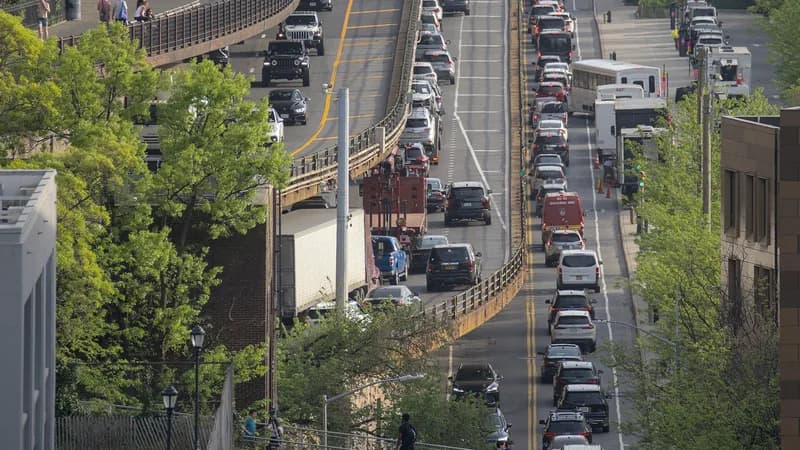
New York City requires trucks, as its traffic rules define them, to use designated routes. A truck making a delivery in the borough must use local truck routes and may leave them only to reach its stop by the most direct way; a truck just passing through must stay on through routes. Leaving the route for a shortcut is not allowed, and trucks are barred from the City's parkways (NYC DOT Truck Smart Guide).
The network changed on October 4, 2026, and NYC DOT says a new map will follow. Changes in Brooklyn include (NYC DOT change list):
A truck off its route does not prove fault by itself, but where the truck was allowed to be, on the date of the crash, is an issue to investigate in a New York City truck crash.
Damages in a New York truck case fall into two groups: the losses that can be added up from records, and the ones that cannot. Where New York's no-fault law applies, as it does for most car occupants and pedestrians, the second group requires a serious injury.
Most of the proof in a truck case is created in the days right after the crash, and most of it is held by someone else. A short practical list is more useful than a flowchart.
If you are not sure what applies to your crash, call 516-227-2662 and ask.
These periods are minimums, not permission to destroy evidence once a claim is expected. Each rule applies only to the carriers and drivers within its own scope; the federal definition of a commercial motor vehicle starts at 10,001 pounds for interstate carriers (49 CFR 390.5). Post-crash test results, where a test was required, are requested too.
New York's Department of Transportation adopts many of the same rules for trucks that operate only within the state, with listed exceptions (17 NYCRR 820.1, 820.6). Dashcam video and telematics have no federal keep period here, which is why we ask for them in writing early. Text current as of the eCFR update of October 7, 2026.
Business video and the carrier's records are the first things to protect. Call us so the preservation letter goes out and you know which deadline applies.
Deadlines
The first clock depends on who you are claiming against and whether the crash caused a death. If you were in a car, also see our Brooklyn auto accident page; for a fatal crash, our Brooklyn wrongful death page. Owner liability for a permissive driver comes from VTL 388.
These are the first deadlines for an ordinary negligence claim for a non-fatal personal injury. Property-damage and other claims can run on different clocks.
A wrongful death claim has its own clocks, which often start from the death or from the appointment of the estate's representative.
2026 changes apply by commencement date. They cover personal-injury actions under New York's no-fault law (Insurance Law article 51) commenced on or after May 26, 2026; what matters is when the lawsuit is commenced, not the accident date (DFS Circular Letter No. 3 (2026)). For those actions:
Questions
Brooklyn runs heavy freight on the BQE and the Gowanus Expressway and through industrial areas such as Sunset Park, Red Hook and East Williamsburg, onto streets laid out long before 53-foot trailers. Wide turns, blind spots, double-parked vehicles and stop-and-go expressway traffic produce the same kinds of crashes again and again. We do not publish crash counts; the City's Vision Zero View map shows where crashes are reported.
We do not rank roads without data; the City publishes crash maps through Vision Zero View. In a claim, the road matters for other reasons: whether the truck was allowed there (trucks are barred from parkways such as the Belt Parkway, and the October 4, 2026 changes removed Myrtle Avenue between Jay and Duffield streets and Greenpoint Avenue between West and Franklin streets from the truck-route network) and which cameras recorded the crash.
Against a private driver, owner or carrier, an injury suit is generally due within three years. Against the City for an injury, a notice of claim is due within 90 days of the incident and suit within one year and 90 days. Against the State, the claim must be filed and served, or a notice of intention served, within 90 days of accrual. Death claims run on separate clocks, and exceptions are case-specific.
Go wherever emergency care is fastest; ambulance crews choose the receiving hospital. People hurt in Brooklyn are often treated at hospitals such as NYC Health + Hospitals/Kings County, Maimonides Medical Center and NewYork-Presbyterian Brooklyn Methodist. For a claim, keep every treatment record and follow-up. Getting care does not by itself make you eligible for benefits; if no-fault applies, written notice to the applicable insurer is ordinarily due within 30 days, unless a reasonable written justification is shown.
Depending on the facts: the driver; the motor carrier that employed or dispatched the driver; the truck's owner, who may be liable for a permissive driver's negligence under VTL 388, subject to exceptions such as federal protection for rental and leasing companies; a shipper or loader at a warehouse or terminal; a maintenance contractor; a parts manufacturer; another driver; or, for a City truck or a road defect, a public body with short notice deadlines.
No-fault pays eligible medical bills and part of lost earnings, up to $50,000 of basic economic loss. A claim against those responsible can add other losses; where the no-fault law applies, pain and suffering needs a serious injury. In those actions commenced on or after May 26, 2026, a claimant more at fault than the defendants is barred, and specified at-fault claimants who are not barred face a $100,000 non-economic limit, except in death actions.
Sunset Park, Red Hook, East Williamsburg and the Brooklyn Navy Yard mix loading docks, backing trucks and container traffic with people walking and cycling on the same blocks. Crashes there raise questions we check: whether the truck was on a permitted local route, whether it was backing or turning safely, who loaded it, and which company dispatched it. We do not assume a cause; we look for the records and the video.
If no-fault applies, a driver or passenger generally claims against the insurer of the vehicle they were in, and a pedestrian against the striking vehicle's insurer. Motorcycle riders are excluded. Benefits reach $50,000 of basic economic loss; written notice is ordinarily due within 30 days absent a reasonable written justification. Where the no-fault law applies, pain and suffering requires a serious injury; the 90/180 category does not apply to suits commenced on or after May 26, 2026.
Call 911 and get medical care. If it is safe, photograph the truck, including the company name and USDOT number on the cab, the trailer, the plates and the scene, and get witnesses' names. Ask for the police report number. If no-fault applies, give the applicable insurer written notice, ordinarily within 30 days. Do not give a recorded statement to the truck's insurer or sign anything before getting advice, and call us so a preservation letter goes out early.
You can file a no-fault claim yourself. A lawyer helps when injuries are serious, several companies may share responsibility, or a City or State vehicle was involved and a notice is due within weeks. We identify the carrier and owner, send preservation demands, track every deadline and deal with the insurers. Our Brooklyn office is on Kings Highway. The consultation is free, and there is no fee unless there is a recovery.
For benefits in depth, read our no-fault and PIP guide.
Tell us where the crash happened and what you know about the truck. We will identify the carrier and owner, send preservation demands and explain the deadline that applies. Free consultation; no fee unless there is a recovery.
What to bring
Related
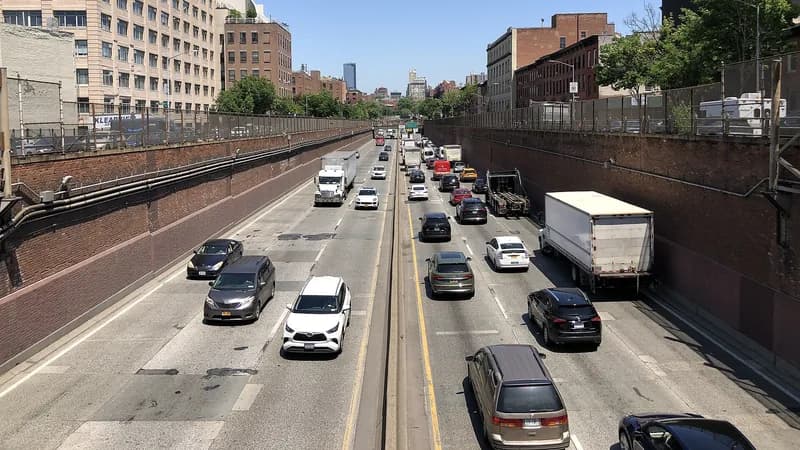
Photo credits: Brooklyn-Queens Expressway from the Sackett Street overpass by Famartin, CC BY-SA 4.0, cropped and resized.