

Bronx truck crashes · served from our Corona office
Bronx Truck Accident Lawyers
First find out who was operating the truck: a trucking company, a City agency or the State. That decides the first deadline, which can be 90 days.
Over 40 years of experience. Free consultation; no fee unless there is a recovery.
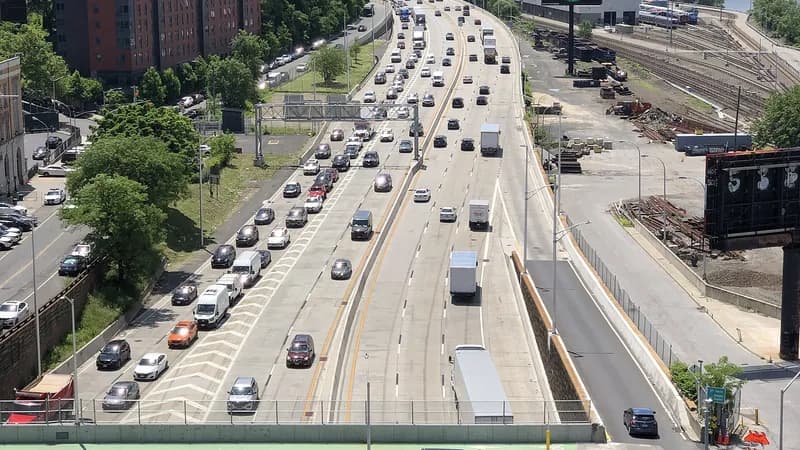
Start here
Who was driving the truck?
The company name and USDOT number on the cab, the plates and the police report usually answer this. Each row starts a different claim with a different first deadline.
- A trucking company or contractor
- No notice of claim. The claim runs against the driver and, depending on the facts, the carrier and the owner, who may be liable for a permissive driver (VTL 388); a rental or leasing owner that was not itself negligent is protected by federal law (49 U.S.C. 30106). An injury lawsuit is generally due within three years (CPLR 214(5)).
- A City truck (sanitation, DOT or another agency)
- A notice of claim with the City Comptroller within 90 days of the incident, then a lawsuit within one year and 90 days (NYC Comptroller, GML 50-e).
- A New York State vehicle
- A claim in the Court of Claims, filed and served on the Attorney General within 90 days of accrual, or a notice of intention in that time and the claim within two years (Court of Claims Act § 10(3)).
- The truck drove off
- Report it to the police at once. Uninsured-motorist coverage or MVAIC may apply, with short report and affidavit deadlines; our Bronx auto accident page sets them out.
- Someone died
- The estate's representative brings the claim, generally within two years after the death (EPTL 5-4.1); against the City, the notice runs 90 days from the representative's appointment. See our Bronx wrongful death page.
Hunts Point and the expressways
Where Bronx trucks are allowed to go
Freight bound for Hunts Point and the South Bronx moves on the Bruckner, the Cross Bronx and the Sheridan Boulevard, then onto local streets shared with homes and schools. Whether a truck was on a permitted street, at a lawful time, is part of the liability picture.
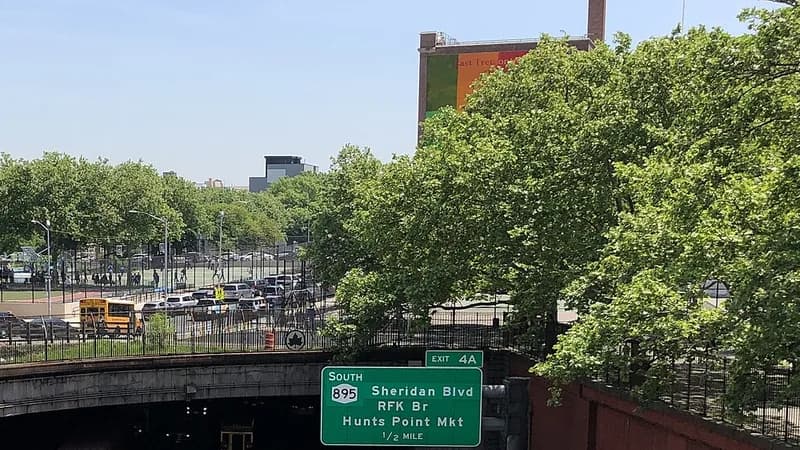
New York City requires trucks, as its traffic rules define them, to use designated routes. A truck making a delivery in the borough must use local truck routes and may leave them only to reach its stop by the most direct way; a truck just passing through must stay on through routes. Leaving the route for a shortcut is not allowed, and trucks are barred from the City's parkways (NYC DOT Truck Smart Guide).
The network changed on October 4, 2026, and NYC DOT says a new map will follow. Changes in the Bronx include (NYC DOT change list):
Added to the truck-route network
- Pugsley Avenue, Cross Bronx Expressway service road to Westchester Avenue
- Manida Street and Ryawa Avenue, in Hunts Point
- East 147th Street, 3rd Avenue to Willis Avenue
- Mott Haven and Port Morris streets, Brook, Locust, Walnut and St Anns avenues and East 132nd to 141st streets
Removed from the network
- Hunts Point Avenue, Randall Avenue to Halleck Street
- Bryant Avenue and Garrison Avenue, near Bruckner Boulevard
- Third Avenue, East 189th Street to East Fordham Road
- Cross Bronx Expressway service road south, Webster Avenue to Third Avenue
A truck off its route does not prove fault by itself, but where the truck was allowed to be, on the date of the crash, is an issue to investigate in a New York City truck crash.
Evidence
The records we ask the carrier to keep
Bronx truck cases tend to turn on the same things: driver errors at speed or in turns, delivery schedules, hours behind the wheel, maintenance, cargo loading and road conditions. Each one is proved from records the carrier holds, and federal rules set only how long some of them must be kept.
- Driver logs (records of duty status) and supporting documents
- At least 6 months from receipt
- 49 CFR 395.8(k)
- Inspection, repair and maintenance records
- 1 year where the truck is housed or maintained, and 6 months after it leaves the carrier
- 49 CFR 396.3(c)
- Driver qualification file
- While the driver is employed, plus 3 years; some items may be removed 3 years after they were made
- 49 CFR 391.51
These periods are minimums, not permission to destroy evidence once a claim is expected. Each rule applies only to the carriers and drivers within its own scope; the federal definition of a commercial motor vehicle starts at 10,001 pounds for interstate carriers (49 CFR 390.5). Post-crash test results, where a test was required, are requested too.
New York's Department of Transportation adopts many of the same rules for trucks that operate only within the state, with listed exceptions (17 NYCRR 820.1, 820.6). Dashcam video and telematics have no federal keep period here, which is why we ask for them in writing early. Text current as of the eCFR update of October 7, 2026.
Published results
Truck and motor-vehicle results
None of these published records names the Bronx. The first six describe collisions with a truck: two name Brooklyn, one New Jersey, two were federal cases and one involved a rideshare driver rear-ended by a truck. The rest are the firm's other motor-vehicle results, quoted exactly as recorded.
Prior results do not guarantee a similar outcome. Every case depends on its own facts.
See the full verdicts and settlements archive$300,000
$300,000 Recovery — Brooklyn 18-Wheeler Rear-End Collision
Our client, a NYC probation officer, was stopped at a red light in Brooklyn when an 18-wheeler rear-ended his vehicle. He suffered multiple injuries. We fought to get him the compensation he deserved. We are proud to secure a $300,000 recovery for our client.
$380,000
$380,000 Recovery — Brooklyn Truck Rear-End Collision
Our client, a NYC probation officer, was a passenger in a work vehicle rear-ended by a truck at a red light in Brooklyn. She suffered multiple injuries including surgery. We're proud to have secured a $380,000 recovery for her.
$750,000
$750,000 New Jersey Truck Accident Settlement
Michael Licatesi and our New Jersey trial team secured a $750,000 settlement for our client who was seriously injured in a truck accident.
$350,000
$350,000 Federal Case Result — Truck Rear-End Collision
A 40-year-old woman was rear-ended by a truck while properly restrained. She suffered serious injuries, including an annular tear in her neck, back injuries requiring ablation and multiple injections, and injuries to her right shoulder, knee requiring surgery, hand, and elbow.
$499,000
$499,000 Federal Truck Accident Settlement
Our client was involved in a truck accident that resulted in federal litigation. Despite the complexity of the case, we secured a $499,000 settlement for injuries sustained to multiple parts of the body.
$400,000
$400,000 Settlement
Settlement involving 68 year old male who was rear ended by a truck while driving for UBER requiring a lumbar fusion with a history of prior injury to his lumbar spine.
Hurt in a Bronx truck crash?
If a City or State vehicle was involved, the first notice may be due within 90 days. Call us so the deadline and the carrier's records are protected.
Deadlines
Deadlines that depend on who is responsible
There is no single deadline for a Bronx truck crash. The first clock depends on who you are claiming against and whether the crash caused a death.
If you were injured
These are the first deadlines for an ordinary negligence claim for a non-fatal personal injury. Property-damage and other claims can run on different clocks.
- The other driver or vehicle owner (a private party)
- No notice of claim. A personal-injury lawsuit generally must be started within three years (CPLR 214(5)).
- The City of New York itself (for example, a City-owned vehicle)
- A notice of claim with the Comptroller within 90 days of the incident; a lawsuit within one year and 90 days (NYC Comptroller, GML 50-e).
- The State of New York itself
- A negligence claim against the State goes to the Court of Claims: it must be filed and served on the Attorney General within 90 days after it accrues, or a notice of intention served within those 90 days and the claim then filed and served within two years (Court of Claims Act § 10(3)). A State worker or vehicle being involved does not by itself make the State liable.
If the crash caused a death
A wrongful death claim has its own clocks, which often start from the death or from the appointment of the estate's representative.
- Against a private driver or owner
- The estate's representative generally has two years after the death; if a criminal action is started against the same defendant for the same event, at least one year after that criminal action ends (EPTL 5-4.1).
- Against the City, a county, town or village
- Where a notice of claim is required, it is due within 90 days after the estate's representative is appointed (GML 50-e), and the lawsuit within two years after the death (GML 50-i).
- Against the State
- The claim must be filed and served within 90 days after the executor or administrator is appointed, or a notice of intention served in that time; in any event within two years after the death (Court of Claims Act § 10(2)).
- Against a transit or bridge authority
- Death claims follow separate notice and time-limit provisions, not the injury rules above. Identify the exact operator first.
No-fault still comes first
Your benefits claim has its own short clock, whatever happens with the truck company.
- Within 30 days
- Written notice of the accident to the applicable no-fault insurer.
- 45 days
- Proof of claim for medical services, within 45 days after the date each service is rendered.
- 90 days
- Proof of claim for lost earnings, within 90 days after the work loss is incurred, and for other necessary expenses, within 90 days after the services are rendered.
- If late
- Each of these limits applies unless written proof gives a clear and reasonable justification for the delay (11 NYCRR 65-1.1). Do not wait on that exception.
- Alongside
- A separate file on fault, injuries and any claim against whoever caused the crash. Our no-fault and PIP guide covers denials and medical exams.
2026 changes apply by commencement date. They cover personal-injury actions under New York's no-fault law (Insurance Law article 51) commenced on or after May 26, 2026; what matters is when the lawsuit is commenced, not the accident date (DFS Circular Letter No. 3 (2026)). For those actions:
- the former 90/180 serious-injury category no longer applies;
- a claimant whose culpable conduct is greater than that of the defendant, or of the defendants combined, is barred from recovery; otherwise, including at an even 50/50 split, damages are reduced by the claimant's share (CPLR 1411);
- except in an action for death, non-economic damages are limited to $100,000 for an injured person who is at fault, is not barred under CPLR 1411, and was operating an uninsured vehicle they were responsible for insuring (unless the lapse in coverage was less than 30 days), was operating while impaired and was convicted of that offense, or was operating in the commission of, or immediate flight from, a felony and was convicted of it (Insurance Law 5104(d)).
Questions
Frequently Asked Questions
The Bronx carries heavy freight traffic on the Cross Bronx, Major Deegan and Bruckner expressways and through the Hunts Point food-distribution area, where trucks share streets with homes, schools and people on foot. We do not publish crash counts; the City's Vision Zero View map shows where crashes are reported. In a claim, what matters is what this truck and its driver did, which is proved from the carrier's records, video and the scene.
We do not rank roads without data; the City publishes crash maps through Vision Zero View. In a claim, the road matters for other reasons: whether the truck was on a designated truck route (the network changed on October 4, 2026, including the removal of Hunts Point Avenue between Randall Avenue and Halleck Street), which public body maintains the road, and which cameras may have recorded the crash.
Against a private driver, owner or carrier, an injury suit is generally due within three years. Against the City for an injury, a notice of claim is due within 90 days of the incident and suit within one year and 90 days. Against the State, the claim must be filed and served, or a notice of intention served, within 90 days of accrual. Death claims run on separate clocks, and exceptions are case-specific.
Go wherever emergency care is fastest; ambulance crews choose the receiving hospital. People hurt in the Bronx are often treated at hospitals such as Jacobi Medical Center, Lincoln Medical Center and Montefiore. For a claim, keep every treatment record and follow-up. Getting care does not by itself make you eligible for benefits; if no-fault applies, written notice to the applicable insurer is ordinarily due within 30 days, unless a reasonable written justification is shown.
Depending on the facts: the driver; the motor carrier that employed or dispatched the driver; the truck's owner, who may be liable for a permissive driver's negligence under VTL 388, subject to exceptions such as federal protection for rental and leasing companies; a shipper or loader; a maintenance contractor; a parts manufacturer; another driver; or, for a City truck or a road defect, a public body with short notice deadlines.
No-fault pays eligible medical bills and part of lost earnings, up to $50,000 of basic economic loss. A claim against those responsible can add other losses; where the no-fault law applies, pain and suffering needs a serious injury. In those actions commenced on or after May 26, 2026, a claimant more at fault than the defendants is barred, and specified at-fault claimants who are not barred face a $100,000 non-economic limit, except in death actions.
Hunts Point is a freight district, so crashes there often involve tractor-trailers, refrigerated trucks and box trucks on early delivery runs. That raises questions we check: whether the truck was on a permitted route after the October 4, 2026 changes, whether the driver stayed within federal hours limits where they apply (11 hours of driving within a 14-hour window for covered property carriers), and which company dispatched the load. We do not assume fatigue; we look for the logs.
If no-fault applies, a driver or passenger generally claims against the insurer of the vehicle they were in, and a pedestrian against the striking vehicle's insurer. Motorcycle riders are excluded. Benefits reach $50,000 of basic economic loss; written notice is ordinarily due within 30 days absent a reasonable written justification. Where the no-fault law applies, pain and suffering requires a serious injury; the 90/180 category does not apply to suits commenced on or after May 26, 2026.
Call 911 and get medical care. If it is safe, photograph the truck, including the company name and USDOT number on the cab, the trailer, the plates and the scene, and get witnesses' names. Ask for the police report number. If no-fault applies, give the applicable insurer written notice, ordinarily within 30 days. Do not give a recorded statement to the truck's insurer or sign anything before getting advice, and call us so a preservation letter goes out early.
You can file a no-fault claim yourself. A lawyer helps when injuries are serious, several companies may share responsibility, or a City or State vehicle was involved and a notice is due within weeks. We identify the carrier and owner, send preservation demands, track every deadline and deal with the insurers. The Bronx is served from our Corona office. The consultation is free, and there is no fee unless there is a recovery.
Serving all Bronx neighborhoods
From Riverdale to Hunts Point and Fordham to Pelham Bay. The Bronx is served from our Corona office at 100-17 Northern Boulevard; see the Corona office and Bronx locations.
- Riverdale
- Kingsbridge
- Fordham
- Bedford Park
- Norwood
- Belmont
- Tremont
- Morris Heights
- Highbridge
- Concourse
- Morrisania
- Melrose
- Mott Haven
- Port Morris
- Hunts Point
- Longwood
- Soundview
- Parkchester
- Castle Hill
- Throggs Neck
- Pelham Bay
- Co-op City
- Williamsbridge
- Wakefield
Bronx truck accident? Start with the truck's paperwork
Tell us what you know about the truck and where it happened. We will identify the operator and owner, send preservation demands and tell you the deadline that applies. Free consultation; no fee unless there is a recovery.
What to bring
- Photos of the truck, its company name and USDOT number
- Police report number
- Your auto insurance card, if you were in a car
- Medical records so far
Related
Other truck accident guides
- New York truck accident lawyer
- Brooklyn truck accidents
- Queens truck accidents
- Manhattan truck accidents
- Staten Island truck accidents
- Nassau County truck accidents
- Long Island truck accidents
- New Jersey truck accidents
- Find the office nearest you
- Bronx auto accidents
- Bronx wrongful death
- NY no-fault and PIP benefits guide
- All verdicts and settlements
Photo credits: Major Deegan Expressway from the High Bridge by Famartin, CC BY-SA 4.0, cropped and resized; Cross Bronx Expressway from the Crotona Avenue overpass by Famartin, CC BY-SA 4.0, cropped and resized.