

Warehouses, loading docks and job sites
New York City Forklift Accident Lawyer
A forklift injury at work usually means two separate questions: workers' compensation from your employer, and whether another company that is not your employer is responsible too.
We represent workers, delivery drivers and bystanders across New York City, Long Island and New Jersey.
Start here
Workers' comp and a third-party claim are different claims
Most injured workers have the first. Whether they also have the second depends on who owned, ran or controlled the forklift and the place it was operating.
- Who you claim against
- Comp: Your employer's compensation carrier
- Third-party: A company that is not your employer
- Do you prove fault?
- Comp: No
- Third-party: Yes: negligence, a Labor Law violation on a construction site, or a product defect
- What it covers
- Comp: Medical care and part of lost wages
- Third-party: Losses comp does not cover, including pain and suffering and full lost earnings
- First deadline
- Comp: Written notice to employer within 30 days; claim within 2 years
- Third-party: Lawsuit generally within 3 years; 90-day notice of claim if a public entity is involved
- How they interact
- Comp: Carrier has a lien on any third-party recovery
- Third-party: Settling below the compensation amount needs carrier approval or an applicable court order
Two limits to know
Not every forklift injury leads to a lawsuit
- If the driver was a co-worker employed by your own employer, compensation is the exclusive remedy against that co-worker (WCL 29(6)).
- A sued third party generally cannot shift part of the loss back onto your employer unless the injury is a statutory “grave injury,” such as the loss of an arm, leg, hand or foot or a brain injury causing permanent total disability. A qualifying pre-accident written indemnity agreement is a separate exception (WCL 11).
Who else may be responsible
Finding the company that is not your employer
On a construction site, these claims often run under New York's Labor Law; see construction accidents. Defective trucks are products liability claims.
- Another company at the warehouse or dock
- A delivery driver or temp worker struck by a forklift run by the business they were visiting.
- Property owner or general contractor
- On a construction site, the owner and contractors can face Labor Law claims for unsafe conditions or work methods.
- Forklift owner or rental company
- A rented truck delivered with bad brakes, a faulty mast or missing guards, or not maintained as agreed.
- Manufacturer or seller
- A design or manufacturing defect in the truck, its controls or its attachments.
Proof
The OSHA record trail behind a forklift case
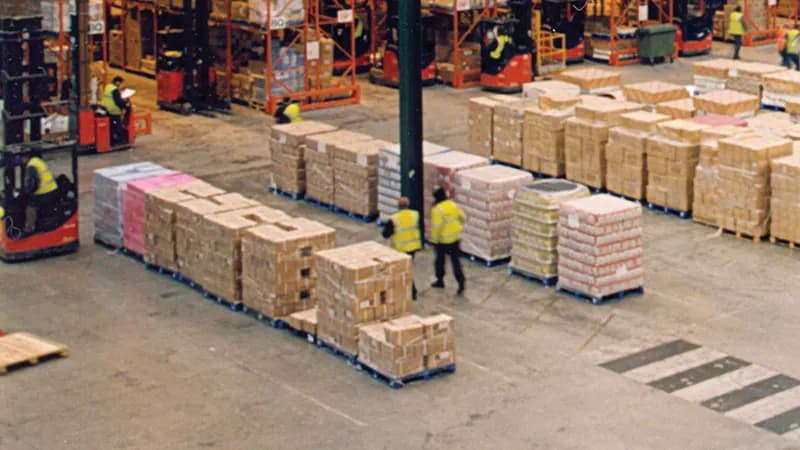
The federal powered industrial truck standard, 29 CFR 1910.178, tells employers how forklifts must be run and maintained. Its paperwork shows whether that happened. Pedestrians sharing aisles with moving trucks are among the people it protects.
- 1
Operator training and evaluation file
Each operator must be shown competent through training and evaluation, re-evaluated at least once every three years, and certified with names and dates (1910.178(l)).
- 2
Daily examination checklists
Trucks must be examined at least daily before use and kept out of service when a condition affects safety (1910.178(q)(7)).
- 3
Repair and removal-from-service records
A truck not in safe operating condition must be removed from service and repaired by authorized personnel (1910.178(q)(1)).
- 4
Traffic and pedestrian rules
Trucks may not be driven up to anyone standing in front of a fixed object, and no one may stand under raised forks (1910.178(m)).
- 5
Video, rental and purchase paperwork
Camera footage of the aisle or dock, the rental contract and the truck's serial number identify who controlled the machine.
Common forklift accidents include tip-overs, workers struck or pinned by a moving truck, falling loads, and brake, steering or mast failures. Injuries range from fractures and crush injuries to spinal and brain injuries; when a worker is killed, the family may have a wrongful death claim.
Work accident results
Results for injured workers
These are the firm's published construction and work accident results. None of the published descriptions involves a forklift; they are shown as examples of workplace injury cases only.
Prior results do not guarantee a similar outcome. Every case depends on its own facts.
See the full verdicts and settlements archive$8,000,000
$8 Million Dollar Settlement — 2nd Department
Plaintiff sustained a series of fractures and other injuries to the right shin, heel and foot, requiring nailing of the right tibia with two proximal and two distal locking bolts, ultimately resulting in below-the-knee amputation.
$750,000
$750,000 Settlement
Plaintiff injured when telephone pole struck him causing a traumatic brain injury and shoulder injury requiring surgery.
$1,157,000
$1,157,000 Award
Plaintiff injured at worksite sustaining traumatic tear of the left biceps tendon with tendon retraction which required surgery.
Related
Related workplace injuries
- Work accidents of every kind, including warehouse injuries.
- Construction accidents and the Labor Law claims behind them.
- Crane accidents and dropped loads.
- Defective products, including industrial equipment.
- Local pages: Brooklyn, Queens, Manhattan, Nassau County and Long Island work accidents.
Questions
Forklift accident questions
Usually not. Workers' compensation is generally the remedy against your own employer, and it pays medical care and part of lost wages without proof of fault. A separate injury lawsuit is possible against someone who is not your employer, such as the property owner, a general contractor, another company whose driver hit you, the company that owned or rented out the forklift, or its manufacturer.
Not against the co-worker. Workers' Compensation Law 29(6) makes compensation the exclusive remedy when you are injured by the negligence of another person in the same employ. A claim may still exist against a different company whose conditions, equipment or workers contributed.
The company operating that warehouse or dock is not your employer, so you may be able to bring a negligence claim against it in addition to your own workers' compensation claim. Its training, traffic rules and the forklift's inspection records are usually the key evidence.
Under 29 CFR 1910.178, employers must ensure each operator is competent through training and evaluation, evaluate each operator at least once every three years, and certify the training. Trucks must be examined at least daily before use and removed from service if unsafe. Trucks may not be driven up to anyone standing in front of a bench or other fixed object, and no one may stand or pass under raised forks. A violation is evidence of how the work should have been done; it does not by itself create a lawsuit against your employer.
You can receive compensation and pursue a third-party claim. The compensation carrier has a lien on the recovery for the benefits it paid, and a settlement for less than the compensation provided by law requires the carrier's written approval or an applicable court order (Workers' Compensation Law 29). Settling without the required approval can put future benefits at risk.
Give your employer written notice within 30 days (Workers' Compensation Law 18) and file a compensation claim within two years (Section 28). Most third-party injury lawsuits must be started within three years (CPLR 214). If a city, county, school district or other public entity owned the site or the forklift, a notice of claim is generally due within 90 days (General Municipal Law 50-e). A wrongful death action must generally be commenced within two years of death.
Get medical care and report the injury to your employer in writing. If you can do so safely, photograph the forklift, its data plate, the load and the aisle or dock, and write down witnesses and the companies working there. Ask that the forklift be kept out of service and unrepaired until it is inspected, and do not give recorded statements to another company's insurer before speaking with a lawyer.
We represent injured workers and bystanders throughout the five boroughs of New York City, on Long Island in Nassau and Suffolk Counties, and in New Jersey, from offices in Uniondale, Brooklyn, Corona and New Jersey.
Talk to a New York forklift accident lawyer
Tell us where it happened, who employed you, and whose forklift it was. We will explain whether you have a claim beyond workers' compensation and which records to request first. The consultation is free.
What to bring
- Your employer and the site or warehouse address
- Names of other companies working there
- Photos of the forklift, load or aisle
- Workers' comp claim number, if any
Photo credits: Loading dock forklift by Metropolitan Transportation Authority of the State of New York, CC BY 2.0, cropped and resized; Warehouse aisles by Axisadman, CC BY-SA 3.0, cropped and resized.