

Subway · LIRR · Metro-North · PATH · Amtrak
NYC Train Accident Attorneys
The railroad, not the injury, decides the first step. A subway claim needs a notice of claim within 90 days; the LIRR and Metro-North need the claim presented 30 days before suit; PATH and Amtrak follow other rules.
Over 40 years of experience. Free consultation; no fee unless there is a recovery.
Start here
Which railroad?
Ordinary injury claims by passengers and people at stations. Many guides say every commuter railroad needs a 90-day notice of claim. For the LIRR and Metro-North that is not what the statute says, but the 30-day presentment and the one-year-and-90-day limit are short too.
Subway
New York City Transit Authority.
First step: A notice of claim within 90 days, served on the Transit Authority itself (GML 50-e); then 30 days must pass before suit.
Time to sue: Generally one year and 90 days (PAL 1212); some claims may have one year, so we calculate it.
Staten Island Railway
Staten Island Rapid Transit Operating Authority; claims go through New York City Transit's claim process (MTA claims).
First step: Call us right away so we can confirm the governing statute, who must receive the claim and the time limit. A claim form is not itself the legal deadline.
Time to sue: Confirmed for your case at the start.
LIRR and Metro-North
MTA subsidiaries (MTA disclosure, July 2026), sued under PAL 1276 (PAL 1266).
First step: For an injury claim, no notice of claim is required of a subsidiary, but the claim must be presented and 30 days must pass before suit (PAL 1276(1), (6)).
Time to sue: One year and 90 days after the claim accrues (PAL 1276(2)).
PATH
A Port Authority subsidiary (PANYNJ).
First step: Against the Port Authority, a notice of claim at least 60 days before suit (Unconsol. Laws § 7107). We confirm the rule for the PATH entity at the start.
Time to sue: Against the Port Authority, suit within one year.
Amtrak
Not a department, agency or instrumentality of the federal government (49 U.S.C. 24301).
First step: No New York public-body notice rule applies to Amtrak as such; report the injury and keep the ticket.
Time to sue: An injury claim is generally three years in New York (CPLR 214(5)), subject to review of where and how it happened.
NJ Transit
A New Jersey public entity.
First step: A written claim under the New Jersey Tort Claims Act within 90 days; see our New Jersey bus page.
Time to sue: New Jersey rules; a New York crash on an NJ Transit train needs early review.
You work for the railroad
Your employer.
First step: A worker for a railroad covered by the Federal Employers' Liability Act sues for negligence under federal law (45 U.S.C. 51). Whether FELA or workers' compensation applies depends on the employer.
Time to sue: Three years under FELA (45 U.S.C. 56).
Death claims are different. Against a New York public authority covered by Public Authorities Law 2980 and 2981, a wrongful death action needs a notice of claim and must be started within two years of the death (PAL 2980, 2981); otherwise generally two years (EPTL 5-4.1). Rail-specific rules and New Jersey law can differ, so the rule for each railroad is confirmed for the case.
Exceptions and tolls, such as a court's permission to serve a late notice (GML 50-e(5)) or rules for minors, can change these dates. Have a lawyer calculate the deadline.
Platforms, gaps and doors
What proves a platform or on-board injury
Railroads owe passengers reasonable care under the circumstances, the standard New York's highest court applied to the Transit Authority in 1998 (Bethel). A fall caused by the train's movement needs proof of a jerk or lurch that was unusual or violent, not just a description of it (Urquhart).
A gap, a door that closed on you, a wet stair or a crowded platform turns on what the railroad knew and did. Escalator falls in stations are covered on our escalator accident page.
- Station and train video. Ask in writing right away; systems record over old footage.
- Incident or police report. Report it before you leave the station if you can.
- Train and door records. Which car, which door, when it moved or closed.
- Maintenance and inspection. Platform edges, stairs, lighting and doors.
- Your ticket or fare record. Shows the line, the trip and the time.
Grade crossings
Hit at a railroad crossing
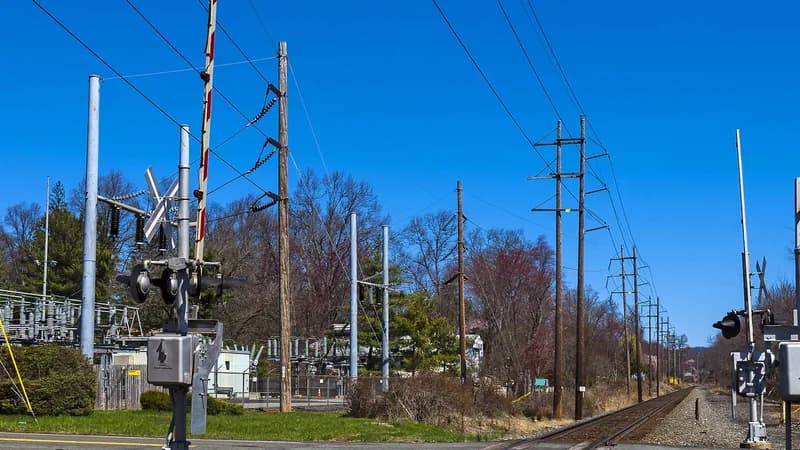
Drivers must obey crossing signals and gates (VTL 1170). When a train and a vehicle collide, the claim can involve the railroad, the driver and whoever maintains the signals, each with its own rule. If you were in the car, no-fault benefits usually come first; see the no-fault and PIP guide.
Results: none of the firm's published results describes a train or rail case. Over 40 years, the firm has recovered more than $100 million for clients. See the verdicts and settlements archive.
Hurt on a train or platform?
A subway claim can need a notice within 90 days, and a commuter railroad claim must be presented 30 days before suit. Call us so the right railroad gets it in time.
Questions
Frequently Asked Questions
We do not publish counts. The claims we see described most often involve platforms and gaps, doors closing on a rider, sudden stops or jolts, falls on stairs and escalators in stations, people struck on the tracks, vehicles hit at grade crossings and, rarely, collisions or derailments. In each, the question is what the railroad or another party did or failed to do, proved from video, train data and maintenance records.
Depending on the facts: the railroad that ran the train or station (New York City Transit, the Staten Island Railway, the LIRR, Metro-North, PATH, Amtrak or NJ Transit), a contractor that maintained the track, signals or equipment, a parts manufacturer, a property owner next to the tracks, or a driver who ignored crossing signals. Each railroad has its own claim rule, so naming the right one comes first.
Falls on platforms, stairs and in the car cause fractures and head injuries; gaps and doors cause leg, arm and crush injuries; people struck by trains or contact with a powered rail can suffer amputations, burns and fatal injuries. The injury does not change which railroad rule applies, but it shapes the medical proof. See our brain injury and catastrophic injury pages for how those injuries are documented.
Get medical care. Report the injury to the conductor, station staff or police, and ask for a report or incident number. Note the line, the car number if you can, the station, the platform or door and the time. Keep your ticket, MetroCard or OMNY record and your clothing. Photograph the gap, the step or the spill. Do not give a recorded statement to the railroad’s claims staff before advice, and call us early.
It depends on the railroad. Subway: a notice of claim within 90 days, suit generally within one year and 90 days. LIRR and Metro-North: no notice of claim for an injury claim, but the claim is presented, 30 days pass, and suit is due within one year and 90 days. PATH: against the Port Authority, a notice of claim at least 60 days before suit and suit within one year; the PATH entity’s rule is confirmed early. Railroad workers under FELA: three years. Death claims follow separate rules.
A successful claim can include medical bills, lost earnings, future care and pain and suffering; in a death case, the estate brings the claim for the family’s financial losses. No-fault and its serious-injury threshold apply to motor-vehicle crashes, not to a train passenger’s claim against a railroad. We do not publish value ranges; the amount depends on the injury, the proof and the defendant.
Yes, if the railroad was negligent. On the subway, serve a notice of claim on the Transit Authority within 90 days. On the LIRR or Metro-North, which are MTA subsidiaries, no notice of claim is required for an injury claim, but the claim must be presented and 30 days must pass before suit, and suit is due within one year and 90 days. Railroads owe passengers reasonable care under the circumstances.
We start by naming the right railroad and calculating its deadline, then ask in writing for station and train video, incident reports and maintenance records before they are lost. The firm has over 40 years of experience and has recovered more than $100 million for clients firm-wide; none of our published results describes a train case. The consultation is free, and there is no fee unless there is a recovery.
Train or subway injury? Start with the railroad
Tell us the line, the station and what happened. We will identify the railroad, calculate its deadline and request the video. Free consultation; no fee unless there is a recovery.
What to bring
- Line, station, car or door and the time
- Report or incident number
- Ticket, MetroCard or OMNY record
- Medical records so far
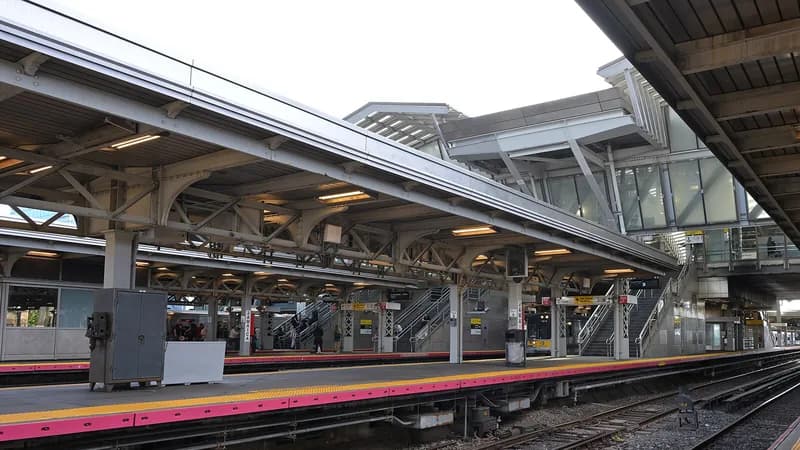
Photo credits: Jamaica station platforms by 4300streetcar, CC BY 4.0, cropped and resized; Gilchrest Road grade crossing by Daniel Case, CC BY-SA 3.0, cropped and resized.