

Medical malpractice claims in Queens County
Queens Medical Malpractice Lawyers
The first thing to pin down is the deadline. In New York it usually runs from the treatment itself or the last continuous treatment for the same condition; only limited exceptions, such as a foreign object or a missed cancer, look to when a problem was found. There is no general discovery rule.
Our Corona office is in Queens. Free review, no fee unless there is a recovery.
The start date
When does your clock start?
Find the event that fits your care. More than one can apply, and the earliest deadline is the one to plan around.
- 1
The act or omission
The usual start: two years and six months from the surgery, missed test or wrong prescription (CPLR 214-a).
- 2
Continued treatment for the same condition
If the same provider kept treating the same illness, injury or condition that gave rise to the claim, the time can run from the last such treatment. Other visits, and check-ups you asked for only to see how you were doing, do not count, and courts look closely at the facts (Nykorchuck).
- 3
A qualifying foreign object is found
An additional one-year window from discovery of the object, or of facts that would reasonably lead to it, whichever is earlier; it does not shorten the ordinary deadline. Chemical compounds, fixation devices and prosthetic aids or devices are excluded.
- 4
A missed cancer is found
Two years and six months from the later of (1) when you knew or reasonably should have known of the negligent act or omission and that it caused injury, with that route capped at seven years from the act or omission, or (2) the last treatment where there is continuous treatment for that condition.
- 5
The patient was a child
Infancy can extend the time, but in a malpractice case that extension cannot run more than ten years after the claim accrues (CPLR 208). Other deadlines still apply separately.
- 6
The care was at Elmhurst or Queens Hospital
For an ordinary personal-injury claim, a separate first deadline: a notice of claim on NYC Health + Hospitals within 90 days after accrual, and suit within one year and 90 days, subject to tolls or late-notice relief (Scantlebury). Death claims follow different rules.
Who ran the hospital
Public and private hospitals in Queens
Elmhurst and Queens Hospital in Jamaica belong to NYC Health + Hospitals, a separate public corporation. The notice goes to NYC Health + Hospitals itself; sending it to the City Comptroller does not count.
Jamaica Hospital Medical Center, NewYork-Presbyterian Queens and Mount Sinai Queens are private, as are most doctors' offices, so no municipal notice of claim applies to a claim against them. The NYC Health + Hospitals facility list shows the public sites, including Gotham Health clinics.
Deadlines at a glance
Who you claim against sets the first deadline
These are general starting points, not a calculation for your case. There is no general “discovery rule” in New York malpractice cases, and continued visits extend the time only when they are continuous treatment for the same condition (Nykorchuck v Henriques). Claims involving State-run or federal facilities follow distinct rules.
- A private doctor, practice or private hospital
- No municipal notice of claim is needed for a claim against a private defendant. A lawsuit generally must be started within two years and six months of the act or omission, or of the last treatment where there is continuous treatment for the same illness, injury or condition that gave rise to the claim (CPLR 214-a).
- NYC Health + Hospitals (a public hospital or Gotham Health clinic)
- For an ordinary personal-injury claim: a notice of claim filed with NYC Health + Hospitals itself, not with the City Comptroller, within 90 days after the claim accrues, and a lawsuit within one year and 90 days after accrual, subject to any applicable toll or court-allowed late notice (Scantlebury, 2005). The entity that ran the facility decides this, not the location alone.
- A foreign object left in the body
- An additional window of one year from discovery of the object, or from discovery of facts that would reasonably lead to it, whichever is earlier. It does not shorten the ordinary deadline. Chemical compounds, fixation devices and prosthetic aids or devices are excluded, so not every item left after surgery qualifies.
- A missed cancer or malignant tumor
- Two years and six months from the later of (1) when you knew or reasonably should have known of the negligent act or omission and that it caused injury, with that route capped at seven years from the act or omission, or (2) the last treatment where there is continuous treatment for that condition.
- The patient is a child
- Infancy can extend the time (CPLR 208), but in a malpractice case that extension cannot run more than ten years after the claim accrues. Other deadlines, such as a public-hospital notice, still need separate attention.
- The patient died
- Wrongful death is a separate claim, generally due within two years of death (EPTL 5-4.1); where GML 50-e applies, its 90-day notice runs from the appointment of the estate's representative. A survival claim for the patient's own injury keeps its own deadlines; death does not simply restart them.
Before filing, the attorney usually consults an appropriate licensed practitioner and files a certificate of merit; the statute allows limited alternatives (CPLR 3012-a). For a missed cancer, see our delayed cancer diagnosis guide; after a death, see Queens wrongful death.
If you need medical care now, get it. Call 911 or go to an emergency room for urgent symptoms. Decisions about your treatment and your doctors are for you and your medical providers; a legal review does not replace medical advice.
Malpractice results
Results for injured patients
These are the firm's published medical malpractice results. The records do not identify the hospital, county or borough, so they are not presented as Queens results.
Prior results do not guarantee a similar outcome. Every case depends on its own facts.
See the full verdicts and settlements archive$950,000
$950,000 Settlement for a Preventable Eye Injury
The Licatesi Law Group fought for a woman who suffered permanent blindness in one eye after an alleged failure to identify a retained contact lens during an ophthalmologic examination.
$1,300,000
$1,300,000 Medical Malpractice settlement
47 year old male police officer injured as a result of surgical malpractice by an orthopedic surgeon resulting in an inability to work and permanent impairment of gait.
Read the case study$3,000,000
$3 Million Dollar Settlement — Failure to Diagnose
Failure to diagnose the plaintiff's cancer resulting in a $3 million dollar settlement.
Meeting with us
Our Queens office in Corona
Our Corona office is at 100-17 Northern Boulevard, and we also meet by phone or video. See our Queens location page.
Treated in another borough? See Brooklyn, Bronx, Manhattan or Staten Island medical malpractice.
Queens neighborhoods we serve include
- Flushing
- Jamaica
- Astoria
- Long Island City
- Forest Hills
- Jackson Heights
- Elmhurst
- Corona
- Bayside
- Ridgewood
- Rockaway
- Kew Gardens
Questions
Frequently Asked Questions About Queens Medical Malpractice
Generally you need a treating relationship with the doctor, nurse or hospital; care that departed from accepted medical practice; proof that the departure, rather than the underlying illness, caused the harm; and real injury. A qualified medical expert usually has to review the records to say whether the care fell below the standard. A poor outcome, by itself, is not malpractice.
Generally two years and six months from the malpractice, or from the last treatment where the same provider was still treating the same illness, injury or condition that gave rise to the claim (CPLR 214-a). Narrow additional rules apply to some foreign objects left in the body and to a missed cancer, and infancy can extend the time up to ten years after the claim accrues; the deadlines section on this page sets out each branch. For an ordinary personal-injury claim over care at Elmhurst, Queens Hospital or another NYC Health + Hospitals facility, a notice of claim is due on NYC Health + Hospitals within 90 days after the claim accrues and suit within one year and 90 days, subject to any toll or late-notice relief.
Damages can cover past and future medical and care costs, lost earnings and earning capacity, and pain and suffering, including loss of enjoyment of life. A spouse may have a related claim, and if a patient died the estate may bring wrongful death and survival claims. The value depends on the injury and the proof, so we do not give figures before reviewing the records.
A complication or an error in judgment is not automatically malpractice. The question is whether a reasonably careful provider in the same field would have acted differently in the same situation, for example by ordering a test the symptoms called for or following up on an abnormal result. The standard is the same across New York and is usually shown through expert medical testimony.
We review care at any Queens hospital, clinic or private practice. Elmhurst and Queens Hospital in Jamaica are NYC Health + Hospitals facilities, where an ordinary injury claim needs a notice on NYC Health + Hospitals within 90 days of accrual. Jamaica Hospital Medical Center, NewYork-Presbyterian Queens and Mount Sinai Queens are private, so no municipal notice of claim applies to a claim against them. Naming a hospital is not a suggestion that anything went wrong there.
You do not hire one yourself. Usually, before filing, your attorney consults an appropriately licensed practitioner (a physician, or a dentist or podiatrist for those claims) and signs a certificate of merit stating there is a reasonable basis for the case (CPLR 3012-a). It is the attorney’s certificate, not an expert affidavit, and the statute allows limited alternatives, such as filing it later when a deadline is about to run, or a different certificate when a case relies only on res ipsa loquitur. Expert medical testimony is usually needed on the standard of care and causation; we arrange that review.
Records come from several providers, medical experts have to review them, and the hospitals and doctors are usually represented by their own lawyers. Depositions and expert disclosure follow, and an injury’s long-term effects may take time to become clear. Each case and court calendar is different, so we do not promise a timeline; we explain what is driving yours.
If you need medical care, get it; choices about your treatment and providers belong to you and your doctors. Write down dates, names and what you were told, request copies of your records (Public Health Law 18), and keep discharge papers and prescriptions. Check whether the hospital was Elmhurst or Queens Hospital, because the 90-day notice comes quickly. Ask a lawyer before giving a recorded statement.
We do not publish statistics for any Queens hospital. Malpractice claims in general often involve delayed or missed diagnoses, including cancer, surgical and anesthesia errors, medication mistakes, early emergency-department discharges, failures to monitor a patient or a labor, and infections or pressure injuries tied to lapses in care. Whether any of these happened in your care is a question for an expert review.
Possibly. A complication alone is not malpractice. The questions are whether the surgery and follow-up care met accepted practice, whether you were told the reasonably foreseeable risks and alternatives before a non-emergency procedure (Public Health Law 2805-d), and whether a departure caused the harm. Jamaica Hospital Medical Center is a private hospital, so no municipal notice of claim applies and the general deadline usually controls.
A lawsuit begins in the Supreme Court with a summons and complaint, usually accompanied by the attorney’s certificate of merit, served on each doctor, practice or hospital. An ordinary injury claim against NYC Health + Hospitals also needs the earlier 90-day notice. The right county depends on the parties and where the care happened, and we confirm the court and the deadline at the review. The consultation is free.
Talk to a Queens medical malpractice lawyer
Tell us the hospital or practice, the dates of treatment and when you learned something was wrong. We will tell you which start date applies, whether a public-hospital notice is due and what to request first. The review is free.
What to bring
- Hospital or practice names and dates
- The last visit for the same condition
- Discharge papers and test results you have
- A short timeline of symptoms
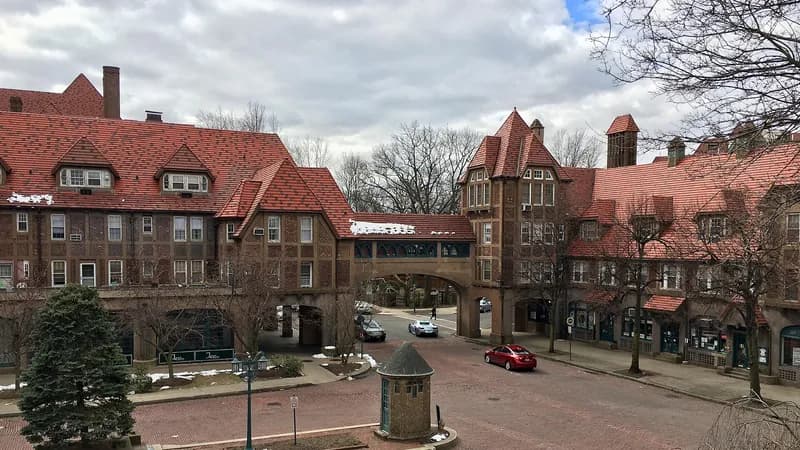
Photo credits: Station Square, Forest Hills by Newyork718, CC BY-SA 4.0, cropped and resized.