

Wrongful death claims in Manhattan
Manhattan Wrongful Death Lawyer for New York County Families
In New York, a wrongful death claim is brought by the court-appointed representative of the estate, generally within two years of the death.
If a City agency may be responsible, a 90-day notice clock starts when that representative is appointed, so the estate step comes first.
Start here
The order things happen
Families often wait to open an estate. In a wrongful death case that delay can matter, because the representative is the only person who can sue and some notice periods run from the appointment.

Right away
Request the death certificate, police or incident reports and hospital records, and ask that video and other evidence be preserved.
Estate appointment
A court appoints the personal representative. In Manhattan, letters are typically sought from the New York County Surrogate's Court.
90 days from appointment
If a city or other municipality may be responsible, serve the notice of claim (General Municipal Law 50-e).
Two years from death
Start the wrongful death action (EPTL 5-4.1; for municipalities, General Municipal Law 50-i). A related criminal case can extend this.
Distribution
The recovery is divided among distributees in proportion to their pecuniary injuries (EPTL 5-4.4).
Sources: EPTL 5-4.1, General Municipal Law 50-e, 50-i, EPTL 5-4.4.
Damages
What New York lets families recover
New York measures wrongful death damages by financial loss. That makes documentation of the decedent's earnings, support and services central to every case.
Wrongful death claim
Pecuniary injuries to the family, medical and funeral expenses, punitive damages where the decedent could have recovered them, and interest from the date of death (EPTL 5-4.3).
Survival claim
The decedent's own injury claim continues after death; it is not lost because the person died (EPTL 11-3.2(b)).
Grief damages are not law
The Grieving Families Act (S4423) passed both houses and was vetoed on December 5, 2025. A new version, S10171, was referred to committee on May 4, 2026.
Manhattan
What Manhattan cases often involve
- Public defendants: City vehicles, City-run hospitals, streets and sidewalks, and MTA buses and stations each carry notice requirements that can start running quickly.
- Street crashes: pedestrians, cyclists, taxis, trucks and delivery riders, where building and traffic video is often overwritten within weeks.
- Construction: falls and falling objects on building sites, where Labor Law claims and site records come into play.
- Medical care: hospital and physician records that must be gathered from every provider involved.
- Financial proof: tax returns, pay records, benefits and the household services the decedent provided.
Wrongful death results
Results for families
These are the firm's published wrongful death results. The published descriptions do not identify them as Manhattan cases. These historical descriptions are reproduced as firm records, not as a statement of the damages available under current New York law; the current-law discussion above governs that question.
Prior results do not guarantee a similar outcome. Every case depends on its own facts.
See the full verdicts and settlements archive$2,000,000
$2 Million Dollar Settlement at Mediation
Wrongful death case settled at the Appellate level, 44-year-old husband and father drowned while swimming in a municipal pool.
$1,850,000
$1,850,000 Award — Wrongful Death of Pedestrian
Wrongful death of pedestrian struck while crossing the street. Despite very limited pecuniary loss, substantial award obtained for family's loss of companionship and emotional damages.
Related
Related pages
- New York wrongful death for claims across the state.
- Manhattan pedestrian accidents
- Manhattan auto accidents
- Manhattan medical malpractice
- Manhattan work accidents
- Brooklyn and Queens wrongful death
Questions
Manhattan wrongful death questions
Under EPTL 5-4.1, the action is brought by the decedent's personal representative, meaning the executor or administrator appointed by a court, on behalf of the family members who are distributees. If the decedent left a will naming an executor who refuses to bring the action, the distributees are entitled to have an administrator appointed to pursue it. In Manhattan, letters are typically sought from the New York County Surrogate's Court.
Generally two years after the death (EPTL 5-4.1). If a criminal action was started against the same defendant for the same event, the representative has at least one year from the end of the criminal action. When a city or other municipality may be responsible, a notice of claim is generally due within 90 days, and for wrongful death that period runs from the appointment of the estate representative (General Municipal Law 50-e); the action must be started within two years of the death (General Municipal Law 50-i).
EPTL 5-4.3 allows fair and just compensation for the pecuniary injuries resulting from the death to the persons for whom the action is brought, plus the reasonable expenses of medical aid, nursing and attention for the fatal injury and reasonable funeral expenses. Punitive damages may be awarded where they would have been recoverable had the decedent survived, and interest runs from the date of death.
Not under the current wording of EPTL 5-4.3, which measures wrongful death damages by pecuniary injuries. The Legislature passed a "Grieving Families Act" bill (S4423) that would have allowed grief and anguish damages, but the Governor vetoed it on December 5, 2025. A new bill, S10171, was referred to the Senate Judiciary Committee on May 4, 2026. Unless a new law is enacted, the pecuniary rule applies.
EPTL 5-4.4 says the damages are exclusively for the benefit of the decedent's distributees and are distributed in proportion to the pecuniary injuries each suffered, as determined after a hearing by the court handling the action or the Surrogate. The reasonable expenses of the action or settlement, and medical and funeral expenses included in the recovery, can be fixed by the court and deducted.
The wrongful death claim compensates the family's losses caused by the death. A survival claim continues the decedent's own claim for injuries suffered before death; EPTL 11-3.2(b) provides that no cause of action for injury to person or property is lost because of the death of the person in whose favor it existed. The estate representative usually brings both together.
Claims against the City and other municipalities require a timely notice of claim, which for wrongful death runs 90 days from the appointment of the estate representative, so the Surrogate's Court step should not wait. For the MTA, Public Authorities Law 1276 says wrongful death actions follow the notice of claim and time limitation provisions in the Public Authorities Law, which should be checked for the specific agency involved.
Talk to a Manhattan wrongful death lawyer
We can explain the estate appointment, the deadlines that apply and what records to request, at a pace that works for your family. The consultation is free.
What to bring
- Death certificate
- Police, incident or hospital records you have
- Will or estate papers, if any
- Pay records or tax returns of the decedent
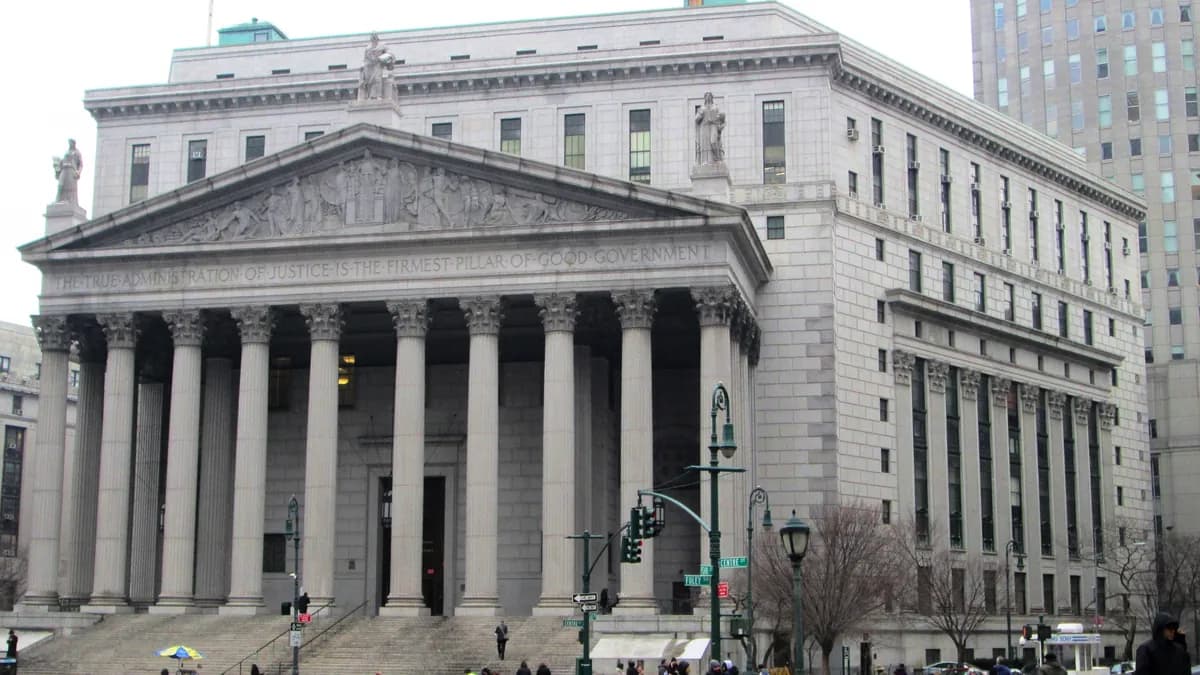
Photo credits: New York County Supreme Courthouse by Beyond My Ken, CC BY-SA 4.0, cropped and resized; Surrogate's Courthouse by Beyond My Ken, CC BY-SA 4.0, cropped and resized.