

Riders, and pedestrians hit by e-bikes
New York Electric Scooter and E-Bike Accident Lawyer
Who pays after an e-bike or scooter crash depends on the device's legal class and on whether a car was involved. A rider hit by a car may have no-fault benefits; a pedestrian hit by an e-bike usually does not.
We represent riders and pedestrians in New York City and in Nassau and Suffolk counties.
Start here
The device's class decides the rules
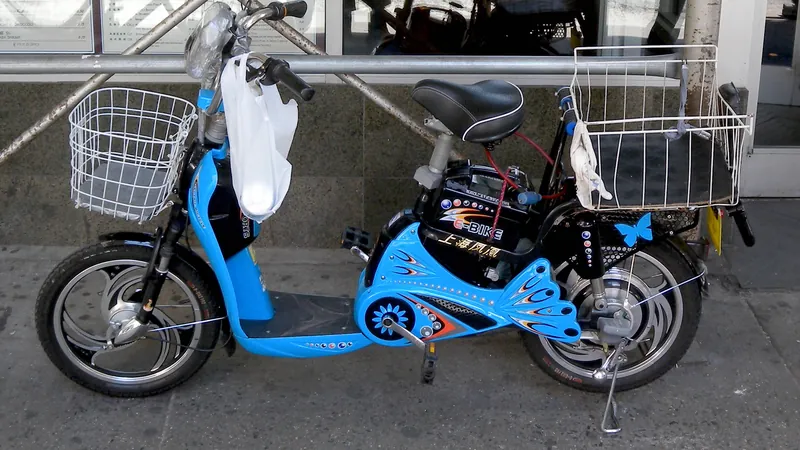
New York defines a bicycle with electric assist as no more than 36 inches wide with a motor under 750 watts, and sorts it into three classes. How a device looks does not decide its class; its motor, speed and controls do.
In New York City, a Department of Transportation rule effective October 24, 2025 caps e-bikes, e-scooters and pedal-assist commercial bicycles at 15 mph.
- Class 1 e-bike
- Motor helps only while pedaling; stops assisting at 20 mph
- Statewide
- Class 2 e-bike
- Motor can propel the bike alone; stops at 20 mph
- Statewide
- Class 3 e-bike
- Motor assistance up to 25 mph
- Defined solely within a city of one million or more
- Electric scooter
- Stand-up scooter; may not be operated over 15 mph
- Roads posted 30 mph or less; no sidewalks unless a local law allows
- Devices outside these definitions
- Wider, more powerful or faster than the definitions allow
- May be treated as something other than an e-bike, which can change coverage
Sources: NYS DMV, electric scooters and bicycles, NYC DOT speed-limit rule.
Who pays
Two very different claims
You were riding and a car hit you
Vehicle and Traffic Law 125 excludes defined e-bikes and e-scooters from "motor vehicle." Under Insurance Law 5103(a)(1), no-fault covers people who were not occupants of another motor vehicle or motorcycle, so a rider is generally treated like a pedestrian or cyclist.
The claim against the driver follows motor-vehicle rules, including the 2026 change to CPLR 1411: in actions commenced on or after May 26, 2026, a claimant more at fault than the defendants recovers nothing.
You were walking and an e-bike or scooter hit you
No motor vehicle was involved, so no-fault generally does not pay. The claim runs against the rider and anyone else whose conduct contributed, and its value depends on the coverage or assets behind them.
Fault is compared in proportion under CPLR 1411. Sidewalk riding, speed above the 15 mph city limit, and running signals are common issues. See our pedestrian accident page for crossings and right of way.
Nassau and Suffolk
Riding on Long Island
The state's Class 3 category is defined only within a city of one million or more. A 25 mph device ridden in Nassau or Suffolk may therefore fall outside the e-bike definition, which can affect coverage and fault.
Scooters may not use sidewalks unless a local law authorizes it, and county, town and village roads carry a 90-day notice-of-claim requirement for defect claims. Our Uniondale office handles Long Island cases.
Evidence
Preserve the device and the data
- The device: make, model, motor rating and speed setting, brakes, lights, tires and battery, before repair or disposal.
- App and rental data: trip history, timestamps, GPS, unlock records and maintenance requests.
- The street: potholes, bike-lane layout, signals, lighting and work zones.
- Video and witnesses: storefront, building, bus and dashcam footage, requested before it is recorded over.
Related result
A pedestrian struck by a bicyclist
This firm result involved a pedestrian struck by a bicyclist riding the wrong way on a one-way street. The published description says "bicyclist" and does not identify an e-bike, an electric scooter or the county.
Prior results do not guarantee a similar outcome. Every case depends on its own facts.
See the full verdicts and settlements archive$500,000
$500,000 RECOVERY
Plaintiff pedestrian struck by defendant bicyclist traveling wrong way on one-way street
Related
Related pages
- Bicycle accidents for conventional bikes and Citi Bike riders.
- No-fault and PIP guide for filing benefits after a car crash.
- Bronx pedestrian accidents, including pedestrians hit by e-bikes.
- Products liability for battery fires and brake or frame failures.
- Wrongful death if a rider or pedestrian was killed.
Questions
E-bike and electric scooter questions
It can. Vehicle and Traffic Law 125 excludes bicycles with electric assist and electric scooters, as the law defines them, from the definition of "motor vehicle." Insurance Law 5103(a)(1) extends no-fault benefits to persons other than occupants of another motor vehicle or motorcycle for loss arising out of the use of the insured vehicle. A rider of a device that meets those definitions is therefore generally in the same position as a pedestrian or cyclist struck by that car.
Because a compliant e-bike or e-scooter is not a "motor vehicle," the no-fault system generally does not apply when one strikes a pedestrian. The claim is usually made against the rider and anyone else whose conduct contributed, such as the owner or a rental company, and depends on the insurance or assets available to them. Identifying the rider, the device and any app or delivery account it was used with is the first job.
According to the NYS DMV, a bicycle with electric assist is no more than 36 inches wide with a motor under 750 watts. Class 1 assists only while pedaling and stops at 20 mph; Class 2 can be propelled by the motor alone up to 20 mph; Class 3, up to 25 mph, is defined solely within a city of one million or more. Electric scooters may not be operated faster than 15 mph and are limited to roads with posted limits of 30 mph or less.
Under a New York City Department of Transportation rule effective October 24, 2025, e-bikes, electric scooters and pedal-assist commercial bicycles are limited to 15 mph in the city. A rider going faster than the rule allows can face a fault argument, and a driver or rider who violates traffic rules can too.
The state definitions apply, but the Class 3 category is defined only for a city of one million or more, so a 25 mph device ridden in Nassau or Suffolk may not fit the state's e-bike definition. That can change insurance coverage and fault arguments. Scooters may not use sidewalks unless a local law authorizes it. A claim about a county, town or village road generally requires a notice of claim within 90 days.
A claim against a city, county, town or village generally requires a notice of claim within 90 days (General Municipal Law 50-e) and a lawsuit within one year and 90 days (General Municipal Law 50-i). Road-defect claims against municipalities also have their own proof requirements, so photograph the defect with a measurement and the exact location before it is repaired.
It may. CPLR 1411 was amended so that, in personal injury actions subject to Insurance Law article 51 that are commenced on or after May 26, 2026, recovery is barred if the injured person's culpable conduct is greater than that of the defendants. Article 51 is the motor-vehicle insurance article, so this matters most when a car or truck was involved. Otherwise, fault generally reduces recovery in proportion rather than barring it.
Most personal injury claims must be started within three years (CPLR 214). Claims against a public body need a notice of claim generally within 90 days, and a wrongful death action generally must be started within two years of the death. Rental and delivery-app records can be overwritten or hard to obtain later, so request them early.
Talk to an e-bike and scooter accident lawyer
Tell us what you were riding or how you were hit. We will sort out the device class, the insurance that may apply and the evidence to save first. The consultation is free.
What to bring
- Police report or incident number
- Photos of the device, scene and injuries
- Rental or delivery-app account details
- Insurance cards for your household
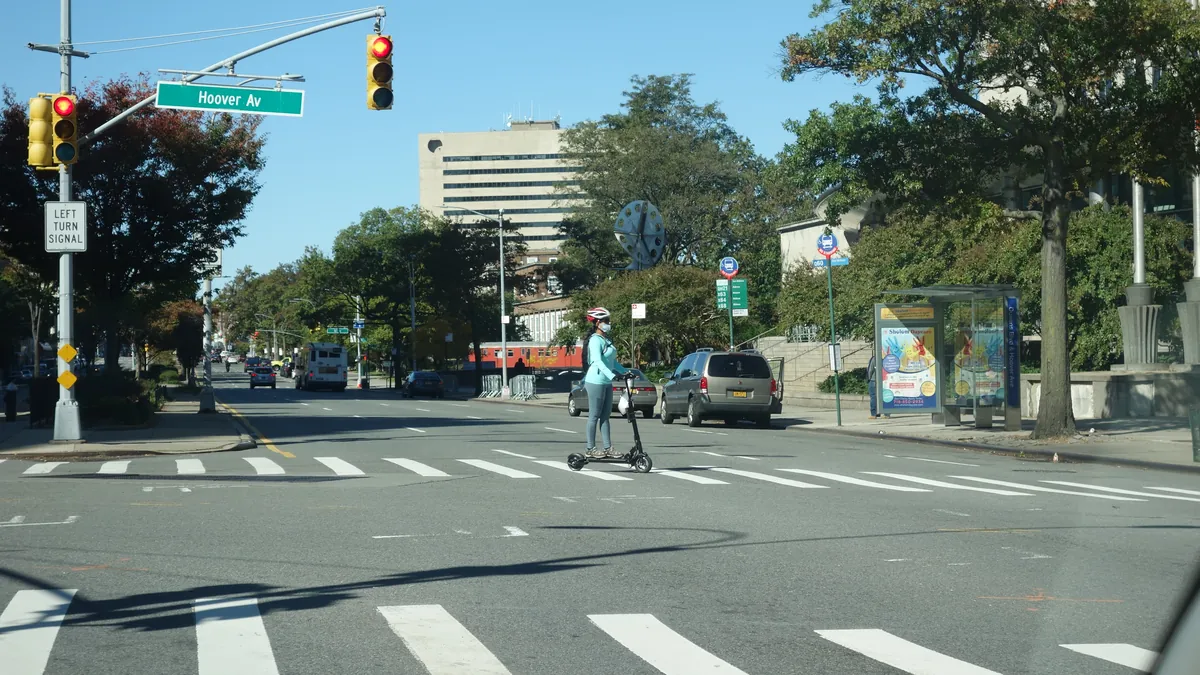
Photo credits: Queens Boulevard e-scooter rider by Tdorante10, CC BY-SA 4.0, cropped and resized.