

Staten Island / Richmond County · served from Brooklyn
Staten Island Pedestrian Accident Lawyer
Even where an intersection has no signal or paint, a driver must yield to you in the crosswalk. The police report, the crossing and early video can show what happened.
We have no Staten Island office; our Brooklyn office serves Staten Island, and you can start by phone or video. More than 40 years of injury practice.
Reports and records
The first weeks, in order
For an ordinary New York injury claim, these are the first steps and the earliest deadlines. Some run from the crash.
A late no-fault notice is accepted only with written proof of a clear and reasonable justification. Death claims, tolls and exceptions follow separate rules and must be checked case by case.
- Day 1
- Call 911 and get medical care. Ask officers for a report and the report number. A driver who knows someone was hurt must stop and give license and insurance information (VTL 600).
- First days
- Photograph the crossing and note whether there was a signal, paint or a median; get witness names and ask nearby businesses about video. Get advice before giving a recorded statement, while still meeting your own insurer’s timely notice and cooperation requirements.
- The report copy
- Request it at the precinct where it happened within 30 days, by mail or in person (NYPD request form), or through the online portal listed by the NYPD. After 30 days, from the State DMV.
- Within 30 days
- Written notice to the no-fault insurer of the vehicle that hit you (11 NYCRR 65-1.1).
- Hit-and-run
- Hit-and-run: a police report within 24 hours and an MVAIC filing within 90 days, if you qualify (Insurance Law 5208). Limited exceptions exist, but they need prompt review.
- City vehicle or street
- Ordinary injury claim against a city, county, town or village (its vehicle or its street): a notice of claim within 90 days (GML 50-e); in New York City it is filed with the Comptroller.
- The State or an authority
- A claim against the State itself goes to the Court of Claims: filed with the court and served on the Attorney General within 90 days, or a notice of intention served in that time (Court of Claims Act § 10). Public authorities, such as transit operators, have their own notice rules.
No signal, no paint
Crossing where there is no signal
A crosswalk is the area connecting the sidewalks at an intersection, painted or not (VTL 110). Where no signal is working, a driver must yield to you in that crosswalk (VTL 1151); City rules say stop and remain stopped (34 RCNY 4-04). Even in a crosswalk, you may not step out suddenly in front of a vehicle too close to stop.
Crossing mid-block, you must yield (VTL 1152). Drivers still owe due care (VTL 1146).
Parking lots and driveways
A driver leaving a driveway must yield to people on the sidewalk (VTL 1151-a) and may back up only when it is safe (VTL 1211). A private parking lot needs no notice of claim, and for an eligible claim the car’s no-fault coverage generally still applies.
Who pays
Who pays, and how fault counts
Shared fault. Your own share of fault generally reduces damages in proportion; it does not end the claim (CPLR 1411).
For a personal-injury action subject to Insurance Law article 51 and commenced on or after May 26, 2026, recovery is barred if your fault is greater than the defendant's, or the defendants' combined (DFS Circular Letter No. 3 (2026)). That rule may apply to a pedestrian's claim against an insured driver, so a disputed crossing matters more than before.
More detail: our pedestrian accident guide.
No-fault first
For an eligible claim involving an insured motor vehicle, no-fault generally pays medical bills and part of lost earnings, up to $50,000 of basic economic loss, regardless of fault (Insurance Law 5103(a)(1), 5102(a)). Eligibility and which insurer handles the claim need review.
Then the driver and owner
Losses beyond no-fault, and pain and suffering if the injury meets New York's serious-injury definition, decided after fault (Insurance Law 5104(a)).
Firm-wide pedestrian results
Recorded pedestrian results
These are the firm's published pedestrian results, quoted exactly as recorded. The records do not say where the cases arose, so they are not presented as Staten Island cases. Over 40 years, the firm has recovered more than $100 million for clients across New York and New Jersey.
Prior results do not guarantee a similar outcome. Every case depends on its own facts.
See the full verdicts and settlements archive$990,000
$990,000 Settlement at Jury Selection. Federal Court. Eastern District
Plaintiff was pedestrian struck by van resulting in multiple fractures requiring several surgeries.
$700,000
$700,000.00 Settlement at Jury Selection
Pedestrian accident sustaining right displaced zygoma fracture post trauma with significant displacement; right alveoli and palatal fracture with malocclusion; right orbital and ethmoid fractures with enophthalmos.
Read the case study$500,000
$500,000 RECOVERY
Plaintiff pedestrian struck by defendant bicyclist traveling wrong way on one-way street
$325,000
$325,000 Parking Lot Pedestrian Accident Settlement
We secured a $325,000 settlement on behalf of our client despite the defense arguing that his injuries were pre-existing. After being struck by a vehicle in a parking lot, our client sustained serious injuries that required laparoscopic surgery. Through diligent advocacy, we secured the compensation he deserved.
Richmond County
Court, office and hospitals
Fell on a sidewalk instead? See Staten Island slip and fall.
- Where a lawsuit is usually filed
- Richmond County Supreme Court, 26 Central Avenue, Staten Island, NY 10301. A case can generally be venued where a party lived or where a substantial part of the events happened (CPLR 503(a)); a suit against the City, in the county where the claim arose (CPLR 504(3)), subject to transfer and other venue rules.
- Where to meet us
- We have no Staten Island office. Staten Island clients are served from our Brooklyn office. Brooklyn, 3857 Kings Highway, #1f, Brooklyn, NY 11234; (516) 227-2662, or by video. See serving Staten Island.
- Designated adult trauma centers
- Level I: Staten Island University Hospital North, Richmond University Medical Center. Source: NYS Department of Health list. Emergency crews choose the hospital; naming one implies no affiliation or fault.
Hit somewhere else in the city? Brooklyn, Bronx, Queens or Manhattan. Long Island and New Jersey are covered from our pedestrian lawyer near me page.
Questions
Staten Island pedestrian accident FAQs
The law is the same New York law as in the rest of the city; what changes is the evidence. Some Staten Island crossings are on wide roads, and some intersections have no painted crosswalk or signal, so where you crossed and what the driver could see matter. Lawsuits are usually filed in Richmond County Supreme Court at 26 Central Avenue. Our Brooklyn office serves Staten Island, and you can start by phone or video.
Possibly. It depends on what happened, not on the road’s name: whether you were in a marked or unmarked crosswalk, what the signal showed, whether the driver was turning, and what the driver could see. Drivers must yield in a crosswalk where no signal is working, and must always use due care. Video, the police report and witnesses often decide the dispute, so we request them early.
The New York State Department of Health lists these designated adult trauma centers in Richmond County: Staten Island University Hospital North, Richmond University Medical Center (Level I adult). Emergency crews decide where to take you. Whichever facility treats you, keep the discharge papers; we request the full records. Naming a hospital does not suggest any affiliation with it or any fault by it.
Call 911 so officers respond and make a report, and keep the report number. You can request a copy at the precinct where the crash happened within 30 days, by mail or in person, using the NYPD request form; NYPD also lists an online portal. After 30 days, requests go to the State DMV. A driver who knows someone was hurt must stop and give license and insurance information.
Possibly. At an intersection the crosswalk exists even without paint, connecting the sidewalks on each side. Crossing mid-block, you must yield to vehicles, but drivers still must use due care. Your share of fault generally reduces damages. For a claim subject to the no-fault law commenced on or after May 26, 2026, recovery may be barred if your fault is greater than the defendants’ combined.
Report it to police right away; an MVAIC claim generally needs a police report within 24 hours and a filing within 90 days, though a later report can be excused if an earlier one was not reasonably possible. A car policy in your household may include uninsured-motorist coverage that applies, depending on its terms; MVAIC is for people who qualify without it. Note any partial plate, color or damage you saw.
Vision Zero is the City’s road-safety program, adopted in January 2014, and the City publishes crash data. That history can describe a road, but it does not prove the driver who hit you was careless. A claim that a street’s design was dangerous faces qualified immunity for planning decisions, though liability may still arise, for example after a plainly inadequate study or an unreasonably delayed fix. It needs a 90-day notice.
For an eligible claim involving an insured motor vehicle, no-fault generally pays medical bills and part of lost earnings, up to $50,000 of basic economic loss, regardless of fault, including in a parking lot. A claim against the driver and owner can add losses beyond that and, if the injury meets the serious-injury definition, pain and suffering. We do not quote values before reviewing the records.
For an eligible claim, the vehicle’s no-fault coverage generally applies. TLC rules require yellow taxis and livery and black cars with up to seven seats to carry at least $100,000 per person and $300,000 per occurrence in liability coverage, and $100,000 in personal injury protection. For an app-dispatched car, which policy applies depends on the vehicle and the trip, so we confirm the insurers early.
We get the first steps right: the correct no-fault insurer, any 90-day notice, the police report and requests for video before it is recorded over. Then we document how the injuries limit you, check every policy that may apply, and file in Richmond County or another proper court if the claim does not settle. The consultation is free, and there is no fee unless there is a recovery.
For an injury claim against a private driver, generally three years. For an ordinary claim against the City, such as a City vehicle or a street defect, file a notice of claim with the NYC Comptroller within 90 days and sue within one year and 90 days. State claims go to the Court of Claims; transit authorities have their own rules. Wrongful death is generally two years from the death. Children’s time to sue can be extended, but notices still apply.
Hit while walking on Staten Island? Talk to us free
Tell us where you crossed and whether there was a signal. We will name the first deadline, who pays your medical bills and how to get the police report. No fee unless there is a recovery.
What to bring
- The crossing or address
- Police report number
- Photos of the crossing and the vehicle
- Any insurer letters or claim numbers
Related pages
Related pages
- Staten Island personal injury
- Staten Island car accidents
- Staten Island bus accidents
- Staten Island wrongful death
- Pedestrian accident attorneys
- Pedestrian accident lawyer near me
- New York no-fault (PIP) guide
- Claims against the City
- Staten Island slip and fall
- Staten Island truck accidents
- Verdicts and settlements
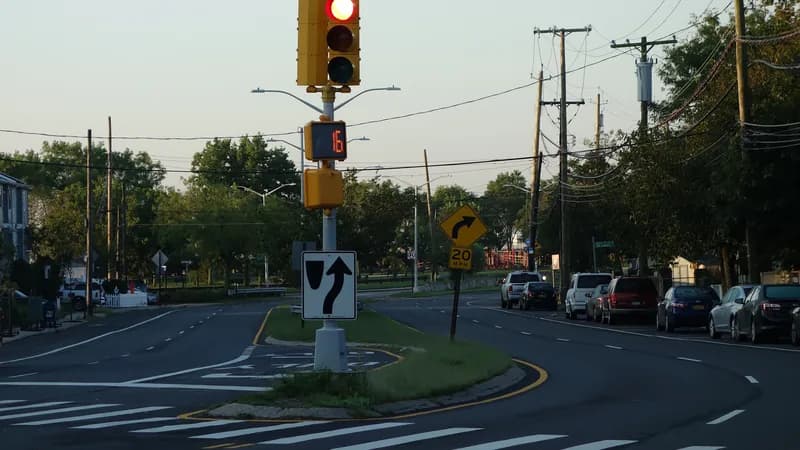
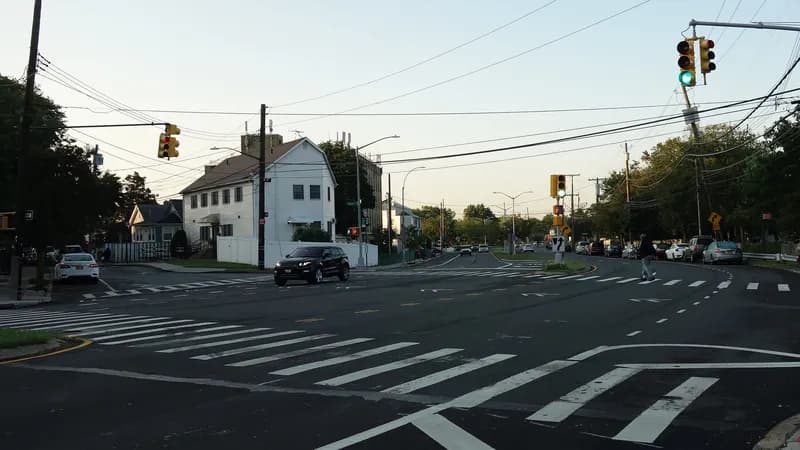
Photo credits: Father Capodanno Boulevard median signal by Tdorante10, CC BY-SA 4.0, cropped and resized; Father Capodanno Boulevard at Ocean Avenue by Tdorante10, CC BY-SA 4.0, cropped and resized.