

Pedestrian Accidents (New Jersey)
New Jersey Pedestrian Accident Lawyer
New Jersey drivers must stop and stay stopped for people in marked crosswalks who are on, or within one lane of, their half of the road, and a crash in a crosswalk lets a jury infer the driver was careless. If you or a relative you live with has a New Jersey auto policy, its PIP generally pays medical bills even though you were walking.
Over 40 years of experience. Free consultation; no fee unless there is a recovery.
Where were you crossing?
- Marked crosswalk
- Drivers must stop and remain stopped while you are on, or within one lane of, the half of the road they are traveling on or turning into; at signal- or police-controlled crossings the signal rules also apply. If you were hit in a crosswalk, the jury may infer the driver did not use due care.
- N.J.S.A. 39:4-36(a)(1), (d)
- Unmarked crosswalk at an intersection
- Drivers must yield to you, unless police or traffic signals control the crossing, other regulations apply, or a pedestrian tunnel or overpass is provided.
- N.J.S.A. 39:4-36(a)
- At a traffic signal
- Do not start against a red or "stop" signal. If you started across on a "go" or green signal and are still in the crosswalk when it changes, you keep the right of way to the far curb. During the green, drivers, including turning drivers, must stop for a pedestrian within one lane of their half of the road.
- N.J.S.A. 39:4-32
- Mid-block or outside a crosswalk
- You must yield to vehicles, but drivers still owe due care. Fault may be shared and the recovery reduced.
- N.J.S.A. 39:4-36(a)(4), (5); 2A:15-5.1
- Parking lot or driveway
- Ordinary care applies to drivers and the property owner; the crosswalk statutes may not apply in the same way.
- Negligence principles
Insurance
Who pays a pedestrian's medical bills
Your household’s New Jersey auto policy
On a standard policy, PIP covers the named insured and resident relatives hit as pedestrians, regardless of fault, unless the policy makes health insurance primary (N.J.S.A. 39:6A-4, 39:6A-4.3).
The Unsatisfied Claim and Judgment Fund
If no PIP is in effect for you, the fund may pay PIP-type medical benefits to a qualified pedestrian struck by a motor vehicle, with a deductible and copayment (N.J.S.A. 39:6-86.1).
The driver’s liability insurance
Answers for losses PIP did not pay and for pain and suffering, subject to any lawsuit limitation that applies to you and to that driver’s vehicle.
Your uninsured or underinsured motorist coverage
If the driver fled, had no insurance or too little (N.J.S.A. 17:28-1.1).
For the PIP amounts and the two lawsuit options, see New Jersey auto accidents.
If the driver drove off
- Call police at once and get the report number; describe the car, plate fragments and direction of travel.
- Ask nearby businesses and homeowners to keep video; some systems record over older footage.
- Tell your auto insurer promptly about an uninsured motorist claim.
- If no policy applies, notice to the Unsatisfied Claim and Judgment Fund is generally due within 180 days, and you must show reasonable efforts to identify the driver (N.J.S.A. 39:6-65, 39:6-78).
Crosswalk and Visibility Record Review
We Rebuild the Scene Before Fault Gets Shifted
Pedestrian cases are often defended by blaming the person who was hit. We preserve the police report, signal timing, lighting, vehicle damage, nearby video, driver statements and ambulance records while they still exist.
- Scene and signal proof
- Crosswalk markings, lighting, speed, sight lines and signal timing show how the impact happened.
- Coverage and injury file
- Medical records, lost-wage proof and every policy that may pay are organized alongside the liability evidence.
Public roads and vehicles. If a dangerous road, signal or sidewalk condition, or a government vehicle, played a part, a written notice of claim is generally due to that public entity within 90 days of accrual, and the Tort Claims Act limits pain-and-suffering damages. Tripped on a sidewalk rather than struck? See New Jersey slip and fall claims.
Injuries we see. Head and brain injuries, spinal injuries, fractures of the pelvis, legs and ribs, internal injuries, scarring and the psychological effects of being struck.
Hit while walking? Video near the crossing can be recorded over quickly. Call us and we will send preservation requests.
After the crash
What to Do After a Pedestrian Accident
Call 911. Get police and medical help, and go to the hospital even if you feel able to walk away.
Document the scene. If you can, photograph the vehicle, the crossing, the signals and your injuries.
Get the driver’s details. Name, plate, license and insurance; if the driver fled, witness descriptions.
Get the police report number. And the officer’s name.
Open a PIP claim. With your or a household relative’s auto insurer, or ask us about the fund.
Let us handle the other insurer. Before you give a recorded statement or sign an authorization.
Deadlines that apply
- 2 years
- Most New Jersey personal injury lawsuits must be filed within two years after the claim accrues, usually the date of injury.
- N.J.S.A. 2A:14-2(a)
- 90 days
- Generally, notice is due within 90 days of accrual and suit within two years for a claim against a public entity or employee. A court may permit late notice within one year for extraordinary circumstances and no substantial prejudice. Minors, incapacity and accrual can change these clocks; seek prompt review.
- N.J.S.A. 59:8-8, 59:8-9
- 180 days
- Notice to the Unsatisfied Claim and Judgment Fund when the vehicle or driver cannot be identified and no policy applies.
- N.J.S.A. 39:6-65
- Children
- If the injured person was under 18 when the claim accrued, the two years generally run from their 18th birthday. Medical malpractice for injuries at birth is the exception: it must be filed before the child’s 13th birthday.
- N.J.S.A. 2A:14-21; 2A:14-2(a)
If someone died, see New Jersey wrongful death; struck by a bus, see bus accidents. If it happened in New York, see our New York pedestrian accident page.
Published results
Pedestrian accident results
These are the firm's published pedestrian accident results, quoted exactly as recorded; they are firmwide results. None of these records is identified as a New Jersey case. They are not a prediction for any other case.
Prior results do not guarantee a similar outcome. Every case depends on its own facts.
See the full verdicts and settlements archive$700,000
$700,000.00 Settlement at Jury Selection
Pedestrian accident sustaining right displaced zygoma fracture post trauma with significant displacement; right alveoli and palatal fracture with malocclusion; right orbital and ethmoid fractures with enophthalmos.
Read the case study$990,000
$990,000 Settlement at Jury Selection. Federal Court. Eastern District
Plaintiff was pedestrian struck by van resulting in multiple fractures requiring several surgeries.
$500,000
$500,000 RECOVERY
Plaintiff pedestrian struck by defendant bicyclist traveling wrong way on one-way street
$325,000
$325,000 Parking Lot Pedestrian Accident Settlement
We secured a $325,000 settlement on behalf of our client despite the defense arguing that his injuries were pre-existing. After being struck by a vehicle in a parking lot, our client sustained serious injuries that required laparoscopic surgery. Through diligent advocacy, we secured the compensation he deserved.
Questions
New Jersey Pedestrian Accident FAQs
We do not rank roads without current crash data. The settings our investigations focus on include wide state highways with commercial driveways, such as Routes 46 and 23, busy downtown streets in Paterson, Passaic and Clifton, and parking lots. What decides a claim is not the road’s reputation but the facts of the crossing: the signal, the crosswalk, the lighting, the driver’s speed and attention, and the video that recorded it.
Ambulance crews choose the hospital based on the injuries. Hospitals in and near Passaic County include St. Joseph’s University Medical Center in Paterson and Chilton Medical Center in Pompton Plains. For the claim, what matters is that the emergency record notes you were struck while walking and lists every injury, and that follow-up care is documented. We collect the ambulance, hospital and follow-up records for you.
A pedestrian can recover if their own negligence was not greater than the combined negligence of the drivers being sued; the damages are reduced by the pedestrian’s share. Example: a jury finds the walker 30% at fault and the driver 70%, so the walker recovers 70% of the damages. A walker found more at fault than the defendants combined recovers nothing from them. In a crosswalk crash, the jury may infer the driver was careless.
Generally two years after the claim accrues, usually the date of injury. If a government vehicle or a public road, sidewalk or signal may be responsible, a written notice of claim is generally due to that public entity within 90 days of accrual. If the driver cannot be identified and no policy applies, notice to the Unsatisfied Claim and Judgment Fund is generally due within 180 days. Children and people who lack capacity can have more time.
If you or a resident relative has a New Jersey auto policy, its PIP generally pays medical bills, unless that policy makes health insurance primary. From the at-fault driver you can claim economic losses PIP did not pay, such as further lost wages and unreimbursed medical bills, and pain and suffering; a qualifying injury may be required, depending on your policy and the vehicle that hit you. Available insurance usually limits what can be collected.
Report it to police right away and ask nearby businesses to keep their video. Your own or a household relative’s auto policy usually includes uninsured motorist coverage for hit-and-run vehicles. If no policy applies and you qualify, the Unsatisfied Claim and Judgment Fund may pay, but notice is generally due within 180 days and you must show that reasonable efforts were made to identify the driver and the vehicle.
No. Drivers must stop and stay stopped for a pedestrian in a marked crosswalk who is on, or within one lane of, the half of the road the driver is traveling on or turning into, and must yield at unmarked crosswalks at intersections without signal or police control. But pedestrians must not cross against a red or "stop" signal, must not step into the path of a car too close to stop, and must yield when crossing anywhere else.
Parking lots are usually private property, so crosswalk statutes for public roads may not apply in the same way, but every driver still owes ordinary care to people on foot, especially when backing up or turning into an aisle. Store and lot video is often the key evidence and should be requested quickly. The property owner may also be responsible if lighting, layout or a hazard in the lot contributed.
Drivers turning left or right through a crosswalk without looking, distraction from phones or navigation, speeding on wide roads, drivers passing another car stopped for a pedestrian, backing up in parking lots, impaired driving, and poor lighting or missing crosswalks. New Jersey law specifically forbids passing a vehicle that has stopped to let a pedestrian cross.
Usually yes. A pedestrian outside a crosswalk must yield to traffic, so a jury may assign part of the fault to the walker, but the statute also says drivers are not relieved of their duty to use due care for anyone in the road. If the driver was speeding, distracted or impaired, the walker can still recover, reduced by their share, as long as it is not greater than the drivers’ combined fault.
The same New Jersey rules apply, but these highways raise particular issues: several lanes, where a car in one lane stops and the next lane does not; higher speeds; turning traffic at commercial driveways; and night lighting. Because Routes 46 and 23 are state highways, a defect in the road, signal or lighting may involve a public entity and its 90-day notice. We look for signal timing, lighting and nearby business video early.
Back to the New Jersey personal injury overview.
New Jersey office: 696 Palisade Avenue, Teaneck, NJ 07666 · 908-667-0077 · directions and hours
Talk to a New Jersey Pedestrian Accident Lawyer
We will work out where the crossing fits under New Jersey law, which policy or fund pays first and which deadlines apply. Free consultation; no fee unless there is a recovery.
What to bring
- The date, time and exact location of the crossing
- The police report number and any photos or video
- Your or your household’s auto insurance card
- Ambulance and hospital paperwork
Related
New Jersey crash and fatal-injury guides
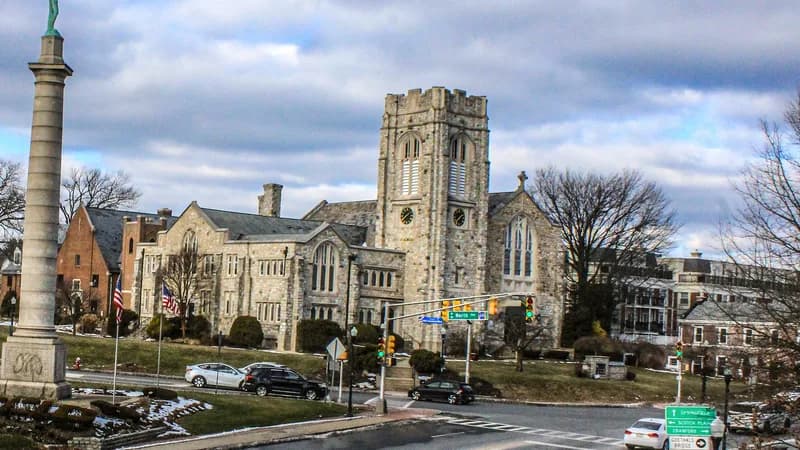
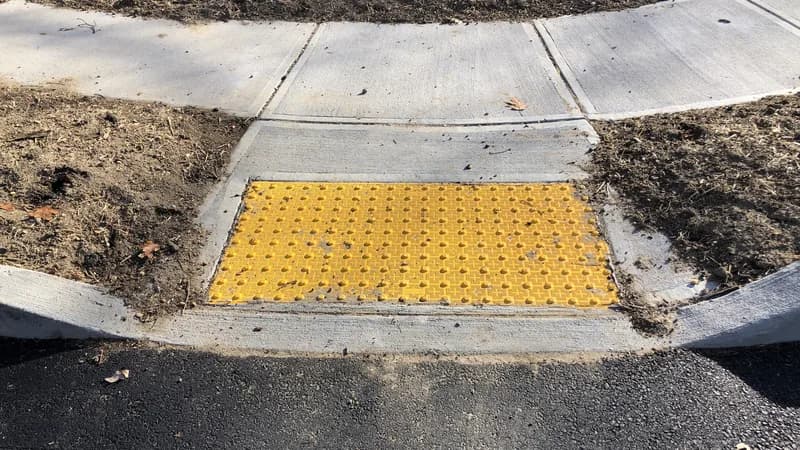
Photo credits: Downtown Westfield by Freeholdman12, CC BY 4.0, cropped and resized; Curb ramp, Ewing Township by Famartin, CC BY-SA 4.0, cropped and resized.