

New York City · Structural and building collapse injuries
New York City Building Collapse Lawyer
Why you were at the building decides the legal path. An injured worker usually has a workers' compensation claim and may have a Labor Law claim against others. A tenant, pedestrian or visitor brings a negligence claim against whoever controlled the structure.
Either way, the site is usually controlled by others after a collapse, and evidence changes quickly.
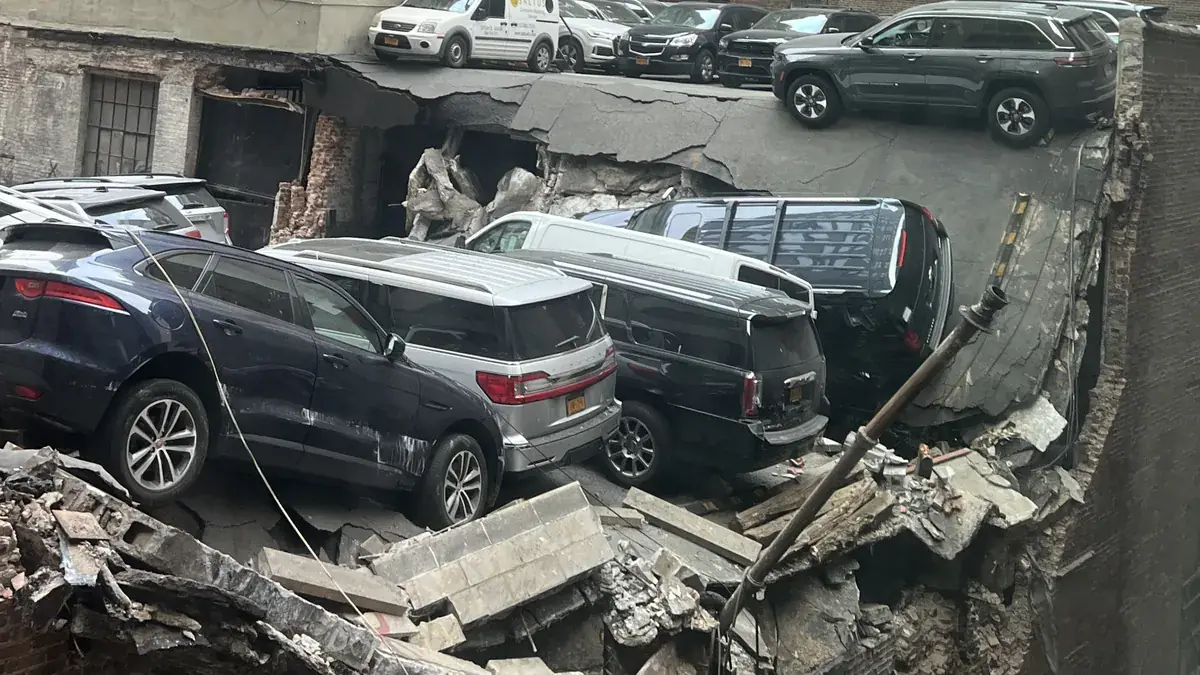
Two paths
Two paths, depending on why you were there
You were working
- First step
- Written notice to your employer within 30 days (Workers' Compensation Law 18).
- Possible claims
- Workers' compensation, plus a possible Labor Law or negligence claim against an owner or contractor other than your employer.
- Key question
- What work was being done, and who controlled it?
You lived, visited or passed by
- First step
- Medical care, then identify the building and, if possible, its owner and anyone working on it.
- Possible claims
- Negligence against the owner, manager, contractors or a neighboring builder.
- Key question
- Who knew, or should have known, the structure was unsafe?
Investigation
What can bring a structure down
Collapses rarely have one cause. Investigations commonly look at:
- Demolition, excavation or underpinning on the same or a neighboring lot
- Removed or altered load-bearing walls, beams or columns
- Overloading with materials, equipment or vehicles
- Long-standing water damage, corrosion or deferred facade and structural repairs
- Fire damage, or temporary shoring that was inadequate or removed too early
Evidence disappears quickly
Get medical care
Tell treating staff exactly how you were hurt.
Do not re-enter
Collapse sites are unstable and are often closed by the authorities.
Save what you have
Photos and videos from before or after, texts about cracks, leaks or work on the building.
Write down witnesses
Neighbors, coworkers and passers-by, with contact details.
Keep every letter
From an employer, insurer, landlord or agency.
A lawyer can ask the parties to preserve records and debris before cleanup and repairs erase them.
For injured workers
When New York's Labor Law may apply
Labor Law 240(1) requires contractors and owners to provide proper protection for workers in the erection, demolition, repairing, altering, painting, cleaning or pointing of a building or structure. Owners of one- and two-family homes who contract for but do not direct or control the work are excluded.
It addresses elevation-related risks, not every injury on a site. In Narducci v Manhasset Bay Associates the Court of Appeals said that "not every object that falls on a worker" triggers the statute; liability depends on an elevation-related hazard and a missing or inadequate safety device of the kind the statute lists. A collapse during demolition or renovation needs that task-by-task analysis.
Labor Law 241(6) requires a violation of a sufficiently specific Industrial Code rule, as Misicki v Caradonna explains. Labor Law 200 and ordinary negligence can also apply where a party supervised the work or created or knew of the dangerous condition.
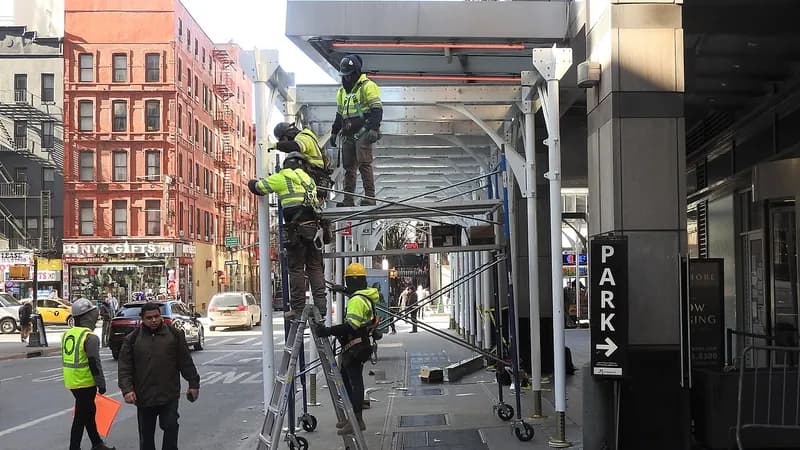
Related practice pages: construction accidents, scaffolding injuries, crane accidents, work accidents and Brooklyn construction accidents.
Responsibility
Who may be responsible, and what shows it
Responsibility follows control. These are the records that usually establish who controlled what.
- Property owner
- Deeds, maintenance and repair records, prior violations, tenant complaints
- General contractor
- Contracts, site safety plans, daily logs, supervision of trades
- Subcontractors
- Scope of work, crew assignments, equipment supplied
- Demolition or excavation contractor
- Permits, shoring and underpinning work, adjacent-property monitoring
- Engineers and architects
- Plans, inspections, and whether they directed the work beyond design
- Public owner or agency
- Ownership records; a 90-day notice of claim may be required
For collapses that are not tied to construction work, such as a ceiling, balcony or stairway giving way in an occupied building, see our premises liability page. Families who lost someone can read about wrongful death claims.
Published firm results
Construction, premises and wrongful-death results
These are the construction, premises liability and wrongful-death results in the firm's published archive. None of the published descriptions identifies a building collapse, and they are not presented as collapse cases.
Prior results do not guarantee a similar outcome. Every case depends on its own facts.
See the full verdicts and settlements archiveAppellate result
Michael Licatesi Wins Again in the Appellate Division
The plaintiff was injured after falling from a defective step at a commercial property. Our Expert Witness provided evidence that the step's slope did not meet regulatory standards, and was a construction defect that the property owner failed to maintain and secure.
Read the case study$175,000
$175,000 Settlement
49 year old fell at a bar with disputed liability resulting in a dismissed case which Michael Licatesi, Esq overturned at the appellate level resulting in a monetary recovery
$950,000
$950,000 RECOVERY
Co-defendant neighbor aware that spill would flow onto her and is outside warning pedestrians negligently fails to apply salt or otherwise address the dangerous condition
$4,000,000
$4,000,000 Jury Verdict — Overturned Dismissal on Appeal
$4,000,000 jury verdict secured after overturning a dismissed case on appeal and obtaining a 100% liability finding for the plaintiff who suffered spine surgery as a result of a fall.
$225,000
$225,000 Apartment Building Slip-and-Fall Settlement
The Licatesi Law Group secured a $225,000 settlement after our client slipped and fell in their apartment building.
Time limits
Deadlines after a collapse
- Employer notice (workers)
- Written notice within 30 days of the accident (Workers' Compensation Law 18). This is not a lawsuit deadline.
- Personal injury lawsuit
- Generally three years (CPLR 214).
- Wrongful death
- Generally two years after the death (EPTL 5-4.1).
- Public owner or agency
- Often a notice of claim within 90 days and a lawsuit within one year and 90 days (General Municipal Law 50-e and 50-i).
Questions
Building collapse questions
Generally not. Labor Law sections 240(1) and 241(6) protect workers engaged in covered construction, demolition, repair and similar work. A tenant, pedestrian, visitor or neighbor hurt by a collapse usually brings a negligence claim against whoever owned, controlled, maintained or was working on the structure. Different deadlines can apply if a public owner is involved.
Possibly. Workers' compensation is generally the remedy against your own employer. A separate claim may exist against an owner, general contractor or another company, depending on the work you were doing, the hazard and who controlled the site. Notify your employer in writing within 30 days, as Workers' Compensation Law section 18 requires, and keep a copy.
No. Section 240(1) covers specific elevation-related risks during the erection, demolition, repairing, altering, painting, cleaning or pointing of a building or structure. The Court of Appeals in Narducci v Manhasset Bay Associates explained that not every object that falls on a worker gives rise to the statute's protections. Whether a collapse qualifies depends on what was being done and what safety devices the work called for.
A personal injury action in New York generally must be commenced within three years (CPLR 214). A wrongful death action generally must be commenced within two years of the death (EPTL 5-4.1). If a city, county, public authority or other public entity owned or controlled the property, a notice of claim is often due within 90 days and the lawsuit within one year and 90 days (General Municipal Law 50-e and 50-i). Have the dates checked early.
Only if it is safe and lawful. Collapse sites are often unstable and closed by the authorities. Photographs you or others took before or right after the collapse, and the names of people who saw cracks, leaks or work on the building beforehand, can be as useful as anything taken later.
Responsibility can be shared among an owner, contractors, subcontractors, a neighboring excavator or others, depending on what each one controlled and did. Contracts, permits, inspection records and site logs usually show those roles. A company name on a fence or truck is a lead, not proof.
The address, the date and time, what you were doing there, any photographs or videos, names of witnesses, medical records you have, and any accident report, work-injury paperwork or letters from insurers or agencies. The consultation is free.
Talk to us about the collapse
Whether a claim exists, against whom and by what date depends on the building, the work being done and your role there. We review that with you at no charge.
What to bring
- The address, date and time
- Photos, videos and witness names
- Any accident report or work-injury paperwork
- Medical records and insurer or agency letters
Photo credits: Ann Street garage collapse by Annapolis Creative, CC BY-SA 4.0, cropped and resized; Sidewalk shed work on 47th Street by Jim.henderson, CC BY-SA 4.0, cropped and resized.