

Summer safety
Summer Accidents in New York: Common Types and Who Is Responsible
Summer in New York means time on roads, sidewalks, beaches, pools and parks. The kinds of accidents that follow are familiar, and each one points to a different set of responsible parties and rules.
By Michael A. Licatesi · Published · Updated
The short answer
- Summer injuries in New York commonly involve vehicle crashes, pools, bicycles and e-bikes, dog bites, alcohol-related incidents and falls on poorly maintained property.
- Each type has its own path: no-fault insurance after vehicle crashes, owner responsibility for pools and property, and specific rules for dog bites and for businesses that serve alcohol.
- In any emergency, call 911 and get medical care first. Evidence can wait until everyone is safe.
This guide groups common summer accidents by type. It does not rank them by frequency and is not legal advice about a specific incident.
Common summer accidents and who may be responsible
Car, truck and rideshare crashes
Who may be responsible Other drivers, vehicle owners, and sometimes rideshare or commercial coverage
Where to read more No-fault vs. bodily injury claims; Lyft accidents
Pool and water injuries
Who may be responsible Pool owners, associations, hotels, clubs, public bodies or equipment makers
Where to read more Summer pool injuries
Pedestrian, bike and e-bike collisions
Who may be responsible Drivers, and sometimes the party responsible for a road defect
Where to read more Pedestrian injuries in NYC
Dog bites
Who may be responsible The dog's owner or lawful custodian
Where to read more See the dog bite section below
Alcohol-related injuries
Who may be responsible The intoxicated person, and possibly a business that unlawfully sold alcohol
Where to read more Hit by a drunk driver
Assaults at events, bars and crowded places
Who may be responsible The attacker, and possibly a property owner whose own carelessness contributed
Where to read more Assault vs. battery in New York
Falls and property hazards
Who may be responsible Property owners, managers and businesses
Where to read more Negligent property management
| Type | Who may be responsible | Where to read more |
|---|---|---|
| Car, truck and rideshare crashes | Other drivers, vehicle owners, and sometimes rideshare or commercial coverage | No-fault vs. bodily injury claims; Lyft accidents |
| Pool and water injuries | Pool owners, associations, hotels, clubs, public bodies or equipment makers | Summer pool injuries |
| Pedestrian, bike and e-bike collisions | Drivers, and sometimes the party responsible for a road defect | Pedestrian injuries in NYC |
| Dog bites | The dog's owner or lawful custodian | See the dog bite section below |
| Alcohol-related injuries | The intoxicated person, and possibly a business that unlawfully sold alcohol | Hit by a drunk driver |
| Assaults at events, bars and crowded places | The attacker, and possibly a property owner whose own carelessness contributed | Assault vs. battery in New York |
| Falls and property hazards | Property owners, managers and businesses | Negligent property management |
Vehicle crashes on summer roads and trips
Road trips, beach traffic and summer events bring their own crash risks. After a crash in New York, no-fault insurance generally pays basic economic loss for covered persons, such as medical bills and part of lost earnings, up to $50,000 per person under Insurance Law 5102, regardless of fault. Coverage is not automatic for everyone: under Insurance Law 5103(b), an insurer may exclude some people, for example someone who intentionally caused their own injury or was hurt while operating a vehicle while intoxicated or impaired. A claim against the at-fault driver for pain and suffering requires a serious injury in cases between people covered by no-fault.
Bicycles, e-bikes and people on foot
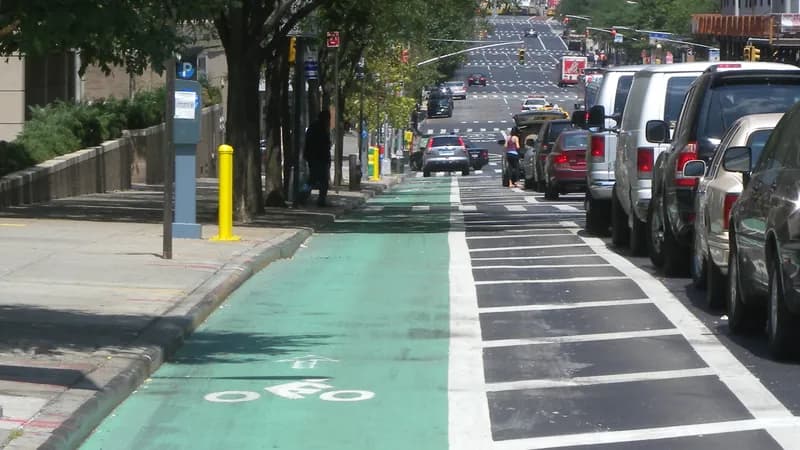
Warm weather fills bike lanes, greenways and crosswalks. When a driver hits a cyclist or pedestrian, the driver's duty of due care and the right-of-way rules decide much of the case, and no-fault coverage can apply. Our pedestrian injury guide explains those rules.
Pools, beaches and water
Pool injuries often involve wet decks, shallow water, broken equipment or missing supervision. Responsibility depends on who runs the pool, and public pools carry short notice deadlines. See our summer pool injury guide.
Dog bites
Dog bite law changed in 2025. In Flanders v Goodfellow, the Court of Appeals described a two-pronged approach: an injured person can hold an owner strictly liable if the owner knew or should have known the animal had vicious propensities, or can rely on ordinary negligence and try to prove the owner failed to use due care under the circumstances, and may assert both. The court overruled earlier law to the extent it barred a negligence claim against a domestic animal's owner.
A separate statute adds a narrower rule. Under Agriculture and Markets Law 123(10), the owner or lawful custodian of a dog that has been determined to be a dangerous dog under that section is strictly liable for medical costs resulting from injury the dog causes, with limited exceptions.
Alcohol and summer events
Summer events can mix alcohol with crowds and driving. Under General Obligations Law 11-101, a person injured because of someone's intoxication may have a claim against a person who caused or contributed to it by unlawfully selling, or unlawfully assisting in procuring, alcohol for the intoxicated person, in addition to the claim against the intoxicated person. General Obligations Law 11-100 separately covers knowingly and unlawfully furnishing alcohol to someone under 21. Both turn on unlawful sale or furnishing; they are not a general rule that any host is responsible for an adult guest's drinking.
Falls and property hazards
Summer falls often happen on broken pavement, wet floors, outdoor stairs and poorly lit walkways. Owners and managers are expected to keep property reasonably safe, and most claims turn on whether they knew or should have known about the hazard. Our guide to negligent property management explains how that works.
Step 1
Get help first
Call 911 for serious injuries and get medical care promptly, even if you feel fine. Do not go back into traffic, water or an unsafe area to take photos.
Step 2
Report and record what happened
- Report the incident to the property owner, business, event organizer or police, and ask for a copy of the report.
- When it is safe, photograph the hazard, the area and your injuries, before a seasonal hazard is cleaned up or repaired.
- Save receipts, tickets, messages, insurance letters and witness names.
Step 3
Check the deadline early
Most personal injury lawsuits against private parties must be filed within three years under CPLR 214. If a public body is responsible for the place where you were hurt, much earlier notice is required and the deadline depends on the exact entity: a city, county, town or village, the State or a public authority. See how to sue a city or public agency in New York.
Frequently asked questions
Vehicle crashes, pool injuries, bicycle and e-bike collisions, pedestrian crashes, dog bites, alcohol-related injuries and falls on poorly maintained property come up often in the summer. This guide groups them by type rather than ranking them.
For covered persons, New York no-fault insurance generally pays basic economic loss, such as medical bills and part of lost earnings, up to $50,000 per person regardless of fault, subject to the exclusions in Insurance Law 5103(b). A separate claim against the at-fault driver may cover more in some cases.
Not automatically. Since Flanders v Goodfellow (2025), an injured person can pursue strict liability if the owner knew or should have known of the dog's vicious propensities, or ordinary negligence if the owner failed to use due care. Separately, the owner of a dog determined to be a dangerous dog is strictly liable for medical costs under Agriculture and Markets Law 123(10), with limited exceptions.
First find out who operates the place; not every beach, pool or park is run by a public body. If a city, county, town or village is responsible, a notice of claim is generally due within 90 days. Claims against the State go to the Court of Claims, and some public authorities have their own statutes.
Related guides
Sources
- N.Y. Insurance Law 5102 (basic economic loss)
- N.Y. Agriculture and Markets Law 123 (dangerous dogs)
- N.Y. General Obligations Law 11-101 (dram shop)
- N.Y. General Obligations Law 11-100 (furnishing alcohol to persons under 21)
- N.Y. Insurance Law 5103 (no-fault coverage and exclusions)
- Flanders v Goodfellow, 44 NY3d 57 (2025)
- N.Y. CPLR 214
Hurt in a summer accident?
We can sort out who may be responsible, which insurance applies and which deadline controls. The consultation is free.