

Uniondale · Brooklyn · Corona · New Jersey
Workplace Injury Lawyer Near Me
Our main office is at RXR Plaza in Uniondale, with offices in Brooklyn, Corona and Teaneck, New Jersey. Below: where we are, what to do in the first 30 days, and who helps with which claim.
Over 40 years of experience. Free consultation; no fee unless there is a recovery.

Offices
Where to meet us
- Uniondale (main office)
Convenient for Nassau and Suffolk counties
423 RXR Plaza, East Tower, Uniondale, NY 11556(516) 227-2662
- Brooklyn
Convenient for Brooklyn and Staten Island
3857 Kings Highway, #1f, Brooklyn, NY 11234(718) 710-4880
- Corona (Queens)
Convenient for Queens and the Bronx
100-17 Northern Boulevard, Corona, NY 11368
- Teaneck (New Jersey)
Convenient for New Jersey
696 Palisade Avenue, Teaneck, NJ 07666
Hurt in a particular borough or county? See our Nassau County, Long Island, Brooklyn and Queens work accident pages.
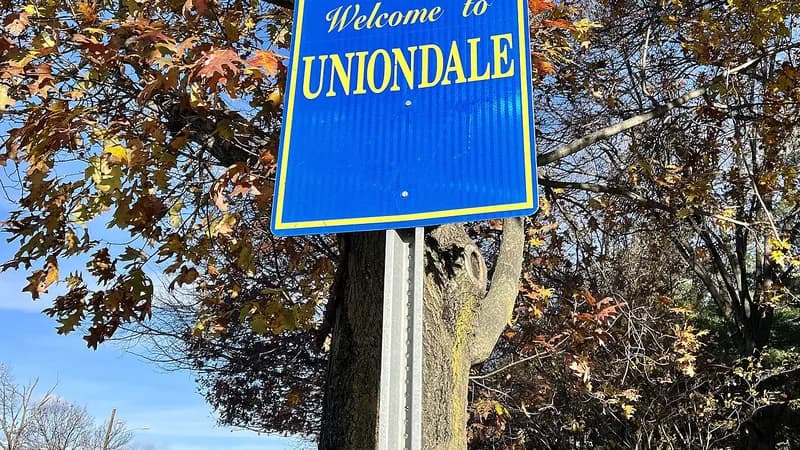
The Uniondale office serves Nassau and Suffolk; call (516) 227-2662 to arrange a consultation.
After the injury
Your first 30 days, in order
This sequence follows the Workers' Compensation Law and the notice rules for public bodies.
1. Today
Get care and say it happened at work
Tell the doctor or hospital the injury is work-related, so the bill can go to the compensation carrier if the claim is accepted, and the record shows how it happened.
2. Within 30 days
Tell your employer in writing
Written notice is due within 30 days; late notice can bar the compensation claim unless excused (WCL 18). Keep a copy.
3. Soon
File your compensation claim
The Board allows two years, but filing early starts benefits sooner (WCL 28, WCB).
4. Within 90 days
If a public body may be responsible
A city, county, town, village or school district usually needs a notice of claim within 90 days (GML 50-e). Call us before then.
5. Before you sign
Talk to us first
Do not give a recorded statement to another company's insurer, and do not sign a release, before we review it.
6. Before any settlement
Protect your benefits
A lawsuit settlement can affect the carrier's lien and your future benefits; where consent is needed, we seek the carrier's consent or a court order first (WCL 29).
Two claims
Who helps with what
Your compensation claim
Filed with the Workers' Compensation Board. A lawyer or licensed representative is optional; fees are set by the Board and paid from awards, never directly by you. The Board lists licensed claimant representatives (WCB toolkit). Benefits are available regardless of citizenship or immigration status.
A lawsuit against someone else
This is our work. We identify who besides your employer was responsible, keep the evidence, meet the deadlines and make sure a settlement accounts for any compensation lien and credit (WCL 29). The overview is on our work accidents page; injuries away from building sites are on workplace accidents.
Hurt on a construction site? The owner of the job can change your first deadline: see construction accident lawyer near me. Over 40 years, the firm has recovered more than $100 million for clients.
The first call
What we will ask you
- Where and when. The address, the date and the task you were doing.
- Who was there. Your employer and every other company working at the place: owner, contractor, vendor, driver.
- Who owns the place. A city, school district, transit agency or the State can mean a 90-day notice.
- What you have filed. Your written notice to the employer, a compensation claim number, any statements given.
- Your treatment and work. Doctors seen so far, time out of work and your usual earnings.
If the compensation claim is disputed
When the employer or carrier disputes that the injury is work-related, no cash benefits are paid until a Workers' Compensation Law judge decides. Disability benefits may be available in the meantime, and are subtracted from a later compensation award (WCB). A dispute on that side does not stop us from investigating a claim against someone else.
Close to one of our offices?
Call to arrange a free consultation. Bring what you have; we will tell you whether there is a claim beyond compensation and the first deadline.
Questions
Frequently Asked Questions
Look for a lawyer who handles work-injury lawsuits, can tell you who besides your employer may be responsible, and explains the fee in writing. Our main office is at RXR Plaza in Uniondale, with offices in Brooklyn, Corona (Queens) and Teaneck, New Jersey. Call (516) 227-2662 to arrange a free consultation at the office that suits you.
Usually not. Workers' compensation is generally the only remedy against your own employer and co-workers. An employer that failed to carry compensation coverage can be sued. What you often can do is sue someone else who is legally responsible for the injury, such as a property owner, general contractor, another subcontractor, a machine maker or another driver, while you collect compensation.
Compensation is no-fault: your employer's carrier pays medical care and partial wage benefits, decided by the Workers' Compensation Board. A lawsuit is against a third party, must prove that party is legally responsible, and can recover pain and suffering and lost earnings above the benefits. The carrier usually has a lien on part of the recovery, after the costs of getting it, subject to statutory exceptions.
Labor Law 240(1) requires owners and contractors to give workers proper protection, such as scaffolds, ladders and hoists, against gravity hazards during construction, demolition, repair, painting or cleaning of a building or structure. Where a violation causes the injury, the worker's own carelessness is not a defense; with no violation and the worker's conduct the sole cause, there is no liability. Owners of one- and two-family homes who contract for but do not direct or control the work are excepted.
Workers' compensation pays medical care and partial wage benefits, with a weekly maximum of $1,281.50 for accidents from July 1, 2026. A third-party lawsuit can add pain and suffering, lost earnings above the benefits and future costs, if responsibility is proved. We do not publish value ranges; each case depends on the injury, the proof and the insurance available.
Tell your employer in writing within 30 days and file the compensation claim within two years. A lawsuit against a private company is generally due within three years. If a city, county, town, village or school district may be responsible, a notice of claim is usually due within 90 days; the State and some public authorities have their own, sometimes shorter, rules.
Injury lawsuits arising from work: falls from ladders and scaffolds, falling objects, machinery and conveyor injuries, crashes while driving for work, falls on another company’s premises, electrical injuries and burns. If you need help only with a compensation claim, we will tell you that at the consultation and how to find a Board-listed representative.
The firm has over 40 years of experience and has recovered more than $100 million for clients firm-wide. We focus on the claim beyond compensation: identifying who else was responsible, keeping the evidence, meeting the notice deadlines and protecting your benefits when the case settles. The consultation is free and there is no fee unless there is a recovery.
Injured at work? Start with a free consultation near you
Tell us where and how you were hurt and who was working there. We will explain the lawsuit, how it fits with compensation, and the deadline that comes first. No fee unless there is a recovery.
What to bring
- Your written notice to the employer
- Compensation papers or claim number
- Names of companies and witnesses
- Medical records
Photo credits: RXR Plaza, Uniondale by Antony-22, CC BY-SA 4.0, cropped and resized; Uniondale welcome sign by AITFFan1, CC BY-SA 4.0, cropped and resized; RXR Plaza towers, Uniondale (social sharing image) by Antony-22, CC BY-SA 4.0, cropped and resized.