

Warehouses · factories · kitchens · work driving
Workplace Accident Lawyers
Work injuries also happen away from building sites, where the Labor Law's scaffold rules usually do not reach. If you are an eligible employee hurt on the job, workers' compensation may cover medical care and part of your wages, and someone other than your employer may be responsible: a machine maker, another driver, the owner of the place you were sent.
Over 40 years of experience. Free consultation; no fee unless there is a recovery.
Start here
Where did it happen?
Against your employer and co-workers, workers' compensation is generally the only remedy (WCL 11). Find your situation to see who else may be responsible and what to keep.
Forklift injuries have their own page: forklift accidents. Burns at work: burn injuries. For how compensation and a lawsuit run together, see our work accidents overview.
Machines and tools
When the machine is the cause
A maker or seller can be responsible for a design defect, a manufacturing defect or a missing warning; see products liability. If someone later removed a guard or changed the machine in a way that caused the injury, the claim against the maker can fail (Robinson), so who changed what, and when, matters.
- Keep it. Ask in writing that the machine not be repaired, scrapped or returned.
- Identify it. Photograph the model and serial plate, the guards and any warning labels.
- Records. Maintenance logs, lockout procedures and service contracts show who worked on it.
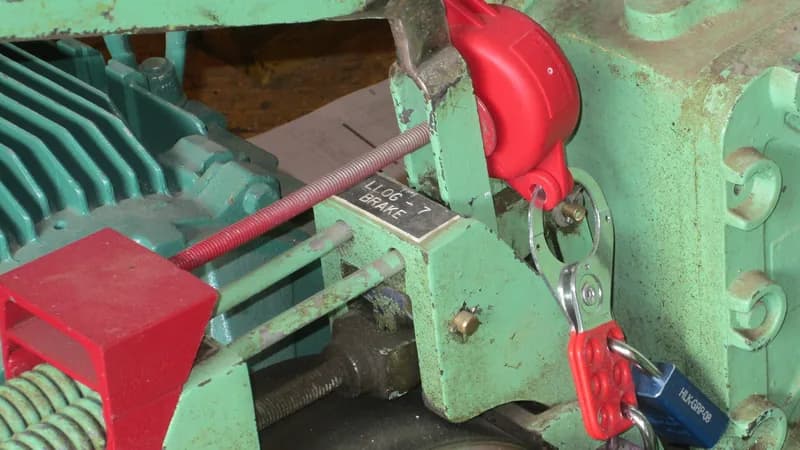
Lockout devices keep machinery from starting during service; whether they were used is often the first question.
Reports
What an OSHA report can and cannot do
Covered employers must report to OSHA a work-related death that occurs within 30 days of the incident, within 8 hours of learning of it, and an in-patient hospitalization, amputation or loss of an eye that occurs within 24 hours of the incident, within 24 hours of learning of it. Crashes on public roads outside construction work zones and events on public transportation are excepted (29 CFR 1904.39).
An inspection file can show what happened. It does not decide a lawsuit, and it does not open a claim against your own employer.
Published results
Work injury results
Quoted exactly as recorded. These are firm-wide results from work injuries; none names a county or the law the claim was brought under, and they are not predictions. Over 40 years, the firm has recovered more than $100 million for clients.
Prior results do not guarantee a similar outcome. Every case depends on its own facts.
See the full verdicts and settlements archive$8,000,000
$8 Million Dollar Settlement — 2nd Department
Plaintiff sustained a series of fractures and other injuries to the right shin, heel and foot, requiring nailing of the right tibia with two proximal and two distal locking bolts, ultimately resulting in below-the-knee amputation.
$1,157,000
$1,157,000 Award
Plaintiff injured at worksite sustaining traumatic tear of the left biceps tendon with tendon retraction which required surgery.
$750,000
$750,000 Settlement
Plaintiff injured when telephone pole struck him causing a traumatic brain injury and shoulder injury requiring surgery.
Hurt at work away from a building site?
Tell us where it happened and what equipment or vehicles were involved. We will tell you whether someone besides your employer may be responsible.
Questions
Frequently Asked Questions About Workplace Accidents
Workers' compensation is your employer's no-fault insurance: medical care and partial wage benefits, decided by the Workers' Compensation Board, whoever was careless. A third-party lawsuit is a court claim against someone else, such as a machine maker, another driver or a property owner, that is legally responsible for the injury. It needs proof of that responsibility but can recover pain and suffering and lost earnings above the benefits. The carrier usually has a lien on part of the recovery.
Usually not. Workers' compensation is generally the only remedy against your own employer and against co-workers (Workers' Compensation Law 11 and 29). The main exception is an employer that failed to carry compensation coverage. A company you sue can seek common-law contribution or indemnity from your employer only for a grave injury, or under a written indemnity agreement made before the accident. Neither lets you sue your employer.
Any accident where someone other than your employer or a co-worker was at fault: a defective machine or tool, a crash with another driver while working, a dangerous condition on premises your employer does not control, an assault that a property owner or security contractor failed to prevent, or repair and renovation work covered by the Labor Law. The router on this page shows the usual candidates and the first evidence for each.
They can be useful evidence of what went wrong, but they do not decide a lawsuit, and they do not let you sue your own employer. Covered employers must report certain deaths, in-patient hospitalizations, amputations and losses of an eye to OSHA, with exceptions, so an OSHA record may exist. We request it along with the company’s own reports.
Workers' compensation pays medical care and partial wage benefits, capped weekly ($1,281.50 for accidents from July 1, 2026). A successful third-party claim can add pain and suffering, lost earnings above the benefits, future medical costs and loss of earning capacity. We do not publish ranges; the value depends on the injury, the proof of responsibility and the insurance available. The compensation carrier usually has a lien on part of the recovery.
For compensation: written notice to your employer within 30 days and a claim with the Board within two years. For a lawsuit against a private company: generally three years. If a city, county, town, village or school district may be responsible, a notice of claim is usually due within 90 days. Illness from exposure and claims against the State or public authorities follow their own rules.
Get medical care and say the injury happened at work. Give your employer written notice and keep a copy. Photograph the scene and any machine, note the model and serial number, and write down witnesses and outside companies present. Ask that the equipment be kept as it is. Do not give a recorded statement to another company’s insurer before talking to us.
Yes, with qualifications. The Workers' Compensation Board says benefits are available regardless of citizenship or immigration status. In Labor Law cases, the Court of Appeals held that federal immigration law does not bar a claim for lost wages, absent proof the worker gave false work-authorization documents to get the job (Balbuena, 2006). Status questions can still arise in a case, so tell us at the start.
Possibly. A job title or tax form does not decide whether you are an employee for compensation; the Board looks at the actual working relationship. If you are not an employee, the hiring company may not be shielded from a lawsuit. And the Labor Law's construction sections can protect people employed on covered work even if they are not on the owner's payroll. We sort this out from your contracts and pay records.
Not before review. An early offer from another company's insurer may not account for future treatment or lost earnings, and a release usually ends the claim. A third-party settlement can also affect your compensation benefits: the carrier usually has a lien and may take a credit against future benefits, and a settlement may need its consent or a court order. We check those points before anything is signed.
Get the full picture, not just the compensation claim
We review how you were hurt, who else was involved and the deadlines, and explain how a lawsuit would fit with your compensation benefits. Free consultation; no fee unless there is a recovery.
What to bring
- Incident report or written notice
- Photos, model and serial number of any machine
- Names of outside companies and witnesses
- Medical records and pay stubs
Photo credits: Lockout on a hoist brake by Wtshymanski, CC BY-SA 4.0, cropped and resized.