

Construction Accidents (New Jersey)
New Jersey Construction Accident Lawyer
Most injured New Jersey construction workers have a workers' comp claim against their employer, and some also have a negligence claim against another company on the site. New Jersey has no New York-style scaffold law. Over 40 years of experience.
Free consultation. No fee unless there is a recovery.
Two claims, two sets of rules
Workers’ compensation
- Against your employer’s insurer
- No need to prove fault
- Medical care and wage benefits; no pain and suffering
- Notice within 90 days; petition within 2 years of the accident or last payment
- Division of Workers’ Compensation
Third-party negligence claim
- Against another company: contractor, owner, equipment maker
- Negligence must be proved
- Full damages, including pain and suffering
- Lawsuit generally within 2 years
- Superior Court
Construction Site Record Review
We Separate the Workers' Comp File From the Third-Party Construction Case
A New Jersey construction injury can involve comp benefits, OSHA evidence, contracts, subcontractors, equipment owners, and site-control documents. We organize the project record to identify who was responsible beyond the direct employer.
- Site-control proof
- Contracts, daily reports, permits, and safety meeting notes show who controlled the work.
- Equipment and witness record
- Photos, inspection logs, and coworker accounts help preserve the hazard before the site changes.
New Jersey is not New York
- New York's Labor Law 240 and 241 impose special liability on owners and contractors. New Jersey has no equivalent.
- A New Jersey claim against a contractor or owner requires proof of negligence.
- OSHA rules can show the standard of care, but a violation is not automatically negligence (Alloway v. Bradlees, 1999).
- You can recover only if your share of fault is not greater than the defendants' combined (N.J.S.A. 2A:15-5.1).
Injured on a New York site? See our New York construction accident page.
Site control
Who may be responsible besides your employer
- General contractor
- Can owe a subcontractor’s employee a duty of reasonable care, based on foreseeability of harm, the relationship and its opportunity and capacity to correct the hazard.
- Alloway v. Bradlees (1999)
- Engineer or design professional
- A site engineer who knew of a dangerous condition, such as an unsafe trench, can owe workers a duty of care even without contractual responsibility for safety.
- Carvalho v. Toll Brothers (1996)
- Equipment manufacturer or seller
- Liable if the product was not reasonably safe because of a manufacturing defect, inadequate warnings or a defective design. The “inherent danger” design defense does not apply to workplace equipment.
- N.J.S.A. 2A:58C-2, -3
- Property owner, other subcontractors
- Liable under ordinary negligence if their conduct or a condition they controlled caused the injury.
- Negligence principles
- Your employer
- Protected by the workers’ comp bar unless the employer committed an intentional wrong: knowledge that injury was substantially certain, in circumstances beyond the ordinary risks of the job.
- N.J.S.A. 34:15-8; Millison (1985); Laidlow (2002)
Workers' compensation
How New Jersey workers' comp works alongside a lawsuit
- Medical care. The employer or its insurer pays necessary treatment and generally chooses the authorized treating doctor; the worker may choose only in an emergency or if treatment is improperly refused.
- Wage benefits. After more than seven days of disability, temporary disability is paid at 70% of the average weekly wage, up to a maximum set each year (NJ Department of Labor).
- Deadlines. Notice to the employer within 90 days; claim petition within two years of the accident or of the last payment, and authorized treatment counts as a payment.
- When the comp insurer is repaid. If a third-party case recovers money, the employer or insurer may be reimbursed for benefits it paid, less the worker's litigation expenses and fee as the statute defines them (N.J.S.A. 34:15-40). That is why we run both files together.
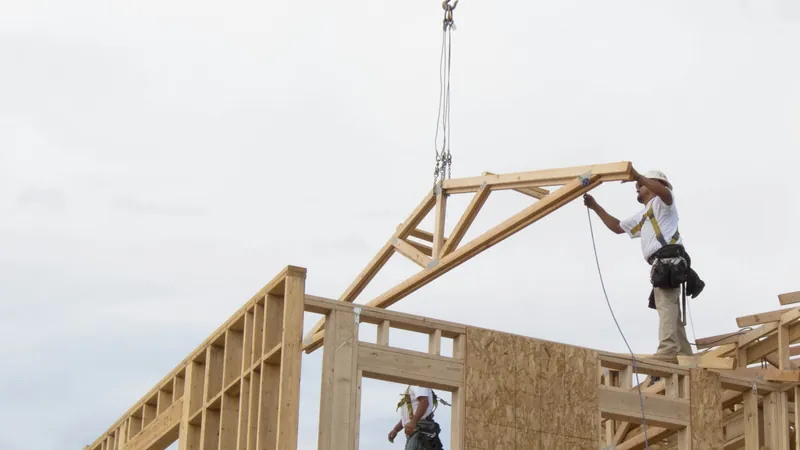
Who enforces site safety. Federal OSHA covers private-sector employers in New Jersey, including contractors working for public entities. New Jersey's PEOSH program covers state and local government workers (NJDOL). Inspection files and citations from either can be evidence.
Accidents
Types of Construction Accidents We Handle in New Jersey
- Falls from Heights
- Scaffolding collapses, ladder accidents, roof falls, and other elevated work injuries.
- Crane & Equipment Accidents
- Crane collapses, falling loads, heavy equipment rollovers, and machinery malfunctions.
- Electrocution
- Contact with power lines, faulty wiring, electrical burns, and shock injuries.
- Trench Collapses
- Excavation cave-ins, burial injuries, and crush injuries from inadequate trench protection.
- Struck-by Accidents
- Falling tools, materials, and equipment striking workers.
- Caught-between Accidents
- Workers crushed between equipment, vehicles, or collapsing structures.
Evidence to preserve before the jobsite changes
- Photos/video of the ladder, scaffold, opening, trench, machine, tool, floor, debris, or fall area.
- Incident reports, witness names, foreman notes, safety meeting records, site logs, permits, and OSHA materials.
- Contracts identifying the owner, general contractor, subcontractors, vendors, and equipment providers.
- Emergency, orthopedic, neurology, surgical, therapy, and disability records.
- Workers' compensation filings, lost wages, union records, benefits, overtime history, and tax records.
- Names of coworkers, site supervisors, safety managers, and any company that repaired or removed equipment.
Published results
Construction and work accident results
These are the firm's published construction and work accident results, quoted exactly as recorded. None of these records names New Jersey; a place is named only where the record names it. They are not a prediction for any other case.
Prior results do not guarantee a similar outcome. Every case depends on its own facts.
See the full verdicts and settlements archive$8,000,000
$8 Million Dollar Settlement — 2nd Department
Plaintiff sustained a series of fractures and other injuries to the right shin, heel and foot, requiring nailing of the right tibia with two proximal and two distal locking bolts, ultimately resulting in below-the-knee amputation.
$750,000
$750,000 Settlement
Plaintiff injured when telephone pole struck him causing a traumatic brain injury and shoulder injury requiring surgery.
$1,157,000
$1,157,000 Award
Plaintiff injured at worksite sustaining traumatic tear of the left biceps tendon with tendon retraction which required surgery.
Questions
Frequently Asked Questions
You generally cannot sue your own employer or co-workers; workers’ compensation is the exclusive remedy against them, except for an intentional wrong (N.J.S.A. 34:15-8). But receiving comp does not stop you from suing a third party whose negligence caused the accident, such as a general contractor, another subcontractor, the property owner or an equipment manufacturer (N.J.S.A. 34:15-40). If the third-party case recovers money, the employer or its insurer may be entitled to be repaid part of the benefits it paid.
Yes, but not like New York’s. New Jersey has no equivalent of New York Labor Law 240 or 241, which make owners and contractors specially liable for certain falls and site violations. In New Jersey, a claim against a contractor or owner requires proof of negligence. Federal OSHA standards apply on private construction sites and can be used as evidence of the standard of care, but a violation is not automatically negligence (Alloway v. Bradlees, 1999). New Jersey’s PEOSH program covers public-sector employees.
There are separate clocks. For workers’ compensation, the employer must know of the injury, or be given notice, within 90 days (N.J.S.A. 34:15-17), and the formal claim petition must be filed within two years of the accident or of the last payment of compensation (N.J.S.A. 34:15-51); employer-authorized medical treatment counts as a payment, and an informal-hearing application does not stop the clock. A third-party negligence lawsuit generally must be filed within two years of the accident (N.J.S.A. 2A:14-2(a)). If a public entity may be responsible, a notice of claim may be due within 90 days.
Falls from heights (scaffolds, ladders, roofs and floor openings), scaffold collapses, crane accidents and falling loads, electrocution, trench and excavation collapses, caught-between accidents with heavy equipment, burns from fires and explosions, machinery accidents, struck-by injuries, structural collapses, and wrongful death from construction site negligence.
Depending on the facts: a general contractor that controlled the site and could have corrected the hazard, another subcontractor, the property owner, an engineer or design professional who knew of a danger (Carvalho v. Toll Brothers, 1996), equipment owners or rental companies, and manufacturers of defective equipment under the Product Liability Act. Your direct employer is generally protected by the workers’ compensation bar unless the intentional-wrong exception applies.
Workers’ compensation pays medical treatment and, after more than seven days of disability, temporary disability benefits at 70% of the average weekly wage up to a yearly maximum. It does not pay for pain and suffering. A third-party lawsuit can add damages comp does not cover: full lost earnings and earning capacity, pain and suffering, disability and loss of enjoyment of life. Punitive damages are available only on proof of actual malice or wanton and willful disregard.
A third-party case requires (1) a duty owed by the defendant, which for a general contractor depends on foreseeability, the relationship between the parties and the opportunity to correct the hazard; (2) a breach of that duty, where OSHA rules may help define the standard of care; (3) causation; and (4) damages. We secure contracts, daily logs, safety plans, inspection records, OSHA materials, photos and witness statements to show who controlled the hazard.
Only in a narrow situation called an intentional wrong. It is not enough that the employer knew of a risk; the employer must have known that injury was substantially certain to result, and the injury and its circumstances must be more than a fact of life of industrial employment (Millison v. E.I. du Pont, 1985). In Laidlow v. Hariton Machinery (2002), deliberately removing a safety guard while knowing injury was substantially certain could meet that standard. Most construction cases instead proceed through comp plus a third-party claim.
Workers’ compensation benefits can begin while the injury is being treated; disputed claims take longer. A third-party lawsuit usually cannot be valued until treatment shows the long-term picture, and it involves contracts, multiple defendants and expert discovery. We coordinate the comp file and the third-party case so one does not undercut the other, and we do not promise a timetable.
It helps when another company may be responsible, when benefits are denied, or when injuries are serious. The comp claim and the third-party case have different deadlines, forums and proof, and a third-party recovery affects what the comp insurer can claim back. The consultation is free and there is no fee unless there is a recovery.
If a construction accident was fatal, see New Jersey wrongful death, or return to the New Jersey personal injury overview.
Contact Our New Jersey Construction Accident Lawyers Today
We will look at who controlled the site, whether a third-party claim exists and which comp and lawsuit deadlines apply. Free consultation; no fee unless there is a recovery.
What to bring
- The site address, your employer and the general contractor if known
- Any comp claim number, letters from the comp insurer and the authorized doctor’s name
- Photos, incident reports and coworker names
- Pay records showing your average weekly wage and overtime