

Wrongful death claims in Nassau and Suffolk
Long Island Wrongful Death Lawyers
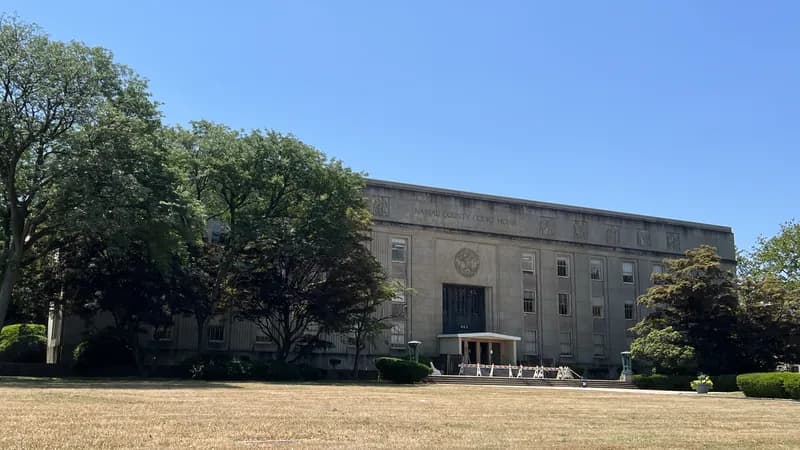
This page covers Nassau and Suffolk Counties, whose courts sit in Mineola and Riverhead.
Which one grants the estate letters, and where the lawsuit can be filed, depends on where the person lived, where it happened and who is sued.

Nassau or Suffolk
Where each part of the claim goes
The same New York law applies in both counties. What differs is the building, and which county a case belongs in. This is a directory of the official offices, not a promise about where a particular case will be heard.
Sources: nycourts.gov court pages; county Public Administrator pages; GML 50-e, 50-i, County Law 52.
Across county lines
When home, the death and the defendant are in different places
Venue generally lies where a party lived or where a substantial part of the events happened, and a representative counts as a resident of the county that appointed them (CPLR 503). Public defendants have their own rules. Each row is a starting point, not a venue ruling.
- Lived in Suffolk, died in a crash in Nassau
- Letters usually come from Suffolk. A suit against a private driver can generally be brought in Suffolk (where a party lived, including the representative appointed there) or in Nassau (where the events happened) (CPLR 503(a)–(b)).
- A Nassau or Suffolk town, village or the county may be responsible
- Notice within 90 days after the representative is appointed and suit within two years (GML 50-e, 50-i); the case is tried in the county where that body is (CPLR 504). The Nassau County page lists Nassau's public bodies row by row.
- A public authority, such as a transit operator
- Death actions generally need a GML 50-e notice and must start within two years of the death (PAL 2980, 2981), except where the case must go to the Court of Claims (PAL 2982). Some authorities add a 30-day presentment. MTA subsidiaries such as the LIRR have no notice-of-claim requirement but the rest of PAL 1276, including the 30-day presentment, applies (PAL 1276(6)); confirm the exact entity. Outside the Court of Claims, an authority is usually sued where it has its principal office or the facilities involved (CPLR 505(a)).
- A State road, park or agency
- The claim goes to the Court of Claims, not to either county's Supreme Court: within 90 days after appointment, file and serve it on the Attorney General or serve a notice of intention, and in every case file and serve it within two years after the death (Court of Claims Act 10(2)).
- Lived in Queens or another borough, died on Long Island
- Letters usually come from the borough's Surrogate's Court, and venue can follow that appointment as well as the place of the death. See Queens wrongful death for how a recovery is divided, and the court directory for the city's courts.
These are death-claim rules. The person's own injury claim runs on its own clocks: where GML 50-e applies to it, the notice is generally due 90 days after the claim arose.
Separately, for the wrongful death action only: if a criminal action is started against the same defendant for the same event, the representative has at least one year after it ends to sue (EPTL 5-4.1(2)). Do not assume that applies to the survival claim or to a notice deadline.
Meeting us
One office for Nassau and Suffolk families
Our main office is at 423 RXR Plaza in Uniondale, and it serves families from both counties. The office you visit does not decide the court: that follows the rules above. For Nassau public bodies in detail, see Nassau County wrongful death; for New York law overall, New York wrongful death.
By cause: Long Island auto accidents, Long Island medical malpractice, Nassau County medical malpractice and Long Island personal injury.
A death at work is different: a claim against the person's own employer is generally barred when workers' compensation applies. A claim against another company on the job may be possible if that company was legally responsible and is not protected by the same exclusivity rule or another defense. See our work accident page.
Questions
Long Island wrongful death questions
Wrongful death claims on Long Island can arise from crashes on local roads, parkways and expressways, pedestrian and cyclist deaths, boating and drowning, work and construction sites, medical and nursing-home care, unsafe property and defective products. A county, town, village, school district, transit operator or the State may be among those responsible; if its legal responsibility can be shown, its own notice deadline applies and can come first.
Generally two years after the death, or at least one year after a criminal action against the same defendant for the same event ends (EPTL 5-4.1). Nassau or Suffolk County, a town or a village, if legally responsible: notice within 90 days after appointment; suit within two years. The State: within 90 days after appointment, file and serve the claim or serve a notice of intention on the Attorney General; the claim must be filed and served within two years after the death. Authorities and survival claims differ.
Only the personal representative appointed by a court. Letters usually come from the Surrogate's Court of the county where the person lived: Nassau (262 Old Country Road, Mineola) or Suffolk (320 Center Drive, Riverhead). The claim is brought for the distributees, such as a spouse, children or parents. If a named executor refuses to sue, distributees who do not take part in the administration can ask for an administrator. Each county also has a Public Administrator.
Emergency crews choose the hospital, and a patient may be moved between hospitals or across county lines. For the claim, get complete records from every place the person was treated, including the ambulance report. If the care itself may be part of the claim, identify the exact operator of each hospital early: one run by a public body or public benefit corporation can have notice rules that start when the representative is appointed.
Fair and just compensation for the pecuniary injuries the death caused the distributees, such as lost support, services and care, plus reasonable medical and funeral expenses paid by or owed by the distributees and interest from the date of death (EPTL 5-4.3). Grief and loss of companionship are generally not compensable. The survival claim adds the person’s own losses before death and goes to the estate. The same rules apply in Nassau and Suffolk; value depends on each family’s proof.
The law is the same; the buildings differ. Nassau's Supreme Court is at 100 Supreme Court Drive, Mineola; Suffolk hears civil matters at 1 Court Street, Riverhead. A case is filed where a party lived, where a substantial part of the events happened, or where the representative was appointed (CPLR 503). A county is sued in that county; towns and villages in their own county (CPLR 504). The court handling the action, or the Surrogate of the county that issued letters, divides a recovery after a hearing (EPTL 5-4.4).
Yes. In a wrongful death action, the person's share of fault does not bar recovery; it reduces the damages in proportion (CPLR 1411(a)). A 2026 rule bars recovery in some motor-vehicle personal-injury actions when the claimant's fault is greater than the defendants'; it is written for personal-injury actions, so its effect on a survival claim from a crash should be checked. Early video, vehicle data and witness accounts often decide the fault question.
Get the death certificate and ask for police, hospital and medical examiner records from the county where it happened. Ask businesses, homes and transit operators to keep video. Note every place involved: where the person lived, where it happened, and whether a county, town, village, transit or State road or vehicle was involved. Decide who will seek letters, and in which county. Keep bills and pay records, and do not sign a release before getting advice.
Mostly through county lines. A person may live in one county, die in another and be hit by a driver or business based in a third, so the estate court, the possible venues and the public bodies involved can all differ. Letters usually come from the county of residence; the lawsuit can often go where a party lived or where it happened; county, town and authority defendants have their own venue rules. Sort this out before the first deadline.
A wrongful death claim is brought by a representative acting for other family members, so each step affects them: getting letters in the right county, identifying every party that may be legally responsible, including public bodies with short notice periods, preserving evidence and proving financial loss. Ask a lawyer about the court's rules on who may appear for a representative. We handle New York wrongful death claims on a contingency basis: no fee unless there is a recovery. Our main office is in Uniondale.
Talk to a Long Island wrongful death lawyer
Tell us where the person lived, where it happened and who was involved. We can work out which county's courts apply and which deadline comes first. The consultation is free, and there is no fee unless there is a recovery.
What to bring
- Death certificate
- Police, hospital or medical examiner records
- The address where the person lived
- Will or estate papers, if any
Photo credits: Suffolk County Supreme Court, Riverhead by ComplexRational, CC BY-SA 4.0, cropped and resized; Nassau County Court House by AITFFan1, CC BY-SA 4.0, cropped and resized.